
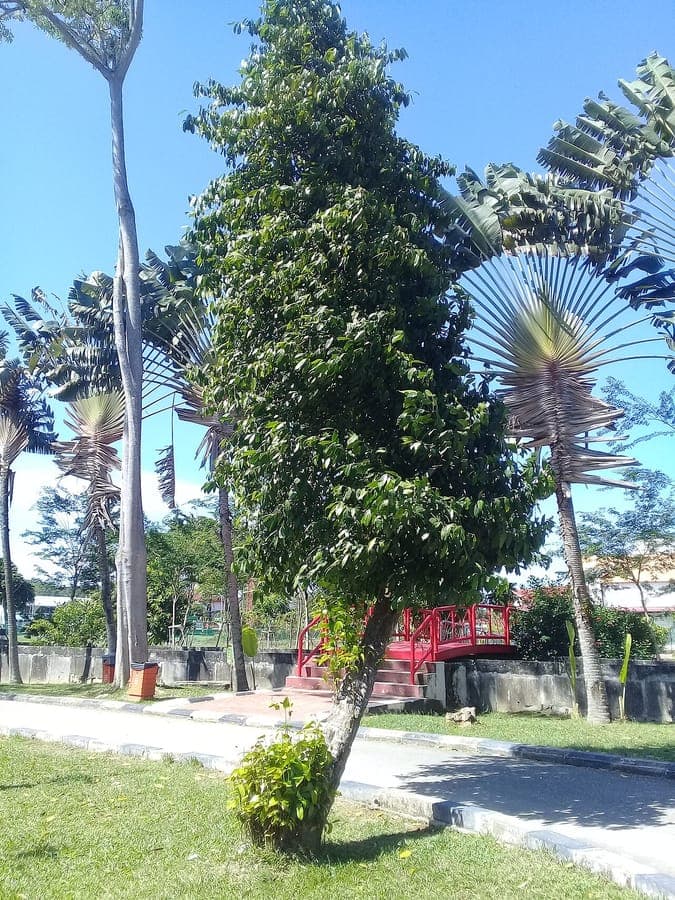
Wiki Farazi / CC0, via Wikimedia Commons
Gnetum gnemon: complete guide
Gnetum gnemon
¿Quieres ver Gnetum gnemon: complete guide en tu jardín?
1 minuto, sin tarjeta de crédito
Overview
Gnetum gnemon, known as Spanish joint-fir, buko or melinjo, is a fascinating tropical tree from the Gnetaceae family. This exotic plant grows naturally from southeast Tibet to the western Pacific, including Borneo, Malaysia, Indonesia and the Philippines. With its distinctive branched twigs and elliptical foliage, it offers unique, architectural beauty. In warm regions it's valued as a food plant; in temperate climates it's a wonderful greenhouse specimen.
Gnetum gnemon grows into a moderate tree or large shrub, reaching 5 to 10 metres in natural conditions, but much more compactly in pot culture.
Appearance and Bloom
Gnetum gnemon exhibits distinctive growth. Twigs are angled, opposite, densely packed in a springing pattern. Leaves are glossy, elliptical to lance-shaped, about 8 to 12 centimetres long with soft margins. They are dark green, lustrous and impart an elegant appearance to the plant.
Flowers are extremely subtle and inconspicuous. They lack true perianth but are borne in short, axillary clusters. Following flowering, fruits develop - oval structures about 2 to 3 centimetres long, ripening orange-red. These fruits are interesting and decorative.
The plant is semi-woody and very slow-growing, making it ideal for pot culture.
Ideal Location
Gnetum gnemon requires warmth, humidity and indirect light. It does not thrive in average living rooms but will flourish in warm greenhouses, conservatories or very warm, humid bathrooms.
Provide:
Indirect, bright light (no direct sun, which can scorch leaves) Temperatures between 18 and 30 degrees Celsius, preferably toward 22-28 degrees High humidity (60-80%) Protection from draughts and cold
Soil
Gnetum gnemon requires very well-draining, nutrient-rich soil. Mix:
40% universal potting compost 30% orchid bark or fine wood chips 20% perlite or expanded clay 10% leaf mould or humus-rich compost
A slightly acidic to neutral pH (6.0 to 7.0) is ideal. Repot each spring into a pot one size larger.
Diseño gratis
¿Quieres ver Gnetum gnemon: complete guide en tu jardín? Crea un diseño gratis ahora.
Watering
Gnetum gnemon loves consistent moisture but dislikes waterlogging. Water regularly during the growing season (March to October), keeping soil moist but not wet. Use rainwater or soft water if possible.
Reduce watering in winter (November to February) when growth slows. Soil may become somewhat drier but should never fully dry out.
Mist daily with fine spray bottles to boost humidity, especially in warm periods.
Feeding
Feed fortnightly during the growing season (March to October) with half-strength orchid fertiliser. Use a balanced formulation (e.g. 20-20-20) or growth-promoting element formula (higher nitrogen).
Halve feeding in winter or cease feeding entirely. Overfeeding can be harmful and encourage twig growth at the expense of leaf quality.
Propagation
Gnetum gnemon can be propagated from seed or semi-ripe cuttings. Seed germinates slowly. Seeds should be used fresh. Sow 2 centimetres deep in moist seed compost. Maintain temperature at 22-25 degrees and high humidity.
Cuttings can be taken from leafy twigs and rooted in moist seed compost under cover.
Maintenance Calendar
January-February: Rest period. Minimal watering. Check for pests. March-May: Growth begins. Repot. Start feeding. Increase misting. June-October: Peak growth period. Regular feeding and watering. November-December: Prepare for winter. Reduce feeding. Keep temperature stable.
Winter Hardiness
Gnetum gnemon is not winter-hardy. Temperatures below 15 degrees Celsius can cause leaf drop and even death. It is a houseplant or greenhouse plant and cannot grow outdoors in temperate climates. Protect from draughts and cold temperatures.
In tropical regions (zones 10-11) it can grow in gardens, but even there it requires shelter.
Pests and Diseases
Gnetum gnemon can be affected by:
Spider mites (in low humidity) Mealybugs (white cottony clusters) Scale insects Root rot in waterlogged pots
Prevention is best: maintain high humidity, ensure good ventilation, and regularly inspect for pests. Treat with biological insecticide or natural methods when needed.
Conclusion
Gnetum gnemon is an exotic greenhouse specimen for tropical plant lovers. With its unique, architectural growth, glossy foliage and decorative fruits, it offers lasting interest. Well-cared-for plants can grow for decades. Find seeds or young plants from tropical nurseries or online specialty retailers.
¿Quieres ver Gnetum gnemon: complete guide en tu jardín? Crea un diseño gratis ahora.
Sube una foto, elige un estilo y obtén un diseño fotorrealista con lista de plantas en menos de un minuto.
Más de 10.000 jardines diseñados
Sin tarjeta de crédito


Plantas similares
Acer pycnanthum: complete guide
Acer pycnanthum
Acer pycnanthum, the Japanese swamp maple, is a fast-growing tree with early red flowers and brilliant autumn color, ideal for damp garden settings.
Freeman maple: complete guide
Acer × freemanii
Everything about the Freeman maple (Acer x freemanii): a fast-growing shade tree with spectacular autumn colour for large gardens.
Silver vine: complete guide
Actinidia polygama
Discover silver vine (Actinidia polygama): a hardy climbing plant with silvery foliage, loved by gardeners and cats alike.