
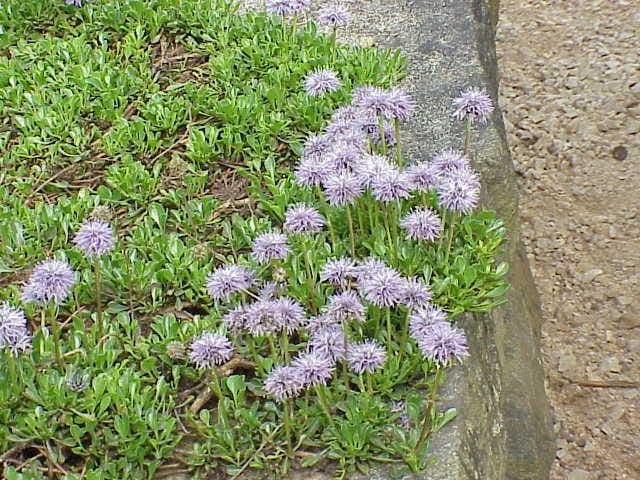
Kurt Stüber [1] / CC BY-SA 3.0, via Wikimedia Commons
Heart-leaved Globe Daisy: complete guide
Globularia cordifolia
¿Quieres ver Heart-leaved Globe Daisy: complete guide en tu jardín?
1 minuto, sin tarjeta de crédito
Overview
Heart-leaved Globe Daisy (Globularia cordifolia) is a charming alpine groundcover from South and Central Europe. This plant forms a compact mat of heart-shaped foliage topped with spherical clusters of sky-blue flowers. Ideal for rock gardens, gravel beds, and borders, it offers years of ornament with minimal effort.
If you seek alpine character with reliable bloom, this plant fulfills that wish. At gardenworld.app, we integrate Heart-leaved Globe Daisy into designs featuring striking bloom and structure.
Appearance & Bloom
Heart-leaved Globe Daisy develops into a low, densely-growing mat, 10-15 cm tall, with stiff green heart-shaped foliage. The plant spreads gradually to 30-40 cm wide. From May through July, brilliant blue flowers appear in characteristic round heads (globules). This bloom extends many weeks and creates spectacle.
After flowering, blooms produce small seedpods. Foliage remains decorative year-round.
Ideal Location
Heart-leaved Globe Daisy thrives in full sunlight, ideal on a south- or east-facing site. Minimum 7-8 hours direct daily sunlight is essential for optimal bloom and compact form. In excessive shade, the plant becomes lanky and less floriferous.
The plant appreciates good ventilation without harsh wind.
Soil
Prime requirement is excellent drainage. Heart-leaved Globe Daisy cannot tolerate waterlogging and thrives in limy, well-draining soil. A blend of 50% coarse gravel, 30% sand, and 20% garden soil is ideal. Heavy clay soils must be substantially lightened with sand and gravel.
The plant favors pH 7-8 (neutral to slightly alkaline). Add calcium carbonate to acidic soils to adjust pH.
Diseño gratis
¿Quieres ver Heart-leaved Globe Daisy: complete guide en tu jardín? Crea un diseño gratis ahora.
Watering
Once established, Heart-leaved Globe Daisy tolerates dry seasons well. Young plants benefit from regular water in their first growing season. Mature plants require minimal watering.
In very dry summers, water once every 2-3 weeks. Avoid waterlogging in all circumstances.
Pruning & Maintenance
Minimal pruning needed. Remove spent flowers to keep the plant tidy and energetic. After flowering, gently trim the plant to encourage compact growth. Remove dead foliage in autumn.
The plant requires no annual renewal; with good care it grows for years.
Maintenance Calendar
May-July: Flowering; remove spent flowers August-September: Growing period; gentle trimming possible October-April: Dormant; minimal care required
Winter Hardiness
Heart-leaved Globe Daisy is highly winter-hardy in zones 4-8, tolerant of temperatures to -18°C and below. However, the plant must overwinter dry. In very moist winter conditions, rot can occur. A layer of gravel over the plant prevents moisture excess in wet winters.
In well-drained positions, little precaution is required.
Companion Plants
Pair Heart-leaved Globe Daisy with:
- Sempervivum: Red and pink rosettes
- Saxifraga: White or pink flowers
- Dianthus alpinus: Alpine pinks in rosy tones
- Veronica: Blue or pink flowers
See gardenworld.app for compositions balancing these alpines.
Final Thoughts
Heart-leaved Globe Daisy is a solid choice for rock gardeners seeking reliable alpine bloom. With its striking blue colors and extended bloom period, it deserves prominent placement in any alpine arrangement.
Find Heart-leaved Globe Daisy at specialty alpine nurseries and garden centers in most regions.
¿Quieres ver Heart-leaved Globe Daisy: complete guide en tu jardín? Crea un diseño gratis ahora.
Sube una foto, elige un estilo y obtén un diseño fotorrealista con lista de plantas en menos de un minuto.
Más de 10.000 jardines diseñados
Sin tarjeta de crédito


Plantas similares
White Beardtongue: complete guide
Penstemon albidus
Discover white beardtongue (Penstemon albidus) - elegant perennial with white to cream flowers. Drought-resistant, perfect for prairie and dry gardens.
Longsepal Beardtongue: complete guide
Penstemon calycosus
Discover longsepal beardtongue (Penstemon calycosus) - beautiful perennial with lilac-blue flowers. For partial shade and moist soil. Ideal for naturalized.
Penstemon cusickii: complete guide
Penstemon cusickii
Discover Cusick's beardtongue, a compact alpine flowering plant with violet-pink blooms. Perfect choice for rock gardens and water-wise landscaping.