
Ivar Leidus / CC BY-SA 4.0, via Wikimedia Commons
Ground Ivy: complete guide
Glechoma hederacea
¿Quieres ver Ground Ivy: complete guide en tu jardín?
1 minuto, sin tarjeta de crédito
Overview
Ground Ivy (Glechoma hederacea), also called gill-over-the-ground, is a tenacious spreading plant from the mint family. With its heart-shaped leaves and purple flowers, it offers attractive appeal in shady corners. Native to Europe, this herb has become well-established in gardens across temperate zones.
This plant suits gardeners seeking rapid groundcover without effort. At gardenworld.app, we integrate Ground Ivy into designs as a green carpet for challenging spots.
Appearance & Bloom
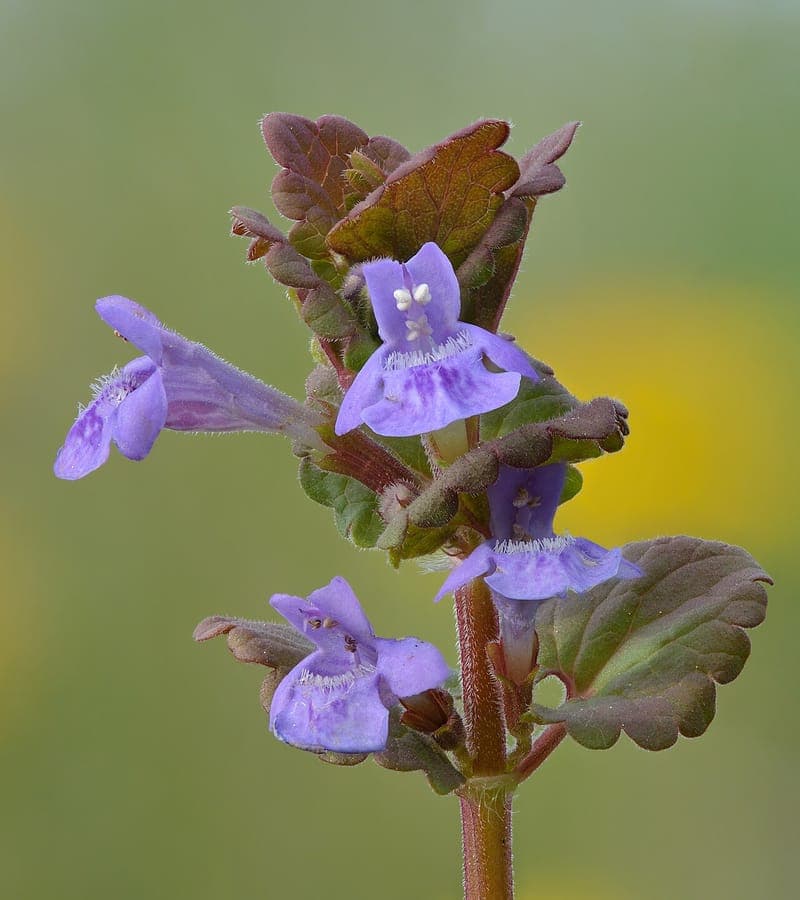
Ground Ivy forms a low, creeping mat with heart-shaped green foliage, sometimes tinged purple, especially in cooler weather. Stems spread along soil and root where they contact earth. Flowers are small, purple-blue, appearing April through May in clusters.
This plant grows compactly to 20 cm maximum height and spreads considerably sideways, ideal for groundcover applications.
Ideal Location
Ground Ivy is surprisingly flexible: it grows in full shade, part shade, and even full sun positions. For optimal compactness and foliage color, it prefers partial shade with some morning sun. In full sun, foliage can bleach somewhat.
The plant is robust in windy conditions and tolerates exposure without issue.
Soil
Ground Ivy tolerates virtually any soil type, from sand to clay. It prefers moderately fertile, well-draining soil but grows in poor earth too. pH preference is neutral to slightly acidic (pH 6-7), but it thrives even in more alkaline media.
Minimal soil preparation suffices; extensive bed preparation is unnecessary.
Watering
Once established, Ground Ivy needs minimal water. Regular watering in the first season helps roots establish well. After establishment, watering is rarely needed, even during dry periods.
In moist soils, the plant grows vigorously; in dry conditions, it grows slower but remains healthy.
Diseño gratis
¿Quieres ver Ground Ivy: complete guide en tu jardín? Crea un diseño gratis ahora.
Pruning & Maintenance
Ground Ivy demands minimal care. Trim back after flowering to encourage compact growth. In autumn, cut back tired-looking foliage. The plant heals quickly and remains healthy after pruning.
If it exceeds bounds, prune back strips. This perennial plant requires no annual removal.
Maintenance Calendar
April-May: Flowering; post-bloom trimming recommended June-September: Growing period; minimal maintenance October-March: Plant remains evergreen in mild winters; no care needed
Winter Hardiness
Ground Ivy is completely winter-hardy in zones 4-10, tolerating temperatures to -30°C. In severe winters, foliage may die back, but roots survive and the plant regrows in spring.
In mild climates, foliage remains evergreen through winter.
Companion Plants
Combine Ground Ivy with:
- English Ivy (Hedera helix): For textural variety
- Brunnera macrophylla: For larger heart-shaped leaves and blue flowers
- Helleborus: For early blooms
- Sagina subulata: For miniature texture variation
Visit gardenworld.app for ideas combining these groundcovers harmoniously.
Caution: Invasiveness
In some regions, Ground Ivy is considered invasive due to rapid spread. Check local regulations before planting. Many gardeners place it in containers or confined zones to prevent unwanted spread.
In enclosed gardens without wild area contact, this presents no problem.
Final Thoughts
Ground Ivy is a practical choice for achieving green quickly in difficult, shady spots. With minimal care and maximum tolerance, it deserves a place in every gardener's toolkit for groundcover challenges.
Find Ground Ivy at specialty garden centers and nurseries throughout most regions.
¿Quieres ver Ground Ivy: complete guide en tu jardín? Crea un diseño gratis ahora.
Sube una foto, elige un estilo y obtén un diseño fotorrealista con lista de plantas en menos de un minuto.
Más de 10.000 jardines diseñados
Sin tarjeta de crédito


Plantas similares
Apple mint (Mentha x villosa): complete guide
Mentha x villosa
Meet apple mint (Mentha x villosa): a fruity-scented kitchen herb with woolly leaves, perfect for tea and mojitos.
Salvia peyronii: complete guide
Salvia peyronii
Discover Salvia peyronii, a rare Lebanese mountain sage. Growing tips, hardiness, and companion planting for a Mediterranean gravel garden.
Bigleaf mint (Mentha x rotundifolia): complete guide
Mentha x rotundifolia
Discover bigleaf mint: cultivation, care tips, and garden uses. Learn how to grow this aromatic herb with soft, hairy leaves.