
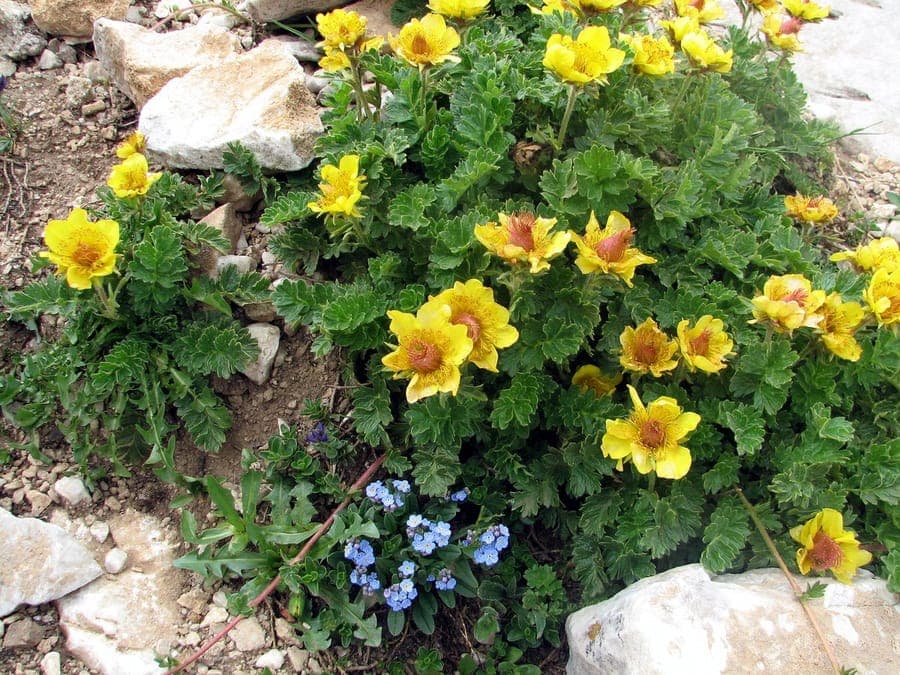
Sonja Kostevc / CC BY 2.5 si, via Wikimedia Commons
Geum reptans: complete guide
Geum reptans
¿Quieres ver Geum reptans: complete guide en tu jardín?
1 minuto, sin tarjeta de crédito
Geum reptans: Complete Guide
Overview
Geum reptans, the creeping avens, is an elegant alpine plant from the Rosaceae (rose family). This low-growing specimen is native to European mountain regions and is known for its reddish-orange to yellow flowers in summer. This is an ideal plant for alpine gardens, rock gardens, and mountain terraces.
This plant provides seasonal interest with delicate flowers and decorative seed heads. At gardenworld.app, we help you integrate this alpine gem into your garden design.
Appearance and bloom
Geum reptans forms a low, creeping mat approximately 10-15 centimeters tall. The plant has elegant pinnate leaves, deeply lobed and interesting in form, grouped in rosettes.
In July and August, thin flower stems rise above the foliage, each bearing a single yellow to orange-yellow flower. The flowers are five-petaled and characteristic of the Rosaceae with golden yellow color.
After flowering, very decorative, deep-red seed heads develop with long hairy appendages. These seed heads remain interesting for weeks and attract bird seed dispersers.
A unique feature is the creeping growth with elongated runners forming new plantlets, creating established colonies.
Ideal location
Geum reptans requires full sun to partial shade, at least four to six hours of direct sunlight. The plant grows well in lightly shaded spots, especially in very warm climates.
Select very well-drained locations on rocky ground, alpine troughs, or stone walls. The plant is very compact and perfect for rock gardens, alpine displays, and mountain terraces. Protection from strong wind is beneficial.
Soil
Geum reptans thrives in very well-draining soils. The plant prefers gritty to sandy soils, virtually dry but not too poor. A pH of 6.0 to 7.5 is ideal.
Organic matter should be minimal. This plant grows best in poor, dry soils like those found in mountain regions.
Diseño gratis
¿Quieres ver Geum reptans: complete guide en tu jardín? Crea un diseño gratis ahora.
Watering
Geum reptans requires minimal watering once established. During the first growing season, water to encourage establishment, then virtually no water needed.
Even when in containers, minimal watering. This plant is very drought-tolerant and excessive water can cause root rot.
Pruning
Geum reptans requires practically no pruning. Remove only dead leaves or damaged parts. Allow runners to grow if you want them to spread.
Maintenance calendar
Spring (March-May): Plant begins growing. Minimal water. Preparation for blooming.
Summer (June-August): Bloom period. Very minimal maintenance. Enjoy flowers and seed heads.
Autumn (September-October): Plant remains green. Minimal maintenance.
Winter (November-February): Plant remains growing. Very minimal maintenance. Winter protection in very cold climates.
Winter hardiness
Geum reptans is very cold-hardy, tolerating temperatures down to -20 degrees Celsius or lower. The plant is adapted to alpine winters.
Companion plants
Geum reptans combines beautifully with other alpine species:
- Silene acaulis (Moss Campion): Pink flowers, very compact
- Sedum: Diverse colors, similar dry preference
- Saxifraga: Diverse forms and colors, alpine-lover
- Armeria: Pink pompoms, compact growth
- Phlox subulata: Pink or purple mini-flowers
Closing thoughts
Geum reptans is an unparalleled choice for alpine gardeners. This elegant plant offers two seasons of interest: summer flowers and decorative seed heads.
Gardenworld.app can help you integrate this alpine specimen into a compelling rock garden design. Design your alpine garden today!
Want more information? Visit gardenworld.app/en for personalized garden advice!
¿Quieres ver Geum reptans: complete guide en tu jardín? Crea un diseño gratis ahora.
Sube una foto, elige un estilo y obtén un diseño fotorrealista con lista de plantas en menos de un minuto.
Más de 10.000 jardines diseñados
Sin tarjeta de crédito


Plantas similares
Siberian crab apple: complete guide
Malus x robusta
Complete guide to the Siberian crab apple (Malus x robusta): location, soil, pruning, winter hardiness and the best companion plants for your garden.
Chinese flowering crabapple (Malus x spectabilis): complete guide
Malus x spectabilis
Meet the Chinese flowering crabapple (Malus x spectabilis): a classic spring bloomer with carmine buds and pink blossom.
Potentilla crassinervia: complete guide
Potentilla crassinervia
Potentilla crassinervia, the Corsican cinquefoil, grows wild on Corsica and Sardinia's peaks. Discover how to grow this hardy alpine rock garden gem.