
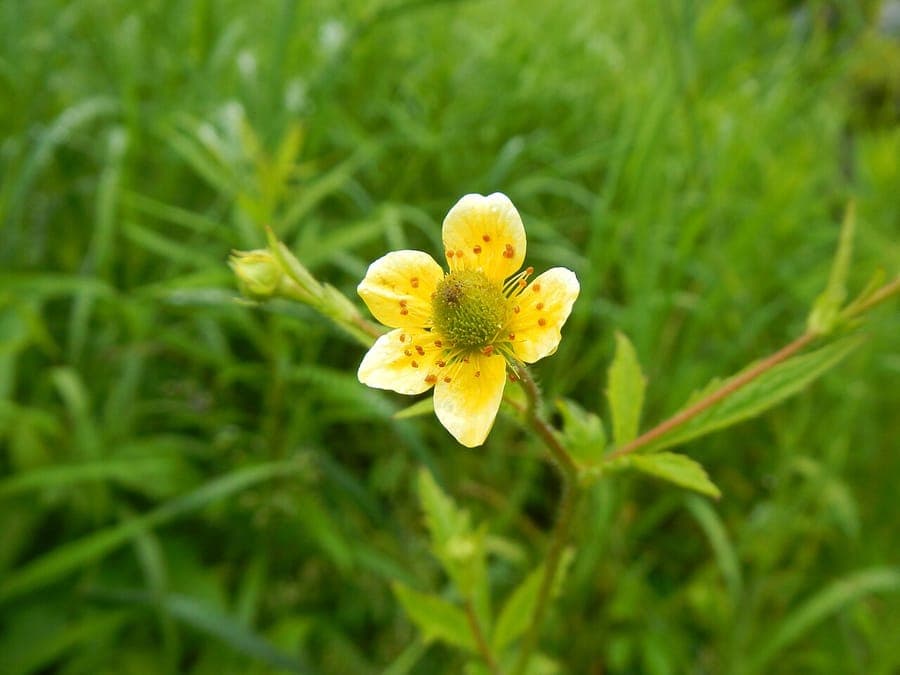
CJChapm / CC BY-SA 4.0, via Wikimedia Commons
Yellow avens: complete guide
Geum aleppicum
¿Quieres ver Yellow avens: complete guide en tu jardín?
1 minuto, sin tarjeta de crédito
Overview
Yellow avens (Geum aleppicum) belongs to the Rosaceae family and is a beautiful perennial plant characterized by its vibrant yellow flowers and attractive foliage. This plant originates from temperate climates of the Northern Hemisphere and grows easily in European gardens. With its robust growth and long flowering period, yellow avens forms a valuable element in borders, flower beds, and wildflower gardens.
Yellow avens reaches an average height of 30 to 60 centimeters, depending on growing conditions and care. The plant owes its name to the fresh yellow flowers that appear from May to August. These flowers attract bees, butterflies, and other pollinators, making yellow avens an excellent choice for ecologically responsible gardens.
Appearance and bloom
The leaves of yellow avens are deeply lobed and have a dark green color. They form an attractive rosette at the base of the plant. This leaf structure gives the plant an elegant, full appearance that remains interesting throughout the entire season.
The flowers are large, approximately 2 centimeters in diameter, with a bright yellow color. They grow in loose clusters at the ends of straight, hairy stems. After flowering, decorative seed heads form with long, red styles that remain attractive deep into autumn. These seed heads add texture and visual depth to the fall border.
Ideal location
Yellow avens grows best in full sun to partial shade. A location with at least six hours of direct sunlight per day ensures optimal flowering. In partial shade, the plant may flower less abundantly but generally grows well. Ensure the plant receives protection from strong afternoon sun in very warm climates.
Soil
This plant is not fussy about soil type but grows best in well-draining, moderately moist soil. Overly wet soil can cause root rot, so ensure good drainage. Yellow avens tolerates slightly acidic to neutral soil (pH 5.5-7.0). You can add compost or potting soil to heavy clay soils to improve drainage.
Diseño gratis
¿Quieres ver Yellow avens: complete guide en tu jardín? Crea un diseño gratis ahora.
Watering
Ensure the soil remains moist during the growing season but not waterlogged. Established plants are fairly drought-tolerant. Water when the top centimeter of soil feels dry. In hot periods, daily watering may be needed, especially for young plants. Reduce watering in autumn and winter as growth slows.
Pruning
Yellow avens requires minimal pruning. Deadhead spent flowers to encourage further blooming. In autumn, you can leave the seed heads for winter interest. In early spring, prune to remove old, damaged growth and keep the plant in shape.
Maintenance calendar
Spring: Plant or transplant in March-April. Begin regular watering. Summer: Deadhead spent flowers and maintain watering. Autumn: Leave decorative seed heads. Reduce watering. Winter: Minimal maintenance needed. Mulch to protect roots.
Winter hardiness
Yellow avens is fully hardy in temperate climates from Northern to Southern Europe. The plant tolerates temperatures down to -15-20C without problems. In very cold regions, some mulching is recommended for extra protection.
Companion plants
Yellow avens combines beautifully with:
- Salvia (sage) - nice color contrasts
- Nepeta (catmint) - blooms simultaneously
- Aquilegia (columbine) - interesting leaf shape
- Knautia - similar growth pattern
- Heuchera - attractive foliage variation
Closing
Yellow avens is a reliable, easy perennial for every gardener. With its long flowering period, decorative seed heads, and beautiful foliage, it offers season-long interest. Plant yellow avens in groups of at least three for maximum border effect. For more garden inspiration and plant combinations, visit gardenworld.app/nl or gardenworld.app/en.
¿Quieres ver Yellow avens: complete guide en tu jardín? Crea un diseño gratis ahora.
Sube una foto, elige un estilo y obtén un diseño fotorrealista con lista de plantas en menos de un minuto.
Más de 10.000 jardines diseñados
Sin tarjeta de crédito


Plantas similares
Siberian crab apple: complete guide
Malus x robusta
Complete guide to the Siberian crab apple (Malus x robusta): location, soil, pruning, winter hardiness and the best companion plants for your garden.
Chinese flowering crabapple (Malus x spectabilis): complete guide
Malus x spectabilis
Meet the Chinese flowering crabapple (Malus x spectabilis): a classic spring bloomer with carmine buds and pink blossom.
Potentilla crassinervia: complete guide
Potentilla crassinervia
Potentilla crassinervia, the Corsican cinquefoil, grows wild on Corsica and Sardinia's peaks. Discover how to grow this hardy alpine rock garden gem.