
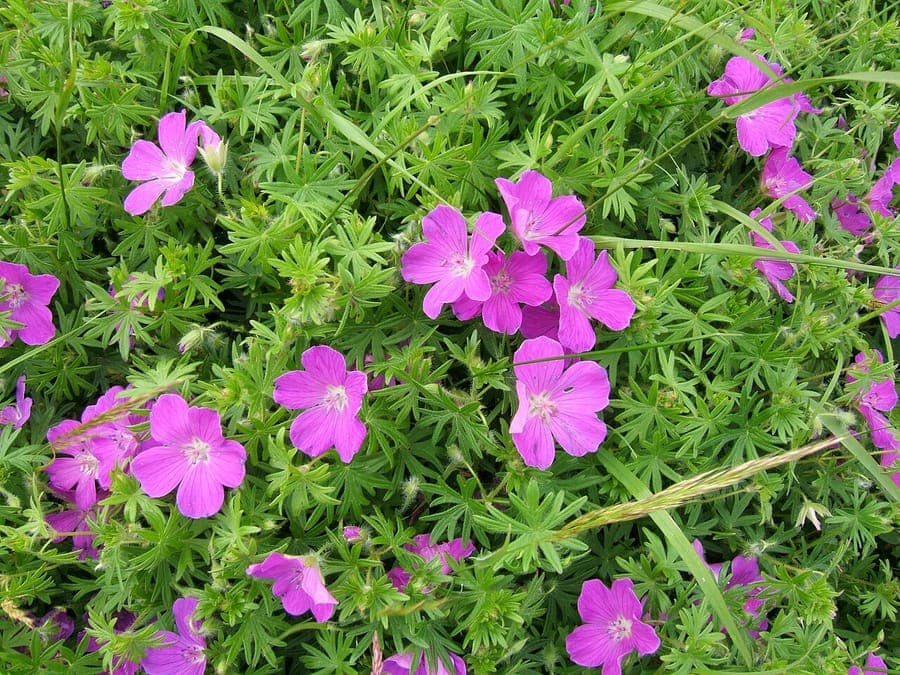
MPF / CC BY-SA 4.0, via Wikimedia Commons
Bloody cranesbill: complete guide
Geranium sanguineum
¿Quieres ver Bloody cranesbill: complete guide en tu jardín?
1 minuto, sin tarjeta de crédito
Overview
Bloody cranesbill (Geranium sanguineum) is a stunning, sturdily built perennial from Europe to the Caucasus distinguished by its intense magenta-pink flowers and long bloom period. Growing naturally on dry slopes and heathland, this plant thrives in full sun and tolerates drought well. With its rich flower color and robust character, bloody cranesbill brings tireless color to sunny gardens from May through October.
In temperate gardens, bloody cranesbill is a classic for sunny perennial borders, rock gardens and dry corners. The plant forms dense groundcover mats through its strong growth and tolerates neglect better than many other garden plants.
Appearance & bloom cycle
Bloody cranesbill reaches heights of 30-50 cm with a spread of 60-80 cm. The plant grows compactly, forming full, densely-packed mats. Leaves are small, finely cut and deeply lobed, often with attractive red-brown fall coloring.
Flowers are the defining feature. Large, approximately 2-2.5 cm in diameter, appearing in countless clusters. Flower color is intense magenta to nearly rose-red, with darker veins accentuating the center. Many cultivars have white eyes. Bloom is unusually long: May through October, sometimes to first frost.
Popular cultivars:
- 'Max Frei': bright magenta
- 'Elsbeth': more pink
- 'Album': white with pink eyes
- 'Striatum': white with pink stripes
Ideal location
Bloody cranesbill clearly prefers full sun. Choose a location with at least 6-8 hours of direct sunlight daily. The plant also tolerates slightly moister soils than many other cranesbills.
This plant is excellent for borders, as underplanting beneath roses and other shrubs, and as groundcover for difficult dry spots. Due to its compact growth and weather-resistant character, it also works well in coastal gardens where salt and wind are normal.
Soil requirements
Bloody cranesbill is very adaptable to diverse soils. It thrives in moderate to poor ground and even tolerates dry, sandy soils well. Too much feeding leads to excessive leafiness. pH can be neutral to slightly alkaline (pH 6.0-8.0).
Optimal are well-draining soils. In clay ground add sand or coarse material. Once established extremely drought-tolerant - ideal for Mediterranean or dry gardens.
Watering
Bloody cranesbill is drought-tolerant after establishment. Water regularly in the first growing season, thereafter self-sufficient. Once established water only during extremely dry periods.
From May through October during bloom water regularly for sustained flowering, although it blooms even without extra water. Excessive water promotes leaf growth at the expense of flowers.
Diseño gratis
¿Quieres ver Bloody cranesbill: complete guide en tu jardín? Crea un diseño gratis ahora.
Pruning
Bloody cranesbill tolerates cutting back well. In August-September, following peak bloom, you can cut the plant back to 20-25 cm to encourage bushier growth and secondary bloom. This often extends the bloom period through October.
In spring (March) remove dead stems. Some naturally fall off after colder winters.
Maintenance calendar
March-April: Remove dead material, minimal feeding May-June: Peak bloom, water during dry spells June-July: Continuous flowering August-September: Cut back for secondary bloom September-October: Fall coloring and secondary bloom November-February: Plant withdraws
Winter hardiness
Bloody cranesbill is extremely hardy, tolerating temperatures to -25°C without difficulty. In temperate gardens it's absolutely frost-resistant. The plant withdraws in winter, but new growth appears early in spring.
No special winter protection needed. In very wet winters, drainage problems can occur, but this is rare in well-draining soils.
Companion plants
Bloody cranesbill combines well with:
- Rose (Rosa): colored combinations, shrub support
- Sage (Salvia): simultaneous bloom, different foliage form
- Dianthus (pink): same sunny preference
- Nepeta (catmint): blue-purple tones create nice contrast
- Lavender (Lavandula): Mediterranean character
Purchasing advice
Bloody cranesbill is very commonly available in garden centers year-round. Costs run around EUR 3-5 per plant. Best planting times are April-May or September-October.
The plant reaches full size in two growing seasons. For borders use 2-3 plants per square meter for dense coverage effect. For groundcover purposes up to 5-6 plants per square meter.
What gardenworld.app advises
When designing sunny borders and dry gardens, gardenworld.app helps with planting recommendations. Upload your garden and specify you're seeking long bloom and drought tolerance - gardenworld.app suggests interesting combinations with bloody cranesbill.
Data from gardenworld.app designs shows bloody cranesbill scoring 9/10 satisfaction in sunny borders, particularly valued for its tireless bloom and resilience.
Closing
Bloody cranesbill is a classic that deserves greater use in modern gardens. With its intense magenta-pink flowers, long bloom period and robust character, it brings tireless color and texture to sunny gardens without constant maintenance. Perfect for dry, full-sun situations and as groundcover in difficult corners. A true workhorse plant for those seeking sustained bloom without fuss.
¿Quieres ver Bloody cranesbill: complete guide en tu jardín? Crea un diseño gratis ahora.
Sube una foto, elige un estilo y obtén un diseño fotorrealista con lista de plantas en menos de un minuto.
Más de 10.000 jardines diseñados
Sin tarjeta de crédito


Plantas similares
Pelargonium acetosum: complete guide
Pelargonium acetosum
Discover the Sorrel-leaf Geranium: a South African plant with aromatic foliage. Perfect for containers and warm locations. Learn cultivation and care.
Erodium foetidum: complete guide
Erodium foetidum
Rock stork's-bill is a delicate alpine plant with purple flowers and fine foliage. Learn how to grow this Mediterranean charmer in your front garden.
Pelargonium crithmifolium: complete guide
Pelargonium crithmifolium
Discover Samphire-leaf pelargonium: an exotic South African geranium with distinctive foliage. Growing tips, care advice and garden inspiration.