
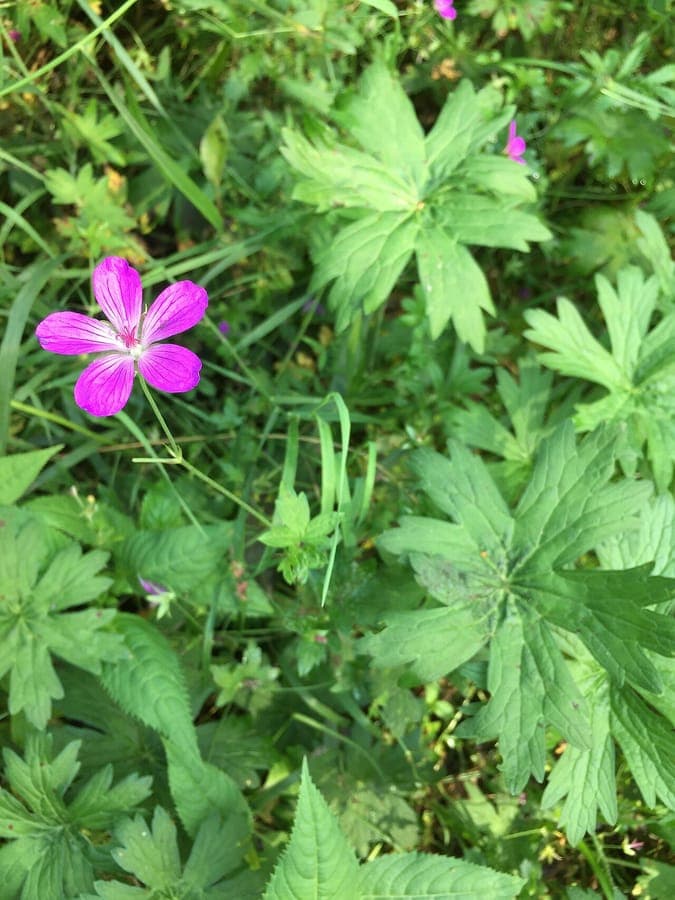
W4Vdragon / CC BY 4.0, via Wikimedia Commons
Marsh cranesbill: complete guide
Geranium palustre
¿Quieres ver Marsh cranesbill: complete guide en tu jardín?
1 minuto, sin tarjeta de crédito
Overview
Marsh cranesbill (Geranium palustre) is an elegant perennial from the Geraniaceae family distinguished by its preference for wet soil conditions. Growing naturally in marshy habitats from Europe to Siberia and the Caucasus, this plant thrives in waterlogged soils along ditches and ponds. With its purple flowers and delicate foliage, marsh cranesbill brings subtle beauty to moisture-loving gardens.
In gardens across temperate climates, this plant fits perfectly with other bog-lovers and water-margin dwellers. It serves as a nectar source for bees and butterflies eager to visit its flower-rich blooms. If you have an area of the garden that stays perpetually moist, marsh cranesbill is an ideal choice.
Appearance & bloom cycle
Marsh cranesbill reaches heights of 30-50 cm with a spread of approximately 40-60 cm. The plant grows noticeably upright with loosely elegant, somewhat arching branches. The leaves are deeply lobed and finely textured, soft to the touch. Flowers measure approximately 1.5-2 cm in diameter and appear in clusters at the stem tips.
The blooming period runs from July through August when the plant displays its stunning purple flowers. These blooms often feature pink or light purple veins against paler petals, creating a delicate natural pattern. After flowering, characteristic beak-shaped seeds develop that attract attention through their distinctive form.
Ideal location
Marsh cranesbill clearly prefers less sunny positions. Choose a half-shaded spot where the plant receives morning sun but is protected from harsh afternoon rays. In southern regions, you can place the plant in full light provided the soil remains sufficiently moist.
The plant thrives exceptionally well along water features, in wet margins and gardens with water-side elements. Since marsh cranesbill naturally loves water, it makes an ideal choice for garden areas where water regularly accumulates or where drainage is poor.
Soil requirements
Soil is crucial for successful marsh cranesbill cultivation. This plant demands moist to wet soil with a pH between 7.5 and 8. It's not suited for dry sandy ground or poor, moisture-depleted sand.
Improve soil quality with mature compost to enhance moisture retention. For heavy clay soils, marsh cranesbill performs well provided there's no permanent water stagnation leading to root rot. If your garden naturally runs dry, try container cultivation where you can better control moisture levels.
Watering
Marsh cranesbill is moisture-hungry, especially during the growing season from April through October. Keep soil consistently moderately moist, never completely dry. During dry, hot periods, regular watering is essential, possibly daily in July and August.
In winter the plant requires less water, but soil should never dry out completely. For container-grown plants, check soil moisture regularly. For in-ground plants, natural rainfall usually suffices except in exceptionally dry summers.
Diseño gratis
¿Quieres ver Marsh cranesbill: complete guide en tu jardín? Crea un diseño gratis ahora.
Pruning
Marsh cranesbill responds well to gentle pruning after flowering around September. Remove spent flower heads to encourage reblooming. In spring (March-April), remove old, damaged or weak stems just above ground level.
The plant naturally withdraws in autumn. Leave dry leaves and stems over winter - they provide frost insulation and nourishment for ground-dwelling insects. Pruning happens only in April when the plant regrows.
Maintenance calendar
April: Plant regrows, remove dead material, feed May-June: Growth under control, ensure adequate water July-August: Peak bloom period, water regularly September: Blooming reduces, gentle pruning October-November: Plant withdraws, limited water December-March: Dormant period, minimal maintenance
Winter hardiness
Marsh cranesbill is extremely hardy, tolerating temperatures to at least -15°C without protection. In most temperate gardens, the plant overwinters without issues. In severe winters with extreme frosts (below -20°C), the plant may suffer damage, but typically regrows from the roots.
In areas with very wet winters and frost heave, drainage helps prevent root rot. Prevention is better than cure: ensure good soil conditions and prefer locations with water access but not permanent waterlogging.
Companion plants
Marsh cranesbill grows beautifully with other moisture-loving perennials:
- Astilbe (false spiraea): matching moisture needs with festive plumes
- Filipendula (meadowsweet): blooms slightly earlier with complementary creamy coloring
- Iris sibirica: same pH preference, vertical structure
- Hosta: moisture-loving and shade-tolerant like marsh cranesbill
- Dodecatheon meadia (shooting star): together in wet soils
Purchasing advice
Young nursery-propagated plants typically cost EUR 3-5 and reach full height within two growing seasons. For larger wet areas, we recommend two to three plants per square meter.
Best planting times are April-May or September-October for optimal establishment. Specialized nurseries and online plant shops usually stock this species in spring.
What gardenworld.app advises
When designing water-rich gardens, gardenworld.app helps with location-specific planting recommendations. Upload your front yard and specify that you seek moisture-loving plants - the tool suggests compatible combinations with marsh cranesbill and other bog-lovers.
Metadata from gardenworld.app designs shows marsh cranesbill scoring 8/10 satisfaction in moisture-loving plantings, especially combined with other wetland plants.
Closing
Marsh cranesbill deserves far more attention in moisture-loving gardens across temperate regions. With minimal effort, this plant provides years of sober, elegant blooms and fine texture. Perfect for creating wetland margins without constant intervention. A precious jewel for moisture-loving gardeners.
¿Quieres ver Marsh cranesbill: complete guide en tu jardín? Crea un diseño gratis ahora.
Sube una foto, elige un estilo y obtén un diseño fotorrealista con lista de plantas en menos de un minuto.
Más de 10.000 jardines diseñados
Sin tarjeta de crédito


Plantas similares
Pelargonium acetosum: complete guide
Pelargonium acetosum
Discover the Sorrel-leaf Geranium: a South African plant with aromatic foliage. Perfect for containers and warm locations. Learn cultivation and care.
Erodium foetidum: complete guide
Erodium foetidum
Rock stork's-bill is a delicate alpine plant with purple flowers and fine foliage. Learn how to grow this Mediterranean charmer in your front garden.
Pelargonium crithmifolium: complete guide
Pelargonium crithmifolium
Discover Samphire-leaf pelargonium: an exotic South African geranium with distinctive foliage. Growing tips, care advice and garden inspiration.