
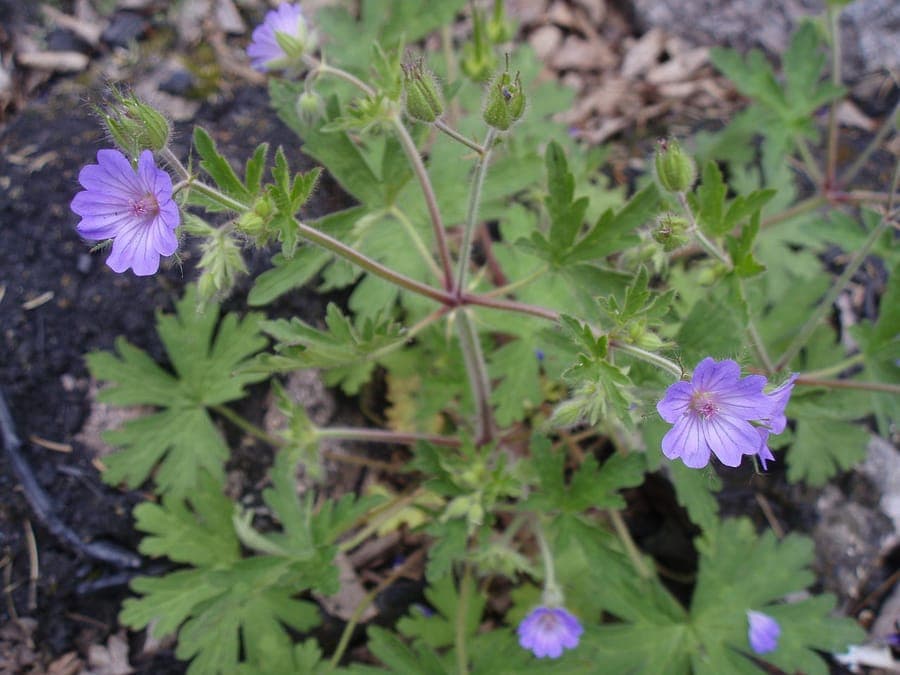
Lotta Risberg / CC BY-SA 4.0, via Wikimedia Commons
Geranium bohemicum: complete guide
Geranium bohemicum
¿Quieres ver Geranium bohemicum: complete guide en tu jardín?
1 minuto, sin tarjeta de crédito
Overview
Geranium bohemicum, commonly known as Bohemian Cranesbill, is a delightful perennial that has been adorning gardens since 1756. This low-growing plant originates from Central European regions and makes an excellent ground cover thanks to its compact habit and lengthy blooming period. The plant thrives in temperate climates and offers a charming splash of purple color from late spring through autumn.
While many gardeners overlook this gem, Bohemian Cranesbill deserves far greater recognition. It's an ideal choice for those seeking a low-maintenance garden filled with abundant flowers and attractive forms. The plant is robust, winter-hardy, and attracts beneficial insects essential for any vibrant garden.
Appearance and Flowering
Bohemian Cranesbill develops a compact, mounding habit, typically reaching 30-40 centimeters in height. The plant creates dense foliage with beautifully dissected leaves resembling those of maples. These deeply divided leaves provide attractive texture and remain decorative throughout the growing season.
The flowers are the true stars of this plant. They appear in abundance from May through September, displaying a gorgeous purple hue often accented with darker veining. The petals are finely frilled, giving each bloom a delicate appearance. A single plant can produce hundreds of flowers, creating a spectacular floral display.
After flowering, the plant develops attractive seed heads that remain ornamental for weeks and perform beautifully in dried flower arrangements.
Ideal Location
Bohemian Cranesbill performs best in bright, sunny locations. Ideally, the plant should receive at least six hours of direct sunlight daily. A completely sunny spot is perfect and encourages maximum flowering throughout the season.
The plant can also grow in partial shade, though flowering will be somewhat reduced. Avoid heavily shaded locations, as the plant will struggle and produce fewer blooms in such conditions.
This versatile perennial works well in garden borders, on patios in containers, and as edging alongside pathways. Its low stature makes it perfect for softening the bases of taller shrubs and roses.
Soil Requirements
Bohemian Cranesbill is not fussy regarding soil composition. The plant grows on virtually any well-draining garden soil. Waterlogged conditions can be problematic, so ensure adequate drainage.
For best results, incorporate compost when planting to improve soil structure and give the plant a healthy start. A pH between 7 and 7.5 is ideal, though the plant tolerates slightly acidic soils reasonably well.
If your soil is heavy clay, add coarse sand and organic matter to improve aeration. This prevents moisture accumulation during winter months.
Diseño gratis
¿Quieres ver Geranium bohemicum: complete guide en tu jardín? Crea un diseño gratis ahora.
Watering
Once established, Bohemian Cranesbill exhibits excellent drought tolerance. Young plants, however, require regular watering, especially during dry periods. Water preferably in early morning or evening.
During the growing and flowering season in summer, regular watering is important. Check the top inch of soil; if dry, it's time to water. Heavy rainstorms usually provide sufficient moisture.
After flowering, you can reduce watering frequency. During winter, the plant requires minimal water unless prolonged drought occurs.
Pruning and Maintenance
Bohemian Cranesbill requires minimal pruning. Under normal conditions, the plant essentially maintains itself. After flowering, deadhead spent flowers to encourage additional blooming.
If the plant becomes overly exuberant, light pruning in early spring promotes branching and creates a fuller plant. Remove any dead wood and damaged foliage as needed.
An annual application of compost or balanced flower fertilizer provides the energy for robust growth. This typically provides sufficient nutrients for the entire season.
Maintenance Calendar
In early spring, remove dead wood and apply light feeding. April through May is ideal for planting new specimens. May through September encompasses the flowering period, during which regular maintenance creates the best visual impact.
After flowering in October, you can cut back the plant and prepare for winter dormancy. November and December are quiet months requiring minimal intervention.
Winter Hardiness
Bohemian Cranesbill is reliably hardy in temperate climates. In the UK and northern regions, the plant overwinters outdoors without protection. Only during severe winters below -15 degrees Celsius might minor frost damage occur.
Ensure good drainage in autumn to prevent waterlogging. Dead leaves can serve as natural mulch, providing extra winter protection. In exceptionally harsh climates, a light leaf mulch offers additional insulation.
The plant tolerates snow well and will vigorously regrow in spring.
Companion Plants
Bohemian Cranesbill pairs beautifully with other low-growing perennials such as Alchemilla mollis (Lady's Mantle), Stachys byzantina (Lamb's Ears), and various Salvias. Beneath roses, it creates an attractive underplanting.
With other flowering ground covers like Phlox subulata or various sedums, you'll achieve fascinating color combinations. White-flowering plants like Arabis amplify the purple color beautifully.
For structural interest, combine with suitable ornamental grasses. Miscanthus 'Kleine Silbermine' or Festuca glauca provide lovely contrasts.
Conclusion
Bohemian Cranesbill deserves far greater recognition among gardeners. As a low-maintenance, abundantly flowering perennial with attractive foliage and color, it's a valuable addition to any garden. For quality plants and expert gardening advice, visit your local nursery where staff can help you select the best specimens.
For more garden inspiration and design ideas, visit gardenworld.app, where you can access free design tools for your outdoor space. With proper planning and knowledge of plants like Bohemian Cranesbill, you'll create a beautiful, sustainable landscape that brings joy for years to come.
¿Quieres ver Geranium bohemicum: complete guide en tu jardín? Crea un diseño gratis ahora.
Sube una foto, elige un estilo y obtén un diseño fotorrealista con lista de plantas en menos de un minuto.
Sin tarjeta de crédito


Plantas similares
Pelargonium acetosum: complete guide
Pelargonium acetosum
Discover the Sorrel-leaf Geranium: a South African plant with aromatic foliage. Perfect for containers and warm locations. Learn cultivation and care.
Erodium foetidum: complete guide
Erodium foetidum
Rock stork's-bill is a delicate alpine plant with purple flowers and fine foliage. Learn how to grow this Mediterranean charmer in your front garden.
Pelargonium crithmifolium: complete guide
Pelargonium crithmifolium
Discover Samphire-leaf pelargonium: an exotic South African geranium with distinctive foliage. Growing tips, care advice and garden inspiration.