
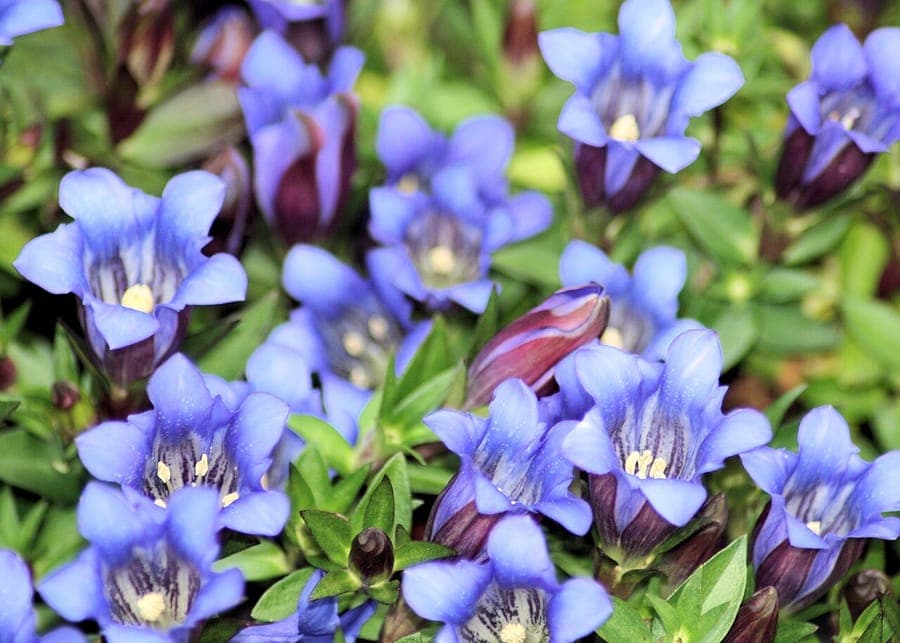
~~ / CC BY-SA 3.0, via Wikimedia Commons
Gentiana scabra: complete guide
Gentiana scabra
¿Quieres ver Gentiana scabra: complete guide en tu jardín?
1 minuto, sin tarjeta de crédito
Overview
Gentiana scabra, known as Japanese autumn gentian or rough gentian, is an enchanting alpine plant naturally occurring in mountainous regions from southeastern Siberia to Japan and eastern China. This species belongs to the gentian family (Gentianaceae) and is particularly celebrated for its spectacular deep blue flowers that appear in late summer and autumn.
This alpine treasure is a favorite among alpine gardeners for its hardiness and magnificent flowering period. The plant grows wild on rocky mountain slopes and alpine meadows at elevations of 1000 to 3000 meters, indicating exceptional suitability for cooler climates.
Appearance and blooming
Gentiana scabra is a compact, herbaceous plant typically reaching 15 to 40 centimeters tall. The plant forms dense rosettes of elongated, lance-shaped leaves displaying dark green coloration. The foliage is somewhat rough to the touch, referencing the species name "scabra".
The flowers of this species are absolutely spectacular. From August through October, long, trumpet-shaped blooms appear in deep indigo-blue coloration, sometimes featuring fine grayish-white stripes in the flower throat. The flowers grow in dense clusters at stem tips, creating a stunning display during peak bloom. This represents one of nature's rarest and most intense blue flowers among alpine plants.
Ideal location
Gentiana scabra thrives in positions receiving full sun to light shade. The plant prefers a minimum of four to five hours of daily sunlight. A north or southeast-facing location proves ideal, providing consistent light without excessive midday heat.
Position Gentiana scabra where drainage is excellent, as stagnant water is catastrophic for this alpine species. In alpine gardens or rock gardens, it makes a perfect mid-sized specimen. Place it where you regularly pass to fully appreciate the autumn flowering display.
Soil requirements
Gentiana scabra grows in well-draining, moderately acidic soil. A pH between 5.5 and 6.5 proves ideal. The plant cannot tolerate waterlogged conditions and prefers sandy or sandy-loam soil. Heavy clay soils must be avoided.
Add gritty material and sand to heavy soils to improve drainage. A mixture of alpine potting soil with additional perlite or horticultural grit works excellently. Organic matter should be kept minimal, as the plant thrives in fairly poor soils in its native habitat.
Diseño gratis
¿Quieres ver Gentiana scabra: complete guide en tu jardín? Crea un diseño gratis ahora.
Watering
Once well-established, Gentiana scabra requires moderate watering. Water regularly during the growing season (spring and summer) to maintain moist but not waterlogged soil. Avoid overhead watering, which can wet foliage and promote fungal infections.
During winter dormancy, significantly reduce watering. Ensure well-draining soil rapidly removes excess moisture.
Pruning
Gentiana scabra requires minimal pruning. Remove only dead flowers and dead leaves as you notice them. This encourages further flowering and helps maintain compact form. Following flowering in October/November, you may remove withered stems.
This plant benefits from cautious, limited pruning rather than heavy cutback.
Maintenance calendar
March to April: Growing season begins; ensure regular watering. May to July: Active growth; apply light fertilizer. August to October: Flowering period; water regularly. November to February: Dormancy; minimal care.
Winter hardiness
Gentiana scabra is completely winter-hardy down to approximately minus 25 degrees Celsius. This makes it highly suitable for Dutch and Belgian gardens, even in colder regions. The plant survives harsh winters without any protective measures.
The primary consideration is ensuring excellent winter drainage. Heavy winter snow or ice can cause significant damage in very wet conditions. Plant on raised beds or steep slopes for optimal winter drainage.
Companion plants
Gentiana scabra combines beautifully with other alpine plants including edelweiss, phlox, silene, and alpine forget-me-nots. Plant in groups of odd numbers (3 or 5) for optimal effect. Combine with gray-foliaged alpines for excellent color contrast.
Rocky environments, scree gardens, and alpine troughs are perfect locations for this species. Low evergreen dwarf shrubs provide useful background.
Conclusion
Gentiana scabra is a true jewel for those creating alpine gardens. With its deep blue autumn flowers, it offers unique color when most other plants are fading. This plant requires care and patience but rewards the gardener with years of magnificent blooms. Discover this rare mountain beauty in your garden.
Available at gardenworld.app - your alpine botanical guide!
¿Quieres ver Gentiana scabra: complete guide en tu jardín? Crea un diseño gratis ahora.
Sube una foto, elige un estilo y obtén un diseño fotorrealista con lista de plantas en menos de un minuto.
Más de 10.000 jardines diseñados
Sin tarjeta de crédito


Plantas similares
Branched gentianella: complete guide
Gentianella ramosa
Full growing guide for Gentianella ramosa, the branched Alpine gentianella of the SW Alps - location, soil, watering, winter care and companion plants.
Spiked centaury: complete guide
Schenkia spicata
Full growing guide for Schenkia spicata (spiked centaury): sunny position, dry soil, bloom season and garden companions.
Narrow-leaf gentian: complete guide
Gentiana angustifolia
Narrow-leaf gentian growing guide: intense blue trumpet flowers in May-July on well-drained limestone. Full cultivation tips.