
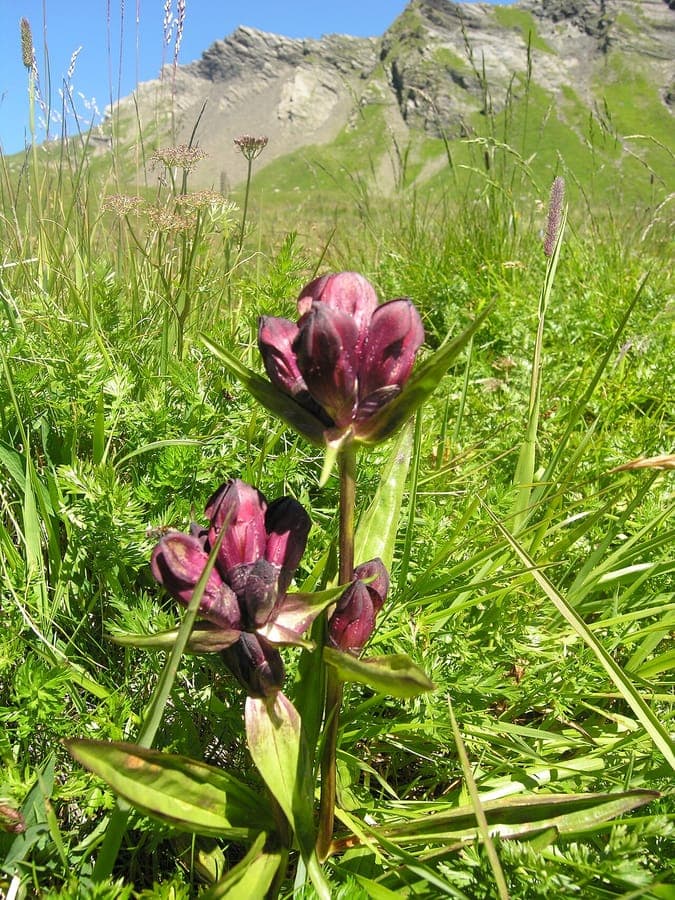
Audrius Meskauskas (Audriusa) / CC BY-SA 3.0, via Wikimedia Commons
Gentiana purpurea: complete guide
Gentiana purpurea
¿Quieres ver Gentiana purpurea: complete guide en tu jardín?
1 minuto, sin tarjeta de crédito
Overview
Gentiana purpurea, better known as purple gentian, is a spectacular mountain perennial from the gentian family (Gentianaceae). This plant is native to southern Norway and central Europe, from France through Italy and Switzerland. The plant is famous for its bold purple to dark-pink flowers that grow vertically from the stems, which is unusual for gentians.
Appearance & Bloom
Purple gentian grows to approximately 40-80 cm in height with a spread of 25-35 cm. The plant forms dense clumps of upright stems with lance-shaped leaves. The flowers are the highlight - small to medium-sized trumpets in various red and purple shades, from deep wine-red to violet. These flowers grow in vertical clusters along the stems. The flowering period is July to August. The plant has a strong, architectural presence.
Ideal Location
Purple gentian grows best in full sun to partial shade. In cooler mountain regions, it thrives in full sun; in warmer climates, preferably with afternoon shade. The plant loves open mountain meadows, alpine borders, and waterside plantings. It is ideal for raised beds and alpine gardens where its vertical structure can be admired.
Soil
This plant feels at home in well-draining soil with lots of organic matter and some sand. It grows well in acidic to neutral soil (pH 4.5-7). Unlike many alpine gentians, purple gentian thrives better in more moist soil. Good drainage is however crucial. Add coarse sand and small stones to improve structure.
Watering
Once established, purple gentian needs regular water, especially during the growing season (April-May) and flowering period (July-August). Ensure the soil remains moist without becoming waterlogged. During dry periods, daily watering may be needed. After flowering, watering can gradually decrease, although the plant always prefers being somewhat moister than typical drought-loving alpines.
Diseño gratis
¿Quieres ver Gentiana purpurea: complete guide en tu jardín? Crea un diseño gratis ahora.
Pruning
Purple gentian requires minimal pruning. Spent flowers can be removed along the stems to tidy the appearance. In spring, dead stems can be completely removed. If the plant sets too much seed and spreads, flowers can be removed before seed set.
Maintenance Calendar
April: Growth begins. Plant check for damage. May: Stems grow quickly. Water regularly. June: Flowering begins. Moisture remains crucial. July-August: Peak flowering. Water regularly. Remove spent flowers. August-September: Flowering ends. Seed set begins. September-October: Growth slows. Gradually reduce water. October-November: Stems die back. Plant preparation for dormancy. December-February: Winter dormancy. Minimal watering.
Winter Hardiness
Purple gentian is very winter-hardy (USDA zone 3-7) and survives harsh winters without protection. The plant however thrives better in temperate mountain climates than in extremely hot or dry weather. In very warm regions, it may struggle.
Companion Plants
Purple gentian grows well alongside other moisture-loving alpine plants:
- Primula (primrose) - for yellow accents
- Veratrum (false hellebore) - for architectural green
- Trollius (globeflower) - for yellow flowers
- Caltha (marsh marigold) - for early yellow
- Cardamine (cuckooflower) - for soft purple
Purple gentian is a spectacular choice for advanced alpine gardeners. For more plant combinations and garden inspiration, visit gardenworld.app. Find more about alpine gardens and high-altitude plantings at gardenworld.app.
¿Quieres ver Gentiana purpurea: complete guide en tu jardín? Crea un diseño gratis ahora.
Sube una foto, elige un estilo y obtén un diseño fotorrealista con lista de plantas en menos de un minuto.
Más de 10.000 jardines diseñados
Sin tarjeta de crédito


Plantas similares
Branched gentianella: complete guide
Gentianella ramosa
Full growing guide for Gentianella ramosa, the branched Alpine gentianella of the SW Alps - location, soil, watering, winter care and companion plants.
Spiked centaury: complete guide
Schenkia spicata
Full growing guide for Schenkia spicata (spiked centaury): sunny position, dry soil, bloom season and garden companions.
Narrow-leaf gentian: complete guide
Gentiana angustifolia
Narrow-leaf gentian growing guide: intense blue trumpet flowers in May-July on well-drained limestone. Full cultivation tips.