
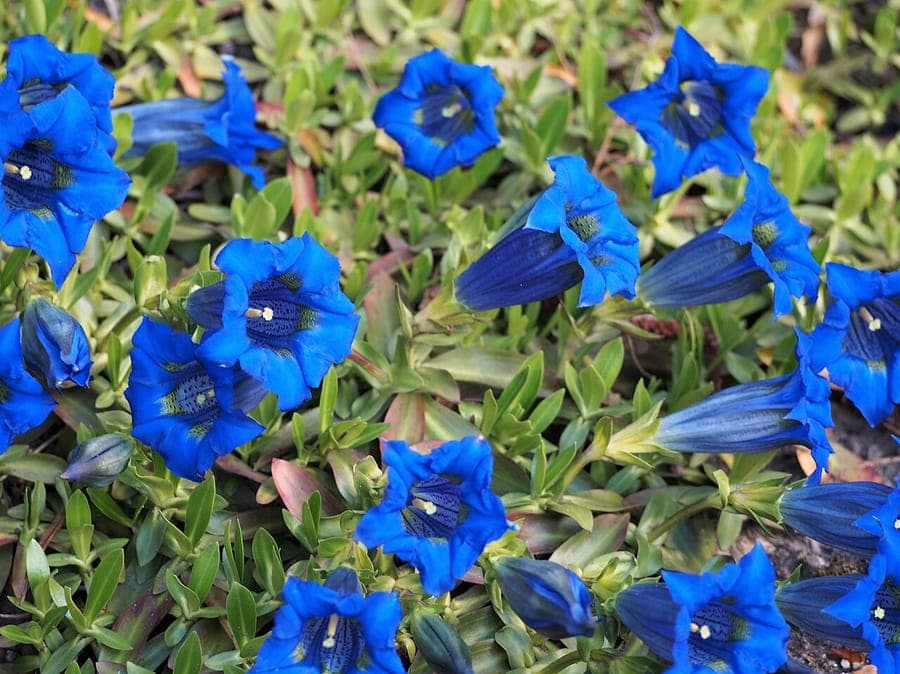
Agnieszka Kwiecień, Nova / CC BY-SA 4.0, via Wikimedia Commons
Gentiana acaulis: complete guide
Gentiana acaulis
¿Quieres ver Gentiana acaulis: complete guide en tu jardín?
1 minuto, sin tarjeta de crédito
Overview
Gentiana acaulis, better known as stemless gentian or trumpet gentian, is a compact alpine perennial from the gentian family (Gentianaceae). This plant is native to mountain regions from northeastern Spain through the Alps, central Italy, and the Carpathians. In gardens, it is famous for its spectacular deep-blue trumpet flowers that open close to the ground.
Appearance & Bloom
Stemless gentian is very compact and forms dense mats of only 5-10 cm height with a spread of 15-30 cm. The dark green, lance-shaped leaves remain close to the ground. The flowers are the highlight - large, deep-blue trumpets of 4-5 cm long that grow directly from the leaf rosette, without true stems. The flowering period is May to June, making this plant highly valuable in the spring landscape. Bees are very attracted to these flowers.
Ideal Location
Stemless gentian grows best in full sun to lightly filtered shade. The plant loves open spots on rocky slopes and alpine meadows. In lower gardens, it performs better in partial shade, especially in warm areas. The plant is ideal for rock gardens, alpine troughs, and raised beds where drainage is perfect.
Soil
This plant requires very well-draining soil with lots of organic matter. A mixture of rocks, gravel, sand, and compost works best. The plant feels at home in acidic to neutral soil (pH 4-5.5). Heavy clay soil is absolutely unsuitable. Excellent drainage is critical - waterlogging will certainly kill the plant.
Watering
Once established, stemless gentian is fairly self-sufficient. During the growing season (April-May), water regularly so the soil remains moist but not waterlogged. After flowering, watering can gradually decrease. During the growing season, the soil should never dry out completely.
Diseño gratis
¿Quieres ver Gentiana acaulis: complete guide en tu jardín? Crea un diseño gratis ahora.
Pruning
Stemless gentian requires no pruning. Dead or damaged leaves can be carefully removed. If the plant becomes too large or dies back in sections, the entire mat can be removed and replaced. This happens rarely in well-maintained gardens.
Maintenance Calendar
March: Plant check. Verify drainage; clear frost damage. April: Growth begins. Check regularly for moisture. May: Flowering begins. Peak bloom mid-month. June: Flowering ends. Seed set begins. July-August: Growing season. Opportunity for careful maintenance. September: Growth slows. Less watering. October-November: Rest period begins. Minimal watering. December-February: Winter dormancy. Plant sleeps beneath snow.
Winter Hardiness
Stemless gentian is very winter-hardy (USDA zone 3-7) and survives harsh winters without protection. The plant tolerates frost well due to its low growth habit. In warm areas where these alpine plants struggle, additional shade and moisture can help.
Companion Plants
Stemless gentian grows well alongside other alpine plants demanding similar conditions:
- Saxifraga (saxifrages) - for white accents
- Silene (catchfly) - for pink tints
- Phlox subulata - for low carpets
- Dianthus alpinus - for tiny flowers
- Sedum (stonecrop) - for texture
Stemless gentian is a true alpine jewel that deserves patience and attention to detail. For more inspiration in creating alpine-like gardens, visit gardenworld.app. Discover more about rock gardens and low-maintenance alpine plantings at gardenworld.app.
¿Quieres ver Gentiana acaulis: complete guide en tu jardín? Crea un diseño gratis ahora.
Sube una foto, elige un estilo y obtén un diseño fotorrealista con lista de plantas en menos de un minuto.
Más de 10.000 jardines diseñados
Sin tarjeta de crédito


Plantas similares
Branched gentianella: complete guide
Gentianella ramosa
Full growing guide for Gentianella ramosa, the branched Alpine gentianella of the SW Alps - location, soil, watering, winter care and companion plants.
Spiked centaury: complete guide
Schenkia spicata
Full growing guide for Schenkia spicata (spiked centaury): sunny position, dry soil, bloom season and garden companions.
Narrow-leaf gentian: complete guide
Gentiana angustifolia
Narrow-leaf gentian growing guide: intense blue trumpet flowers in May-July on well-drained limestone. Full cultivation tips.