
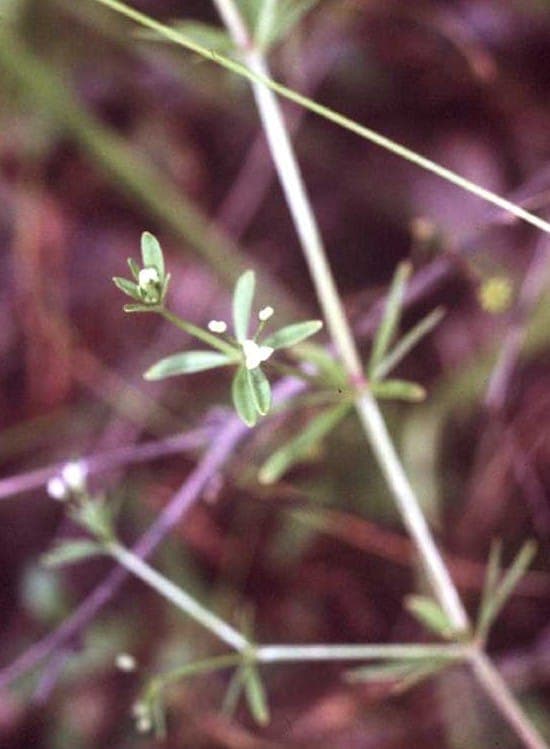
Robert H. Mohlenbrock / Public domain, via Wikimedia Commons
Galium trifidum: complete guide
Galium trifidum
¿Quieres ver Galium trifidum: complete guide en tu jardín?
1 minuto, sin tarjeta de crédito
Overview
Galium trifidum, commonly known as small bedstraw or three-petal bedstraw, is a delicate herbaceous plant in the Rubiaceae family. Valued for its airy growth habit and silky white flowers, this moisture-loving species thrives in damp environments throughout the Northern Hemisphere - from Alaska to Mexico and Europe. Its fine texture and ethereal appearance make it an elegant choice for wet garden corners.
The plant grows as a loosely-branched, semi-prostrate herb that reaches its full potential in marshy or consistently wet conditions. This makes Galium trifidum ideal for wetland-style gardens, streambanks, and other areas prone to seasonal waterlogging.
Appearance and Bloom
Galium trifidum reaches heights of 20 to 40 centimetres, forming a loose, highly branched, herbaceous habit. The thin, wiry stems are clothed with very small, narrow leaves arranged in threes or fours, creating an exceptionally fine, feathery appearance.
Flowers appear from June to August and are tiny - just 3 to 4 millimetres across - in white or very pale pink, with four petals. They grow in loose clusters at stem tips, creating an ethereal cloud of delicate blooms. Following flowering, small, rounded fruits develop, turning dark brown at maturity.
Foliage is green to yellow-green and lacks striking autumn colour, persisting until the first frost.
Ideal Location
Galium trifidum thrives in semi-shaded to full shade conditions, though it can also grow in partial sun. The plant is extremely moisture-loving and requires consistent soil wetness. Ideal placements include:
Streambank or pond edge plantings Low-lying, naturally wet garden areas Near downspouts or drainage zones In borders beneath larger shrubs and trees
Soil
Prefer nutrient-rich, humus-laden, moisture-retentive soil. It is essential that soil never dries out, even briefly. Acidic to neutral pH (5.5 to 7.0) is ideal. Work in generous amounts of organic matter - compost or peat substitutes - before planting to boost water retention and nutrient availability.
Avoid heavy clay soils without amendment, as these cause waterlogging. Add grit or sand to improve drainage while maintaining moisture capacity.
Diseño gratis
¿Quieres ver Galium trifidum: complete guide en tu jardín? Crea un diseño gratis ahora.
Watering
Watering is critical for Galium trifidum success. Keep soil consistently moist but not waterlogged. During the growing season (April to October), soil should never dry out. Check soil moisture regularly, especially during dry spells.
Water deeply and frequently, particularly during dry summers. Mulch around the plant with 5 centimetres of compost to increase water retention and moderate soil temperature. In hot, dry climates, daily watering may be necessary.
Reduce watering in autumn and winter, when growth slows, but ensure soil remains slightly moist.
Pruning
Galium trifidum requires minimal pruning. The plant grows naturally graceful, branched forms and needs no formal shaping. Do remove:
Dead or damaged stems as they appear Faded flower clusters after bloom (optional - seed structures are attractive) Excessive growth blocking pathways
Prune after flowering, around September or October. Avoid heavy cutting, as this disrupts the natural form.
Maintenance Calendar
April-May: Spring growth begins. Monitor soil moisture; add compost to plant base. June-August: Flowering period. Water regularly. Remove spent flowers as desired. September-October: Prepare for winter. Reduce watering gradually. November-March: Dormancy period. Minimal activity. Protect in extreme cold with thick mulch.
Winter Hardiness
Galium trifidum is hardy to USDA zones 3-8 (to -40 degrees Celsius), surviving outdoors in most European regions. In very cold zones (1-2), thick mulch (10-15 centimetres) protects against extreme cold. The plant dies back to ground level after frost and resprouts in spring.
In temperate climates (zones 8+), the plant overwinters with minimal protection. Foliage may turn grey-green and persists until early spring.
Companion Plants
Galium trifidum thrives alongside other moisture-loving, shade-tolerant species:
Hostas - for leaf shape contrast Astilbe - for similar structure and moisture needs Primula japonica - for colour and comparable habitat Saruma henryi - for similar moisture requirements Dichondra repens - as groundcover
Avoid robust, drought-tolerant plants that could overwhelm this gentle species.
Conclusion
Galium trifidum is a moisture-loving beauty that brings elegance to wet, shaded corners. With its fine texture, silky flowers, and water-loving nature, this species offers a unique garden experience. Maintain consistent moisture and choose companions with similar needs, and you'll enjoy this delicate plant for years. Find seeds and young plants at garden centres. Start small and propagate via seed for additional plants.
¿Quieres ver Galium trifidum: complete guide en tu jardín? Crea un diseño gratis ahora.
Sube una foto, elige un estilo y obtén un diseño fotorrealista con lista de plantas en menos de un minuto.
Más de 10.000 jardines diseñados
Sin tarjeta de crédito


Plantas similares
Oregon bedstraw: complete guide
Galium oreganum
Everything about Oregon bedstraw (Galium oreganum): shade planting, soil requirements, care and use as a low groundcover in woodland and shade gardens.
Awned woodruff: complete guide
Asperula aristata
Full guide to growing Asperula aristata, the awned woodruff: sunny location, alkaline soil, minimal watering, and companion plants for dry or rock gardens.
Purple woodruff: complete guide
Asperula purpurea
Full guide to Asperula purpurea, purple woodruff: sunny sites, chalky soil, watering, pruning, winter hardiness and companion plants for rock and dry gardens.