
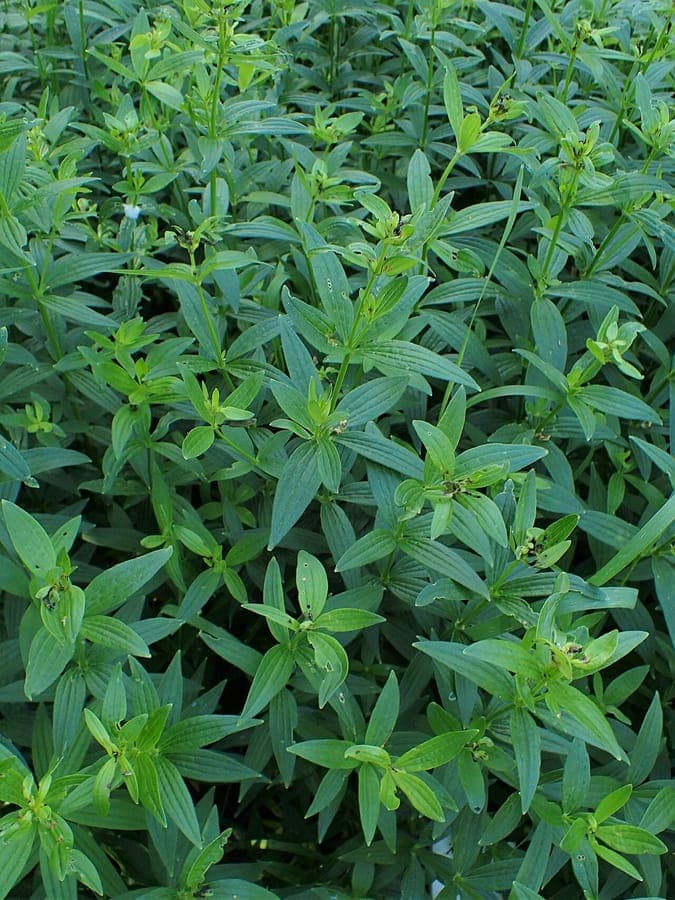
Krzysztof Ziarnek, Kenraiz / CC BY-SA 4.0, via Wikimedia Commons
Galium rubioides: complete guide
Galium rubioides
¿Quieres ver Galium rubioides: complete guide en tu jardín?
1 minuto, sin tarjeta de crédito
Overview
Galium rubioides, commonly known as European Bedstraw or Dyer's Madder, is a delicate perennial from Central-Eastern Europe to the Russian Far East. The plant grows wild in dry woodland edges, meadows, and hillsides from Austria to China and Turkey.
This is a slender plant with fine, hair-like foliage and tiny white flowers. The plant reaches 30 to 60 centimeters in height and often grows in loose colonies. It is valuable for naturalistic gardens and dry borders.
Appearance and Bloom
Galium rubioides is recognizable by its characteristic whorled leaves, small and hair-like. The stems are slender, often reddish-tinged. The tiny flowers are white to cream-colored and grow in small clusters at branch tips.
The blooming period runs from May through August. Flowers are very small, just a few millimeters across, but numerous enough to create an airy effect. The plant has a light, naturalistic appearance.
After blooming, small triangular seeds form and disperse readily. The plant itself has a very fine texture that combines well with coarser plants.
Ideal Location
Galium rubioides grows best in full sun to part shade. The plant thrives in warmer, drier locations. A spot with at least four to six hours of sun is ideal.
The plant is tough and tolerates diverse conditions. It grows well on slopes, in open borders, and in dry corners. In very shaded places, growth becomes slower.
Wind poses no problem for this plant. It grows well in windy locations thanks to its slender, flexible growth.
Soil
Galium rubioides is a plant of dry sites. It prefers well-draining soil that is not overly rich. The plant grows excellently in lean, stony soils.
The plant also grows well in sandy, clay, or loamy soils as long as drainage is good. Waterlogged soils can cause problems.
The pH preference is neutral to slightly alkaline, though the plant also grows in slightly acidic soils.
Diseño gratis
¿Quieres ver Galium rubioides: complete guide en tu jardín? Crea un diseño gratis ahora.
Watering
Galium rubioides is drought-tolerant once established. The plant needs regular watering during its first growing season to establish properly.
Once established, the plant needs little extra water. In normal years, rainfall suffices. Even in drier periods it grows reasonably, though flowering may decrease.
Excessive water can cause problems. Always ensure good drainage.
Pruning
Pruning can help keep the plant more compact and encourage more flowers. After blooming, you can cut the plant back to about half its height.
In spring, removing damaged or dead stems helps. This plant need not be cut back hard.
Leave seed to stand for natural dispersal if desired.
Maintenance Calendar
Spring: New growth appears. Remove winter damage. Water regularly.
Late Spring-Summer: Flowering from May to August. Water as needed. Deadhead spent flowers for longer season.
Fall: Seeds fall and disperse. Plant dies back. Water less.
Winter: Plant rests. No care needed.
Winter Hardiness
Galium rubioides is completely hardy throughout temperate regions. The plant tolerates temperatures far below -20 degrees Celsius. The plant dies back to ground level in winter and regrows in spring.
The plant needs no protection. It is an extremely robust plant.
Companion Plants
Galium rubioides pairs well with other dry-site plants:
- Salvia (Sage)
- Nepeta (Catmint)
- Thymus (Thyme)
- Teucrium (Germander)
- Linum (Flax)
- Other Galium species
- Grasses
Closing Remarks
Galium rubioides is a slender, elegant plant for dry borders and naturalistic gardens. With its delicate flowers, drought tolerance, and attraction for pollinators, it deserves more recognition.
Plant in full sun, ensure good drainage, and maintain regular watering the first year. After that, minimal care is needed.
For more information visit gardenworld.app for guides and garden design ideas. Enjoy growing this elegant plant!
¿Quieres ver Galium rubioides: complete guide en tu jardín? Crea un diseño gratis ahora.
Sube una foto, elige un estilo y obtén un diseño fotorrealista con lista de plantas en menos de un minuto.
Más de 10.000 jardines diseñados
Sin tarjeta de crédito


Plantas similares
Oregon bedstraw: complete guide
Galium oreganum
Everything about Oregon bedstraw (Galium oreganum): shade planting, soil requirements, care and use as a low groundcover in woodland and shade gardens.
Awned woodruff: complete guide
Asperula aristata
Full guide to growing Asperula aristata, the awned woodruff: sunny location, alkaline soil, minimal watering, and companion plants for dry or rock gardens.
Purple woodruff: complete guide
Asperula purpurea
Full guide to Asperula purpurea, purple woodruff: sunny sites, chalky soil, watering, pruning, winter hardiness and companion plants for rock and dry gardens.