
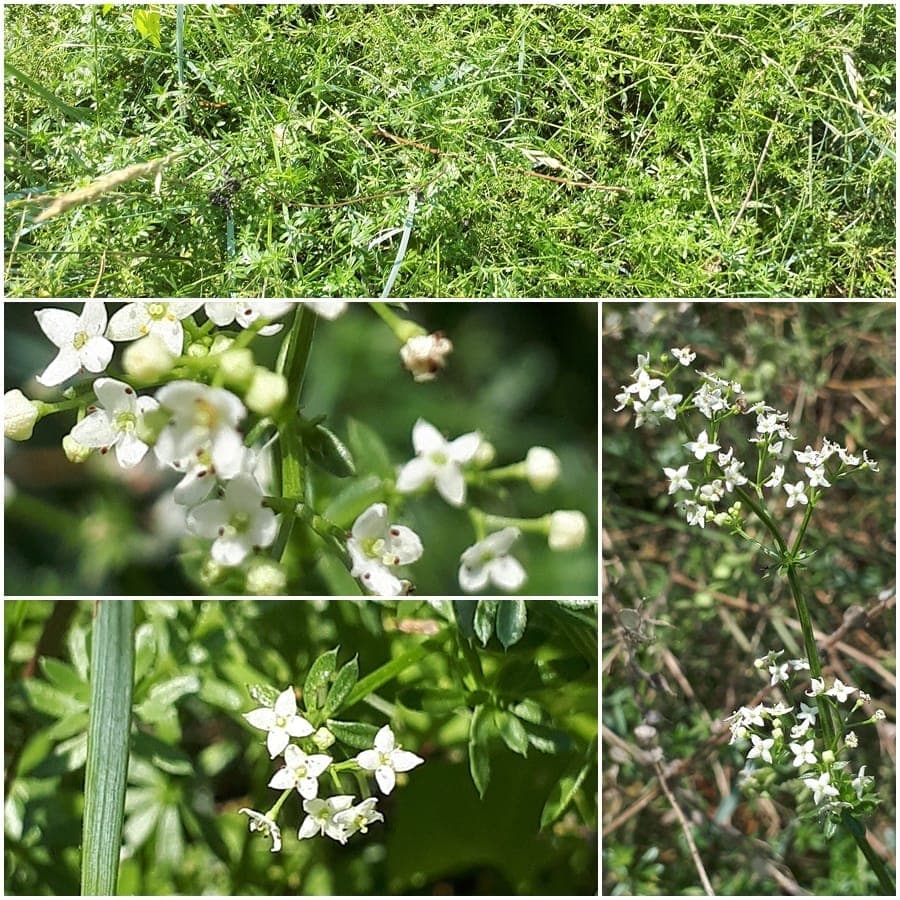
Jacques Maréchal / CC BY-SA 2.0 fr, via Wikimedia Commons
Galium parisiense: complete guide
Galium parisiense
¿Quieres ver Galium parisiense: complete guide en tu jardín?
1 minuto, sin tarjeta de crédito
Overview
Galium parisiense, also known as wall bedstraw, is an elegant thin annual plant from the madder family (Rubiaceae). This plant is native to Macaronesia, Western and Central Europe through the Mediterranean region and even to Iran. In gardens, it thrives in dry, sunny spots where other plants struggle.
Appearance & Bloom
Wall bedstraw grows to approximately 15-40 cm in height and forms graceful, finely branched stems. The leaves are extremely small and needle-like, giving the plant a light, airy appearance. Small white flowers appear from May to August and grow in loose clusters at the stem tips. These tiny blooms attract small insects and beneficial predators.
Ideal Location
Wall bedstraw grows best in completely sunny locations. The plant feels at home in warm, dry spots where many other plants cannot thrive. This makes it ideal for gravel gardens, xeriscapes, and Mediterranean-inspired plantings. It is also suitable for pots and containers on sunny terraces.
Soil
This plant prefers dry, well-draining soil. Sandy, calcareous, or loamy material works better than heavy moisture-retaining soil. The plant tolerates nutrient-poor soil well and actually grows better in lean soil. Waterlogging is absolutely out of the question and will quickly kill the plant.
Watering
Galium parisiense is very drought-sensitive, even when young. After sowing, the soil should be kept lightly moist until seedlings emerge. Once established, the plant is extremely drought-tolerant and self-sufficient. Rarely or never water is the motto - too much water is more harmful than too little.
Diseño gratis
¿Quieres ver Galium parisiense: complete guide en tu jardín? Crea un diseño gratis ahora.
Pruning
This annual plant requires no pruning. After flowering and seed setting, the entire plant can be removed and composted. If you want to collect wild seed, leave some plants standing so they can disperse their seeds.
Maintenance Calendar
April-May: Sow directly in the soil at the desired location. May-June: Seedlings emerge. No fertilizer needed. June-July: Flowering begins. Plant grows and spreads. July-August: Peak flowering. Small insects and beneficial predators are attracted. August-September: Seed setting begins. Plant gradually dies back. September-October: Opportunity to collect seeds for next year. October-November: Plant dies completely. Clean up or leave for seed dispersal.
Winter Hardiness
Galium parisiense is not a winter-hardy plant - it is an annual that thrives only in warm months. It cannot survive outdoors in climates with harsh winters. In milder regions, however, the plant can self-seed and return year after year.
Companion Plants
Wall bedstraw grows well alongside other drought-loving plants:
- Papaver rhoeas (corn poppy) - for red accents
- Dianthus armeria (Deptford pink) - for purple flowers
- Silene (catchfly) - for texture contrast
- Agrostemma (corn cockle) - for purple tints
- Verbascum (mullein) - for architectural form
Wall bedstraw is a quiet beauty in the garden for those who love minimalist designs. For more plant combinations, visit gardenworld.app to completely redesign your front yard. Much more plant information and design tips can be found on gardenworld.app.
¿Quieres ver Galium parisiense: complete guide en tu jardín? Crea un diseño gratis ahora.
Sube una foto, elige un estilo y obtén un diseño fotorrealista con lista de plantas en menos de un minuto.
Más de 10.000 jardines diseñados
Sin tarjeta de crédito


Plantas similares
Oregon bedstraw: complete guide
Galium oreganum
Everything about Oregon bedstraw (Galium oreganum): shade planting, soil requirements, care and use as a low groundcover in woodland and shade gardens.
Awned woodruff: complete guide
Asperula aristata
Full guide to growing Asperula aristata, the awned woodruff: sunny location, alkaline soil, minimal watering, and companion plants for dry or rock gardens.
Purple woodruff: complete guide
Asperula purpurea
Full guide to Asperula purpurea, purple woodruff: sunny sites, chalky soil, watering, pruning, winter hardiness and companion plants for rock and dry gardens.