
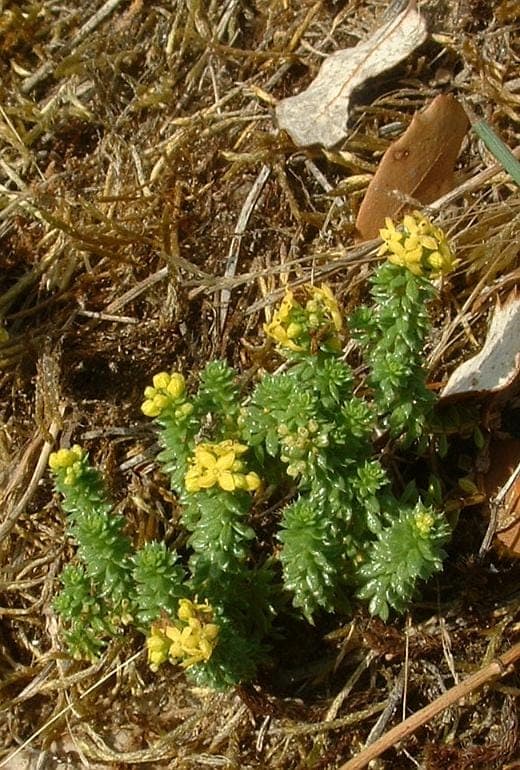
J.F. Gaffard Jeffdelonge at fr.wikipedia / CC BY-SA 3.0, via Wikimedia Commons
Sand Bedstraw: complete guide
Galium arenarium
¿Quieres ver Sand Bedstraw: complete guide en tu jardín?
1 minuto, sin tarjeta de crédito
Overview
Galium arenarium, commonly known as Sand Bedstraw or Gose grass, is an elegant coastal plant from the Rubiaceae family. This semi-desert-adapted perennial originates from western France to northwestern Spain and thrives in sandy coastal zones. With its fine foliage and delicate white flowers, it makes a perfect addition to coastal gardens, Mediterranean landscapes and dry, sunny planting schemes where many plants struggle.
Appearance and bloom
Galium arenarium grows to approximately 40-50 cm tall, forming elegant, loose cushions. The plant has very fine, narrow leaves arranged in whorls around the stems - characteristic of the genus Galium. The name 'arenarium' refers to its preference for sandy soils. From May through August, the plant produces numerous small white flowers in compound inflorescences. These blooms are attractive to bees and butterflies and emit a soft, pleasant fragrance. The seed capsules disperse via wind currents.
Ideal location
Sand Bedstraw prefers very sunny locations in the garden. The plant thrives best on south-facing slopes, along coastal routes, in Mediterranean gardens and on dry sandy hillsides. This is a perfect choice for coastal garden simulations in gardens with natural sandy soils. The plant can tolerate some afternoon shade in very hot climates, but blooms most profusely in full sun.
Soil quality
Sand Bedstraw has a strong preference for sandy soils and does not perform well in heavy clay soils. The ideal soil is highly draining sand, sandy-gravel mixtures or porous compost. This is a plant for gardeners with difficult sandy soils - it actually thrives where many other plants fail. Avoid heavy clay and peat soils that retain water.
Watering needs
As a coastal plant from sandy beaches, Galium arenarium has low water requirements. After establishment, water regularly until the root system is well-developed (first season), but thereafter only during very dry periods. The plant can tolerate extended periods without supplemental water thanks to its adaptation to coastal sand habitats. Excessive watering can lead to root rot.
Diseño gratis
¿Quieres ver Sand Bedstraw: complete guide en tu jardín? Crea un diseño gratis ahora.
Pruning
Sand Bedstraw requires minimal pruning. The plant grows naturally in elegant, loose forms. After flowering, you may remove faded flower heads for a tidier appearance, but this is optional. In early spring, dead or damaged stems can be removed. Heavy pruning is unnecessary as the plant rarely becomes unruly.
Maintenance calendar
- April-May: Check drainage, water after dry winter
- May-August: Flowering period; remove faded flowers
- August-September: Seed ripening; allow seeds to mature
- October-March: Winter dormancy; minimal care required
Winter hardiness
Galium arenarium is winter hardy in maritime regions of western Europe. Originating from France and Spain, it tolerates severe continental winters less well than alpine species. In very harsh winters, protection may be needed in temperate climates. The plant grows best in regions with mild winters and maritime climate.
Companion plants
The elegant structure of Galium arenarium combines well with other coastal plants:
- Centranthus (red valerian) - similar sunlight needs
- Armeria maritima (thrift) - together create coastal garden beauty
- Dianthus armeria (Deptford pink) - textural contrast
- Thymus (wild thyme) - equal drainage requirements
- Sedum (stonecrop) - similar preferences for dry sandy soils
Conclusion
Sand Bedstraw offers elegant beauty for gardeners who appreciate coastal garden aesthetics. This is a perfect plant for those with difficult sandy soils or coastal garden themes. Its preference for sun and sandy drainage makes it ideal for locations where many other plants fail. Try Galium arenarium in your coastal garden and discover the maritime elegance it brings. Available at Intratuin and Gamma in the Netherlands. Visit gardenworld.app for more plant combinations and design inspiration.
¿Quieres ver Sand Bedstraw: complete guide en tu jardín? Crea un diseño gratis ahora.
Sube una foto, elige un estilo y obtén un diseño fotorrealista con lista de plantas en menos de un minuto.
Más de 10.000 jardines diseñados
Sin tarjeta de crédito


Plantas similares
Oregon bedstraw: complete guide
Galium oreganum
Everything about Oregon bedstraw (Galium oreganum): shade planting, soil requirements, care and use as a low groundcover in woodland and shade gardens.
Awned woodruff: complete guide
Asperula aristata
Full guide to growing Asperula aristata, the awned woodruff: sunny location, alkaline soil, minimal watering, and companion plants for dry or rock gardens.
Purple woodruff: complete guide
Asperula purpurea
Full guide to Asperula purpurea, purple woodruff: sunny sites, chalky soil, watering, pruning, winter hardiness and companion plants for rock and dry gardens.