
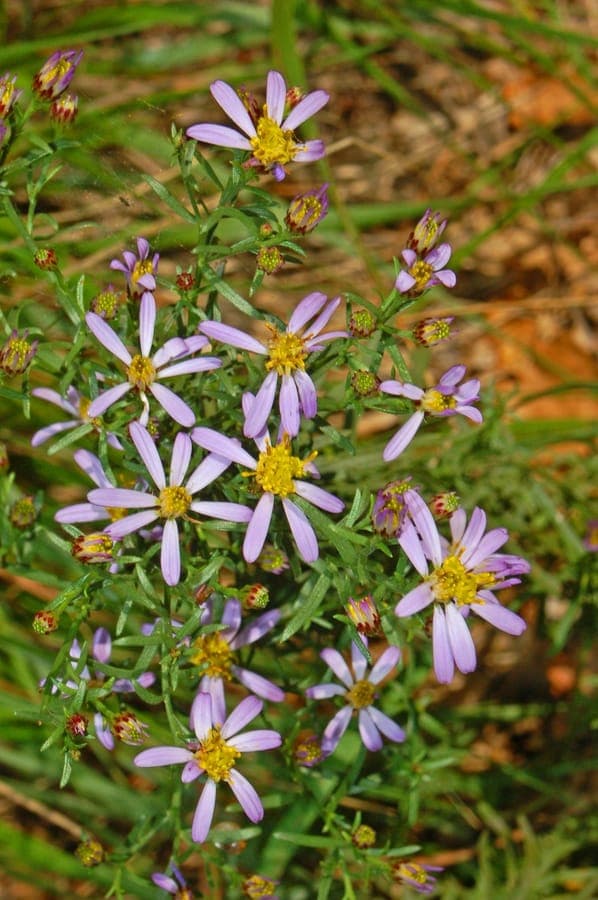
Hectonichus / CC BY-SA 3.0, via Wikimedia Commons
Galatella sedifolia: complete guide
Galatella sedifolia
¿Quieres ver Galatella sedifolia: complete guide en tu jardín?
1 minuto, sin tarjeta de crédito
Overview
Galatella sedifolia, commonly called stonecrop aster or acrid aster, is a delicate perennial native to Europe. This plant naturally ranges from Western Europe to the Caucasus, inhabiting dry, sunny slopes and rocky places. Formerly known as Aster sedifolius, this charming wildflower has been reclassified within the genus Galatella.
This graceful aster is celebrated for its numerous purple autumn flowers and exceptionally fine, needle-like foliage. It is invaluable for borders, rock gardens, and especially for supporting butterflies, bees, and beneficial insects during autumn when other nectar sources diminish.
Appearance and Bloom
Galatella sedifolia grows as a compact mound of 30-50 centimeters tall with numerous slender, upright stems. The foliage is characteristically very fine and needle-like, almost thread-thin in texture. This creates a delightfully airy, elegant appearance.
Flowers are the showstopper: countless small blooms in purple to lilac shades, grouped in tight clusters. Blooming begins in September and continues into October. The plant attracts hungry honey bees and a succession of butterflies seeking late-season nectar.
Ideal Location
Galatella sedifolia must be planted in full sun - minimum 6-8 hours direct sunlight daily. In partial shade, flower production decreases and plants tend toward excessive vegetative growth.
The plant is remarkably wind-tolerant and handles south-facing or west-facing exposures without complaint. Well-ventilated locations benefit disease prevention significantly.
Soil
Galatella sedifolia makes very modest soil demands. The plant thrives in dry to moderately moist soils, sandy to clayey types, and acidic to alkaline pH. Good drainage is however essential.
The plant excels in nutrient-poor soils. Overly rich soils promote vegetative growth at flowering's expense. Average garden soil is usually sufficient without supplementation.
Watering
Galatella sedifolia requires moderate moisture. Once established, the plant tolerates considerable drought. Regular watering is only necessary during the first growing season.
The plant actually performs better in slightly drier conditions than in constantly wet soil. Good drainage prevents root rot during rainy periods. Watering can be reduced substantially as plants mature.
Diseño gratis
¿Quieres ver Galatella sedifolia: complete guide en tu jardín? Crea un diseño gratis ahora.
Pruning
Galatella sedifolia requires minimal pruning. The plant naturally remains compact. In spring, remove dead stems from the previous year.
After flowering, spent flower stems may be removed, but this is not strictly necessary. Retained seedheads provide winter interest and food for seed-eating birds.
Maintenance Calendar
Spring: Plant young specimens or divide established plants. Remove dead stems. Apply very light feeding with blooming fertilizer.
Summer: Water regularly if dry conditions persist. Gradually reduce watering in July-August. Scout for powdery mildew.
Autumn: Cease watering. No feeding. Revel in magnificent purple flower display. Allow seed maturation.
Winter: Plant dormant. Dead portions can be removed after first hard frost. No water or feeding.
Winter Hardiness
Galatella sedifolia is hardy throughout northern Europe. The plant tolerates temperatures to approximately -25 degrees Celsius. In most temperate regions, winter protection is unnecessary.
Heavy snow load can damage plants, so locate them on well-draining slopes that prevent snow accumulation. The plant persists many years in the same location.
Companion Plants
Combine Galatella sedifolia successfully with:
- Sedum (stonecrop): matching drought preference and height
- Armeria (thrift): similar well-draining soil preference
- Veronica: blue flowers provide color contrast
- Teucrium (germander): shared Mediterranean preference
- Linaria: yellow flowers offer attractive contrast
- Salvia: purple flowers echo timing and sustained display
Excellent planting partners for rock gardens and dry borders.
Closing
Galatella sedifolia is an outstanding choice for autumn bloomers in contemporary gardens. With delicate needle-like foliage, abundant purple flowers in autumn, and minimal maintenance demands, this native European perennial absolutely deserves gardener attention.
Reasonably available at larger nurseries during autumn months. Ideal for mixed borders, rock gardens, and wildflower plantings that support butterfly populations. Mass planting creates dramatic late-season impact.
¿Quieres ver Galatella sedifolia: complete guide en tu jardín? Crea un diseño gratis ahora.
Sube una foto, elige un estilo y obtén un diseño fotorrealista con lista de plantas en menos de un minuto.
Más de 10.000 jardines diseñados
Sin tarjeta de crédito


Plantas similares
Calendula stellata: complete guide
Calendula stellata
Complete guide to Calendula stellata, the star-flowered marigold from Sicily: location, soil, watering and companion planting tips.
Korean chrysanthemum: complete guide
Chrysanthemum x rubellum
Chrysanthemum x rubellum is a hardy autumn perennial with single pink to copper flowers from August to November. Care and combinations.
Helianthus divaricatus: complete guide
Helianthus divaricatus
Helianthus divaricatus is a North American woodland sunflower with yellow summer blooms, ideal for naturalistic borders and shady edges.