
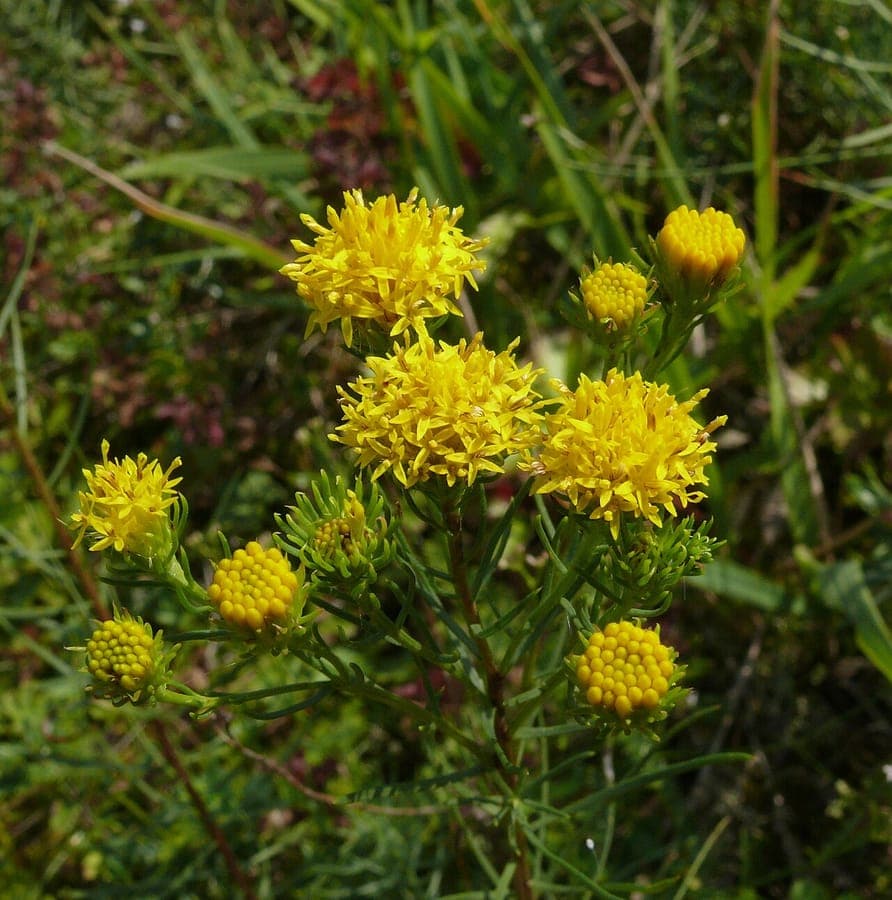
Bernd Haynold / CC BY 2.5, via Wikimedia Commons
Galatella Linosyris: complete guide
Galatella linosyris
¿Quieres ver Galatella Linosyris: complete guide en tu jardín?
1 minuto, sin tarjeta de crédito
Overview
Galatella linosyris, also known as goldilocks aster, is a beautiful perennial from the Asteraceae family. This plant is naturally found in Europe, from the Alps to the Caucasus Mountains. It is known for its abundant yellow flowers that appear in September and October. The plant blooms just when many other flowers have finished, making it essential for late-season bird feeding and pollinator migration. This is a valuable plant that deserves more attention in private gardens.
Appearance and bloom
Galatella linosyris grows as a compact shrub 40-60 centimeters tall and wide. The stems are thin and finely branched, creating a feathery, delicate appearance. The flowers are bright yellow, small and abundant, densely packed along the branches. They bloom from September to October, sometimes into November in mild years. The flowers are magnetic for bees, hover flies and other insects. The plant forms an attractive silhouette against autumn colors. Compared to other autumn bloomers this plant flowers longer.
Ideal location
Choose a sunny spot in the garden, at least six hours of direct sun per day. The plant grows best in open, sunny locations or on dry slopes where it receives plenty of sun. In partial shade it grows weak and flowers less abundantly. Protect against strong wind, particularly in exposed areas. A southeast-facing position is ideal.
Soil
Galatella linosyris is very tolerant of various soil types. It grows best in slightly acidic to neutral soil with pH 6.0-7.5. It tolerates dry soils well, a characteristic shared with many steppe plants. Add organic matter for better water-holding capacity. Heavy clay should be improved with sand. It also grows well in rocky or gravelly soils.
Diseño gratis
¿Quieres ver Galatella Linosyris: complete guide en tu jardín? Crea un diseño gratis ahora.
Watering
Once established watering is minimal. The plant is quite drought-tolerant. Water during prolonged drought when the plant wilts. Water less after blooming. No watering needed in winter. Excessive water can cause root rot so good drainage is essential. Once established the plant can manage with almost no extra water.
Pruning
Pruning is only minimally needed. After blooming ends in November you can cut the plant back to 10-15 cm from the ground. This stimulates compact growth in the next season. Remove dead branches and old wood carefully. The plant regrows well from pruning. This is actually recommended for nice shape.
Maintenance calendar
Spring: Plant specimens, water moderately, no feeding needed. Water until May if dry. Summer: Water during drought, let grow, no interventions. Autumn: Enjoy flowers September-October, bees flock, spot insects. Winter: After first frost, prune back to 10-15 cm.
Winter hardiness
Galatella linosyris is fully winter hardy. The plant naturally grows in alpine regions with cold winters. A light leaf cover of 5-10 cm protects the root zone in extreme cases. No protection as a rule needed. It tolerates temperatures down to -20 degrees Celsius. This makes it ideal for permanent borders.
Companion plants
Galatella linosyris blooms beautifully with other autumn bloomers like asters (chrysanthemums), sedums and goldenrod. Combine with snowberry, skimmia or wintersweet for structure and interest. Also use with late-blooming pollinator magnets like bergamot and agapanthus. Mass plant in groups of three to five for best effect.
Closing
Galatella linosyris is a true garden champion for autumn and early winter. The yellow flowers bring cheer as the season turns bleak. Incredibly valuable for bees and butterflies just before winter. Hardly any maintenance, drought-tolerant and fully winter hardy. Make this plant an essential part of your pollinator-friendly garden. Available at quality garden centers. Once established it requires almost no care.
¿Quieres ver Galatella Linosyris: complete guide en tu jardín? Crea un diseño gratis ahora.
Sube una foto, elige un estilo y obtén un diseño fotorrealista con lista de plantas en menos de un minuto.
Más de 10.000 jardines diseñados
Sin tarjeta de crédito


Plantas similares
Calendula stellata: complete guide
Calendula stellata
Complete guide to Calendula stellata, the star-flowered marigold from Sicily: location, soil, watering and companion planting tips.
Korean chrysanthemum: complete guide
Chrysanthemum x rubellum
Chrysanthemum x rubellum is a hardy autumn perennial with single pink to copper flowers from August to November. Care and combinations.
Helianthus divaricatus: complete guide
Helianthus divaricatus
Helianthus divaricatus is a North American woodland sunflower with yellow summer blooms, ideal for naturalistic borders and shady edges.