
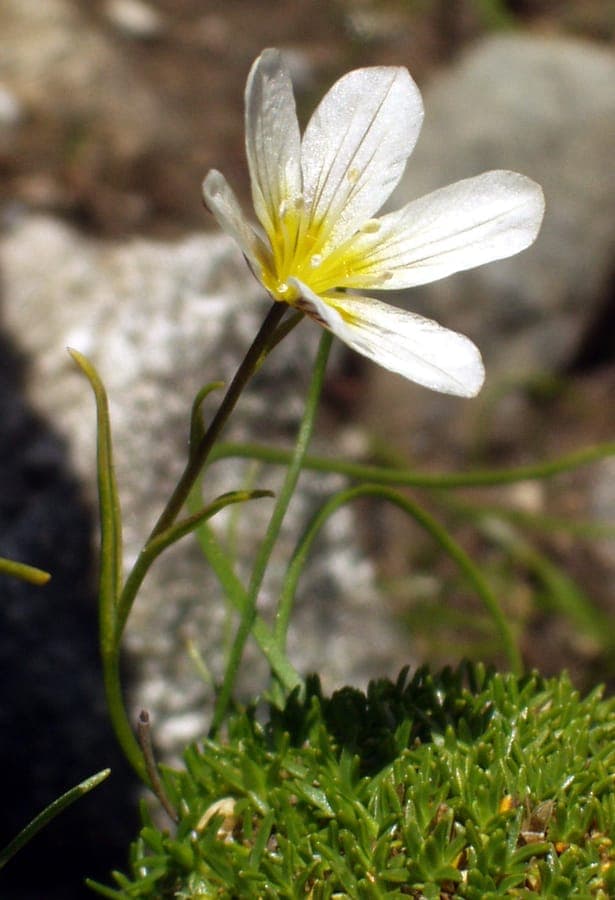
User:Stemonitis / CC BY-SA 3.0, via Wikimedia Commons
Gagea serotina: complete guide
Gagea serotina
¿Quieres ver Gagea serotina: complete guide en tu jardín?
1 minuto, sin tarjeta de crédito
Overview
Gagea serotina, commonly known as common alp-lily, is an elegant spring bloomer that brings a welcome yellow tint to the spring landscape. This plant naturally grows in cold, mountainous regions of the Northern Hemisphere, from subarctic to subalpine environments. In gardens, it forms a delicate accent in spring borders.
Appearance and Bloom
Common alp-lily grows to about 10-20 cm tall and forms a compact plant with narrow, grassy leaves. The plant grows from small bulbs underground. Flowers appear in April to May in small clusters (usually 1-3 flowers per plant) and are bright yellow with green stripes on the back of the petals. The flowers are very small (about 1 cm across) but extremely delicate. The plant is vulnerable and requires careful handling.
Ideal Location
Gagea serotina feels most at home in cool, sunny to partially shaded spots. This is a plant of mountainous regions, so the more sun in spring, the better. A protected spot, away from strong winds, is ideal. Place the plant beneath deciduous shrubs or trees, so it receives full sun in spring but shade in summer.
Soil Requirements
Gagea serotina requires well-draining soil with plenty of grit or sand. The plant behaves like a true rock garden plant and wants virtually no water stagnation. A mixture of potting soil, sand, and fine grit (1:1:1) is ideal. In heavy clay, the plant will likely struggle or die. The pH can be neutral to acidic.
Watering
Once planted, alp-lily needs hardly any water. During the growing season (spring), you can water lightly if it's very dry. After blooming and in summer, the plant must stay dry - this is essential. In autumn, gentle rainfall can moisten the plant without problems. Mulching is not needed; in fact, a thin mulch layer can lead to root rot.
Diseño gratis
¿Quieres ver Gagea serotina: complete guide en tu jardín? Crea un diseño gratis ahora.
Bloom and Seed Production
The bloom is brief, lasting about 2-3 weeks in April-May. After flowering, the plant forms small seed holders. Let seeds ripen and fall to the ground. The plant self-seeds, but very slowly. Many gardeners prefer to propagate the plant by carefully removing the small bulbs from the ground and cultivating them separately.
Maintenance Calendar
February-March: Plant awakens; no maintenance April-May: Flowering period; water only in dry spells June-August: Summer dormancy; plant disappears underground; NO water September-October: Plant prepares for winter dormancy; minimal water November-January: Completely dormant; no water needed
Winter Hardiness
Gagea serotina is extremely hardy and even grows in subarctic environments. The plant tolerates temperatures down to -35°C without difficulty. The bulbs must stay dry in winter to prevent rot.
Companion Plants
Gagea serotina combines beautifully with other early bloomers:
- Crocus vernus (spring crocus)
- Scilla sibirica (Siberian squill)
- Chionodoxa luciliae (glory-of-the-snow)
- Helleborus niger (Christmas rose)
- Cyclamen coum (spring cyclamen)
- Hepatica nobilis (liverleaf)
This plant is a rock garden treasure. Discover on gardenworld.app how to incorporate alpine blooms into your garden design with rock gardens. For advice on alpine and rock garden plants, consult gardenworld.app.
Final Thoughts
Gagea serotina is for the true gardening enthusiast who appreciates delicate, mountainous flowers. With its yellow spring blooms, compact growth, and preference for dry conditions, it brings character and exclusivity to your rock garden. This is a plant for those with patience and an appreciation for careful handling.
¿Quieres ver Gagea serotina: complete guide en tu jardín? Crea un diseño gratis ahora.
Sube una foto, elige un estilo y obtén un diseño fotorrealista con lista de plantas en menos de un minuto.
Más de 10.000 jardines diseñados
Sin tarjeta de crédito


Plantas similares
Reverchon's gagea: complete guide
Gagea reverchonii
Full guide to Gagea reverchonii, Reverchon's gagea: rare Pyrenean bulb with bright yellow spring flowers, soil needs and companion planting.
Leafy gagea: complete guide
Gagea foliosa
Gagea foliosa is a rare Mediterranean bulb with bright yellow star-shaped flowers blooming February to March in well-drained rocky settings.
Tubular gagea: complete guide
Gagea fragifera
Gagea fragifera is a mountain bulb with golden-yellow star flowers blooming May to July on subalpine slopes from Europe to the Himalaya.