
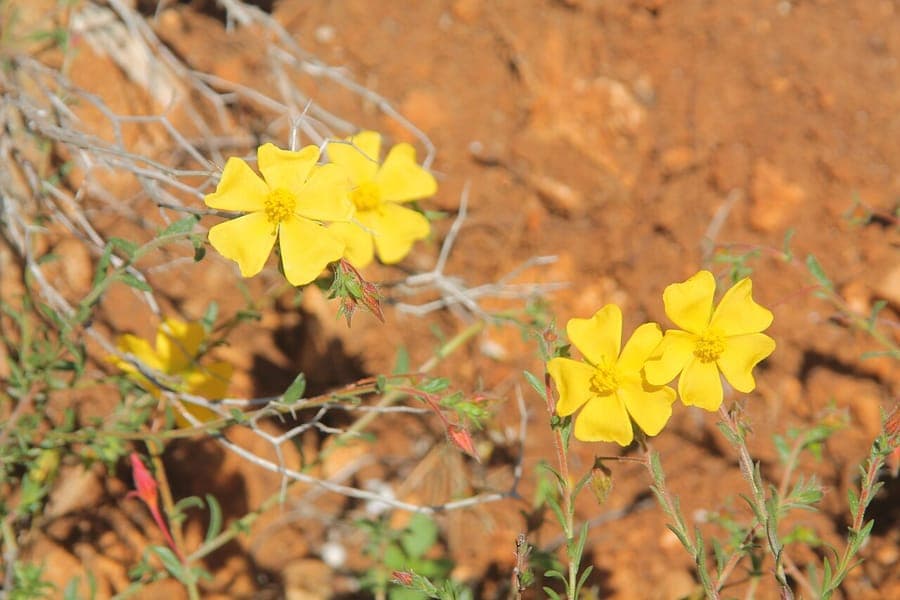
idobi / CC BY-SA 3.0, via Wikimedia Commons
Fumana arabica: complete guide
Fumana arabica
¿Quieres ver Fumana arabica: complete guide en tu jardín?
1 minuto, sin tarjeta de crédito
Overview
Fumana arabica, known as the Arabian rockrose or fumana, is a small, drought-tolerant shrublet native to the Middle East and Mediterranean region. The plant belongs to the Cistaceae family and is known for its yellow flowers and exceptional drought tolerance.
Fumana arabica is a valuable plant for Mediterranean gardens, rock gardens, and dry slopes. With its compact growth and minimal maintenance needs, the plant offers practical solutions for challenging growing locations. The plant attracts pollinators and adds color to bare ground.
Appearance and Bloom
Fumana arabica grows into a compact shrublet approximately 20-40 centimeters tall and 30-50 centimeters wide. The plant has a low, spreading growth form with stiff, gray-green leaves.
The leaves are very fine, needle-like, and have a characteristic gray-green color retained year-round. The structure is compact and dense.
The blooms are spectacular and occur from April to May. Yellow, open flowers with five petals appear in large numbers across the entire plant. Though each flower lasts only a day, there are continuously new flowers opening, providing a long flowering period.
After blooming, small, dry seed capsules form that ripen in summer.
Ideal Location
Fumana arabica thrives optimally in full sun. The plant needs at least 8-10 hours of direct sunlight daily. Less sun leads to reduced flowering and less compact growth.
The plant is exceptionally tolerant of windy locations and can grow on exposed slopes. Protection from excessive coastal wind is, however, beneficial in coastal zones.
A dry, sheltered location is ideal. The plant grows poorly in shady or moist spots.
Soil
Fumana arabica grows best on lean, well-draining, usually poor soils. The plant tolerates sandy, gravelly, and rocky soils better than wet or fertile soils. A soil pH between 7.5 and 8.0 is ideal - thus slightly alkaline.
Heavy wet soils are harmful. Add sand or gravel to improve drainage. In containers, use well-draining mix with perlite.
No compost or fertilizer needed. Lean soil is actually beneficial and prevents overly vigorous growth.
Diseño gratis
¿Quieres ver Fumana arabica: complete guide en tu jardín? Crea un diseño gratis ahora.
Watering
Fumana arabica is very drought-tolerant and handles prolonged drought well. After planting, water regularly until the plant is well-established, usually 4-6 weeks.
Once established, mature plants need virtually no water. Even in dry summers, supplemental water can be skipped. In exceptionally dry years, light watering is permissible.
Excessive moisture is very harmful and leads to root rot. Ensure water drains well.
Pruning
Fumana arabica requires minimal pruning. After blooming (June), gentle deadheading of spent flowers can be done, though this is not strictly necessary.
In early spring, gentle cutting back can help the plant remain compact. Do not cut deep into old wood, as this plant is slow to regenerate from older woody parts.
Because the plant naturally grows compact, regular pruning is usually unnecessary.
Maintenance Calendar
March-April: Light pruning for shape. No water addition unless very dry.
April-June: Enjoy spectacular blooms. Gentle deadheading possible.
June-August: Seed ripening. No water needed in normal rainfall.
Autumn-Winter: The plant is semi-dormant. No maintenance needed. Enjoy compact structure.
Winter Hardiness
Fumana arabica is fairly winter-hardy in temperate to warm European climates. The plant can tolerate temperatures down to about -10 to -15 degrees Celsius.
In very cold winters, foliage may drop, but roots survive and the plant regenerates in spring. In very harsh climates (northern Europe), the plant can only survive in very sheltered locations.
Cold-dry winters are better tolerated than cold-wet ones. Well-draining soil is essential for winter hardiness.
Companion Plants
Combine Fumana arabica with other Mediterranean drought-tolerant plants for dry, low-maintenance gardens. Suitable companion plants include:
- Helianthemum nummularium (sun rose)
- Thymus vulgaris (thyme)
- Lavandula angustifolia (lavender)
- Euphorbia characters (spurge)
- Artemisia alba (sage)
- Sedum (stonecrop)
These combinations create beautiful dry garden scenes. Fumana arabica forms the low base with yellow flowers.
Closing Remarks
Fumana arabica is an excellent choice for Mediterranean and dry gardens in Europe. The plant offers spectacular yellow flowers, minimal maintenance needs, and exceptional drought tolerance.
For Dutch, German, French, and Belgian gardens: plant in full sun, dry locations on lean soil. Consult gardenworld.app for specific advice based on your region. Also on gardenworld.app you will find tips for Mediterranean garden solutions.
¿Quieres ver Fumana arabica: complete guide en tu jardín? Crea un diseño gratis ahora.
Sube una foto, elige un estilo y obtén un diseño fotorrealista con lista de plantas en menos de un minuto.
Más de 10.000 jardines diseñados
Sin tarjeta de crédito


Plantas similares
Curled-leaf rock rose: complete guide
Cistus crispus
Everything you need to grow Cistus crispus, the curled-leaf rock rose from the western Mediterranean. Siting, soil, pruning, and winter care fully explained.
Marjoram-leaved sun rose: complete guide
Helianthemum marifolium
Everything about Helianthemum marifolium, the marjoram-leaved sun rose: location, dry soil, flowering season and care for this Mediterranean rock plant in your garden.
Beach-heath: complete guide
Hudsonia tomentosa
Complete guide to Hudsonia tomentosa: growing this woolly sand-heath on poor sandy soils, its care needs, companions and garden uses.