
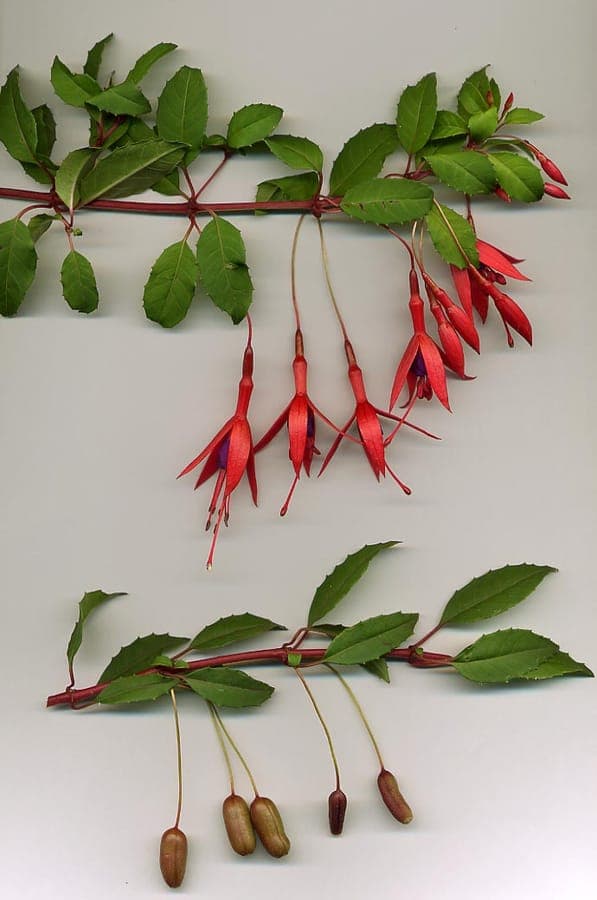
Wikimedia Commons / CC BY-SA 3.0, via Wikimedia Commons
Fuchsia: complete guide
Fuchsia magellanica
¿Quieres ver Fuchsia: complete guide en tu jardín?
1 minuto, sin tarjeta de crédito
Overview
Fuchsia magellanica is a stunning shrub with distinctive pendant flowers ranging from red and purple to white and pink combinations. Native to South America, this plant thrives in partial shade and offers continuous blooming from June through October.
Appearance & Bloom Cycle
The Fuchsia grows 150-200 cm tall with an elegant, spreading habit. Leaves are oval, opposite, and possess a soft texture. Characteristic pendant flowers appear along stems with tubular sepals and prominent stamens. Colors vary from pure white with pink accents to deep magenta and purple.
Continuous blooming occurs June to October with adequate nutrition. Dark purple berries follow flowers and attract birds throughout autumn.
Ideal Location
Fuchsia magellanica thrives in partial shade. Full sun exposure can cause leaf scorch, particularly in hot summers. Position on north or east-facing sites for morning sun and afternoon shade.
Ensure good air circulation, avoiding placement against warm walls. Protection from intense midday sun is essential, especially in southern regions.
Soil Requirements
Use nutrient-rich, well-draining potting soil or garden soil mixed with compost. The plant prefers neutral to slightly acidic soils (pH 6.0-7.0). Incorporate organic matter to improve moisture retention without waterlogging.
For container growing, use standard potting mix enriched with 30% compost for perfect drainage and nutrition.
Watering
Keep soil consistently moist but not waterlogged. Fuchsias need regular watering during the growing season. Water when the top 2-3 cm of soil feels dry.
During hot periods, daily watering may be necessary. Container plants dry faster and require closer attention. Water at the base, avoiding flowers and foliage.
Diseño gratis
¿Quieres ver Fuchsia: complete guide en tu jardín? Crea un diseño gratis ahora.
Pruning
Pruning ensures shape and abundant blooming. Cut back to about 30 cm in February/March, promoting branching and more flowers.
Remove dead or damaged growth as observed. After initial bloom in August, a light trim encourages autumn flowering.
Maintenance Calendar
March: Winter pruning, shaping, begin feeding April-June: Regular watering, monthly feeding June-October: Continuous bloom, weekly feeding October: Stop feeding, prepare winter protection November-February: Minimal care, frost protection
Winter Hardiness
Fuchsia magellanica is hardy to USDA zone 8-9 (-10 to -5°C). In mild regions it survives outdoors with protection; elsewhere, moving indoors is safer.
Mulch the base in October with 10-15 cm organic material. In harsh winters, stems freeze but roots usually survive. New growth emerges in spring.
Container specimens should be moved indoors to a cool, bright location (5-10°C) until April.
Companion Plants
Fuchsias combine beautifully with:
- Contrasting Fuchsia varieties
- Trailing plants like bacopa or diascia
- Foliage plants for texture contrast (heuchera, Japanese maple)
- Low-growing groundcovers for underplanting
In mixed containers, pair with 2-3 other trailing plants for impact.
Purchasing & Care
Available from specialized nurseries, garden centers, and online. Select healthy specimens without yellowing or pests when purchasing.
Direct planting gives better results than repotting later. Provide support for larger specimens as needed.
Conclusion
Fuchsia magellanica rewards gardeners with years of elegant hanging flowers. With proper location, consistent watering, and seasonal pruning, your plant will become a showstopper throughout summer. Try multiple color varieties for dramatic effects. Visit gardenworld.app for designs incorporating Fuchsias and discover personalized garden plans featuring this beautiful plant.
¿Quieres ver Fuchsia: complete guide en tu jardín? Crea un diseño gratis ahora.
Sube una foto, elige un estilo y obtén un diseño fotorrealista con lista de plantas en menos de un minuto.
Más de 10.000 jardines diseñados
Sin tarjeta de crédito


Plantas similares
Shortfruit evening primrose: complete guide
Oenothera brachycarpa
Everything about Oenothera brachycarpa - the shortfruit evening primrose from the American Southwest. Growing tips, placement and care for your garden.
Sundrops (Oenothera tetragona): complete guide
Oenothera tetragona
Everything about Oenothera tetragona - the cheerful daytime-blooming sundrops perennial. Growing tips, placement, pruning and care for a long summer display.
Seabeach evening primrose: complete guide
Oenothera humifusa
Full guide to Oenothera humifusa, the seabeach evening primrose native to the US Atlantic coast. Yellow blooms, silvery foliage, drought-tolerant.