
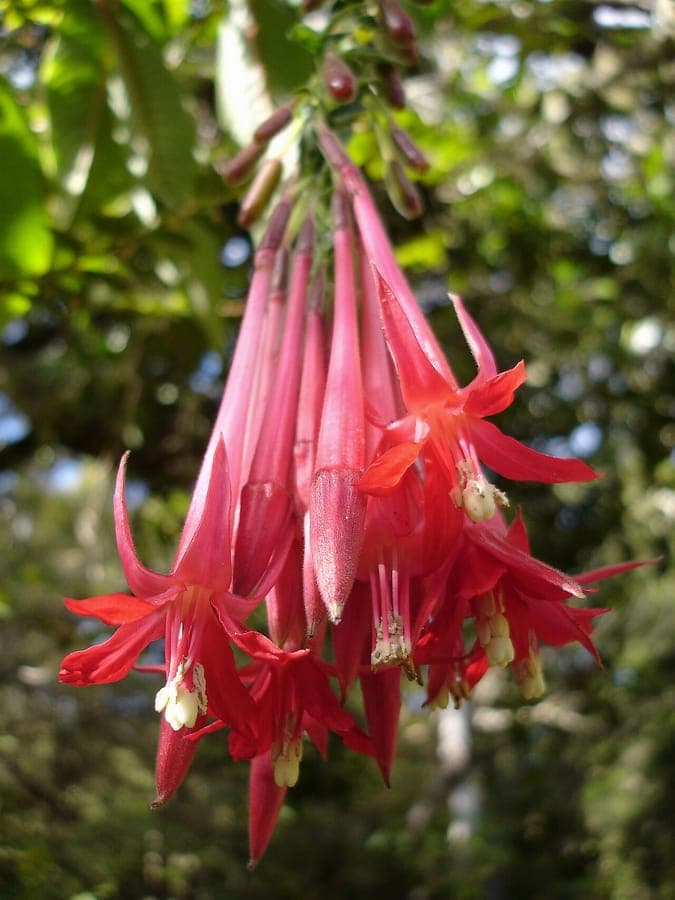
Wikimedia Commons / CC BY-SA 2.5, via Wikimedia Commons
Fuchsia Boliviana: complete guide
Fuchsia boliviana
¿Quieres ver Fuchsia Boliviana: complete guide en tu jardín?
1 minuto, sin tarjeta de crédito
Overview
Fuchsia boliviana, commonly called Bolivian fuchsia, is a spectacular ornamental shrub from the Onagraceae family. This plant originates in the Andes Mountains, ranging from southern Peru to northwestern Argentina. In temperate regions it is primarily grown as a houseplant or in greenhouses, though it can be grown outdoors in mild climates. The plant is renowned for its spectacular red flowers that hang along the branches and often attract hummingbirds. This is an underappreciated plant for home cultivation that deserves far more attention than it currently receives.
Appearance and bloom
Fuchsia boliviana grows as a shrub reaching 2-3 meters tall. The leaves are long and narrow with a glossy, dark green color that persists year-round. The characteristic flowers are long and slender, with red sepals that resemble delicate skirts. They appear in pairs or clusters along the stems and bloom from May to October in temperate climates. The flowers attract hummingbirds and bees, especially during summer. Each flower can reach several centimeters in length and appears very graceful. The flowers also carry an intense fragrance that attracts many pollinators. After blooming, berries form that also serve as bird food.
Ideal location
Choose a spot with bright, indirect light. Direct sunlight can cause leaf scorch, leading to brown spots on foliage. South-facing windows are usually too intense; north or east-facing windows work better. Place the plant away from heat sources like radiators or air conditioning units, which can make the air far too dry. The plant appreciates well-ventilated spaces, so ensure good air circulation. A spot near a window with filtered light is ideal. In summer the plant can stand outside in shade in a protected location.
Soil
Fuchsia boliviana thrives in nutrient-rich, well-draining potting soil. Use a mixture of horticultural perlite, peat and compost in 1:1:1 proportions. This ensures good water drainage and prevents root rot, a common problem with this species. A pH around 6.0-7.0 is ideal. Add compost regularly to maintain nutrient levels. Heavy soils must be lightened with sand and organic material.
Diseño gratis
¿Quieres ver Fuchsia Boliviana: complete guide en tu jardín? Crea un diseño gratis ahora.
Watering
Keep the soil consistently moist but never waterlogged. During the growing season (spring-summer), water more frequently, possibly daily in warm periods. Check soil moisture by inserting your finger into the soil. In winter and dormancy, water less. Don't let the pot sit directly in water. Use lukewarm water. Regular misting is beneficial, especially in dry indoor spaces. Spraying with a mist bottle helps prevent spider mites.
Pruning
Pruning is essential for an attractive shape. After blooming (October-November) you can cut stems back to 20-30 cm from the base. This stimulates branching and more flowers next season. Remove dead wood and thin out where branches are too dense. Remember: pruning promotes bushy growth and more flowers.
Maintenance calendar
Spring: Increase light, propagate from cuttings, repot to larger container. Begin watering twice weekly. Summer: Regular watering, feed every two weeks with organic fertilizer, expect flowers. Autumn: Reduce water, lower temperature, blooming may continue. Winter: Cool dormancy from October to March with less water and no feeding.
Winter hardiness
Fuchsia boliviana is not winter hardy and cannot survive harsh winters outdoors. The plant dies when temperatures drop below 10 degrees Celsius. In mild regions it can overwinter outside in a protected spot. Ideally provide a cool but frost-free location around 5-8 degrees Celsius. Overly warm winter quarters can cause failure to bloom. An unheated porch is often ideal.
Companion plants
Combine Fuchsia boliviana with other tropical plants like begonias, cordylines and coleus. The red flowers contrast beautifully with purple or silver-leaved plants. In hanging baskets it works wonderfully with trailing silene or bacopa. Ensure all companion plants have similar light and moisture requirements. Red flowers work well next to white and green-leaved plants.
Closing
Fuchsia boliviana is a beautiful plant that requires considerable care, but it's well worth the effort. With proper temperature, light and feeding, you can enjoy its exotic flowers year after year. This plant brings a piece of tropical paradise into your home or greenhouse. The red hanging flowers create a dramatic sight in summer when they appear abundantly. Many gardeners discover that the investment in caring for Fuchsia boliviana is richly rewarded through years of blooming periods. Give it a try: this Bolivian beauty deserves a place in every plant lover's home. Purchase cuttings or young plants from leading garden centers and nurseries and enjoy this exotic splendor.
¿Quieres ver Fuchsia Boliviana: complete guide en tu jardín? Crea un diseño gratis ahora.
Sube una foto, elige un estilo y obtén un diseño fotorrealista con lista de plantas en menos de un minuto.
Más de 10.000 jardines diseñados
Sin tarjeta de crédito


Plantas similares
Shortfruit evening primrose: complete guide
Oenothera brachycarpa
Everything about Oenothera brachycarpa - the shortfruit evening primrose from the American Southwest. Growing tips, placement and care for your garden.
Sundrops (Oenothera tetragona): complete guide
Oenothera tetragona
Everything about Oenothera tetragona - the cheerful daytime-blooming sundrops perennial. Growing tips, placement, pruning and care for a long summer display.
Seabeach evening primrose: complete guide
Oenothera humifusa
Full guide to Oenothera humifusa, the seabeach evening primrose native to the US Atlantic coast. Yellow blooms, silvery foliage, drought-tolerant.