
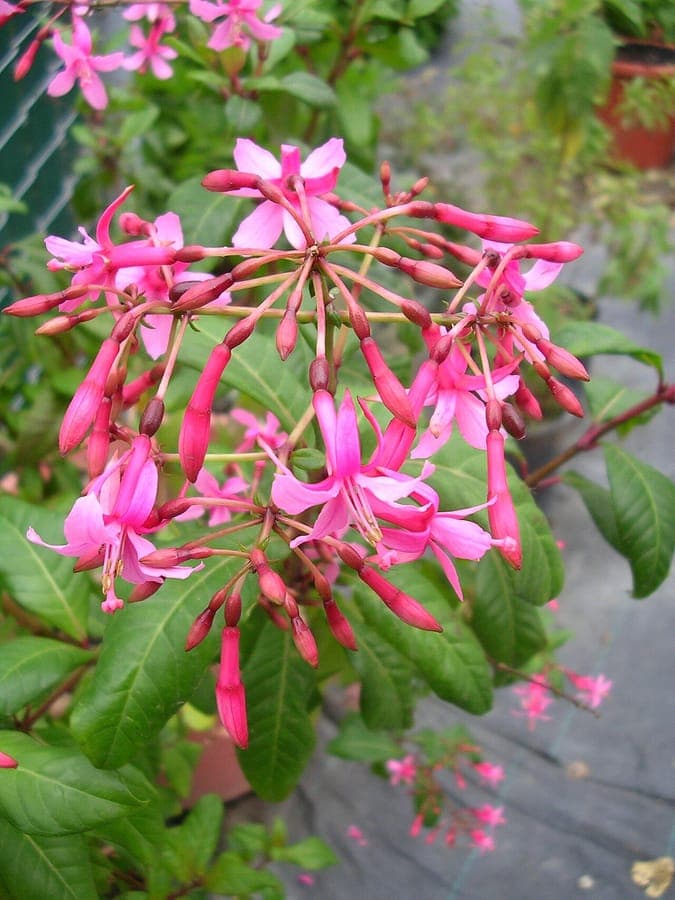
anniesannuals / CC BY 2.0, via Wikimedia Commons
Fuchsia arborescens: complete guide
Fuchsia arborescens
¿Quieres ver Fuchsia arborescens: complete guide en tu jardín?
1 minuto, sin tarjeta de crédito
Overview
Fuchsia arborescens, commonly known as Aretillo or Tree Fuchsia, is an elegant shrubby species native to Mexico through Guatemala. Unlike many hybrid fuchsias, this represents a true tree fuchsia capable of developing into a small tree. The plant is celebrated for its elegant, long red flowers combined with relatively straightforward cultivation compared to many hybrid varieties.
Appearance and Bloom
Fuchsia arborescens grows as an upright to tree-like shrub, typically reaching 2-3 meters under ideal conditions. The leaves are lanceolate, green with slightly darker tones and prominent venation. The true beauty lies in the flowers: long, elegant red tubular-form blooms hang in loose clusters at branch terminals. The flowers are elongated and graceful, with a red calyx. Autumn and winter bring peak flowering abundance.
Ideal Location
Fuchsia arborescens thrives in bright, filtered light to half shade. Full sun can cause leaf scorch in very hot climates. Two to three hours morning sun with afternoon shade proves ideal. Temperate climates allow somewhat more sun exposure. The plant appreciates air movement and good ventilation to prevent fungal diseases.
Soil
Rich, well-draining potting mix is essential. A blend of universal potting soil with some perlite works well. In garden beds, incorporate humus and aged compost. pH should be slightly acidic (6.0-7.0). Heavy, moisture-retentive soil leads to root rot. Regular mulching in garden beds helps counter moisture loss.
Watering
Fuchsia arborescens loves consistent moisture but cannot tolerate waterlogged conditions. During the growing season, maintain equal moisture levels. In winter, reduce watering somewhat for the dormancy period. Regularly monitor moisture needs; foliage droops quickly when water becomes insufficient. The plant appreciates humidity; regular misting helps in dry environments.
Diseño gratis
¿Quieres ver Fuchsia arborescens: complete guide en tu jardín? Crea un diseño gratis ahora.
Pruning
Regular pruning helps maintain compact form. Following bloom (February-March), trim stems to approximately two-thirds their original length. This stimulates branching. Dead or weak branches can be removed anytime. During growing season, use pinching for bushier growth.
Maintenance Calendar
Spring (March-May): Apply growth fertilizer every two weeks, nourish with weakening light. Summer (June-August): Regular watering and feeding, monitor for powdery mildew. Fall (September-October): Reduce feeding, blooming ceases. Winter (November-February): Minimal feeding, sparse water, dormancy in cool environment.
Winter Hardiness
Fuchsia arborescens is frost-sensitive and survives only above 0 degrees Celsius. In all zones outside tropical and subtropical areas (zones 10-11), this plant must be containerized and brought indoors for winter. Even in mild zones, protection is advisable. Potted plants overwinter well in cool, bright locations at recommended temperatures of 10-15 degrees Celsius.
Companion Plants
In containers, Fuchsia arborescens combines beautifully with hanging/trailing plants: Ivy, Bacopa, Tradescantia, and other fuchsias. In warmer gardens, combine with Begonia, Impatiens, and other shade-lovers. For contrasting texture, add Coleus or silver-leafed Plectranthus.
Closing Thoughts
Fuchsia arborescens offers an elegant choice for Mexican plant enthusiasts and advanced fuchsia cultivators. With striking red blooms and relatively straightforward care, this plant becomes a worthy accent indoors or on a protected patio. At gardenworld.app, you can perfectly integrate this plant into container designs. For anyone seeking elegant bloomers, this proves an excellent choice. At gardenworld.app, we help you realize perfect plant combinations for your garden oasis.
¿Quieres ver Fuchsia arborescens: complete guide en tu jardín? Crea un diseño gratis ahora.
Sube una foto, elige un estilo y obtén un diseño fotorrealista con lista de plantas en menos de un minuto.
Más de 10.000 jardines diseñados
Sin tarjeta de crédito


Plantas similares
Shortfruit evening primrose: complete guide
Oenothera brachycarpa
Everything about Oenothera brachycarpa - the shortfruit evening primrose from the American Southwest. Growing tips, placement and care for your garden.
Sundrops (Oenothera tetragona): complete guide
Oenothera tetragona
Everything about Oenothera tetragona - the cheerful daytime-blooming sundrops perennial. Growing tips, placement, pruning and care for a long summer display.
Seabeach evening primrose: complete guide
Oenothera humifusa
Full guide to Oenothera humifusa, the seabeach evening primrose native to the US Atlantic coast. Yellow blooms, silvery foliage, drought-tolerant.