
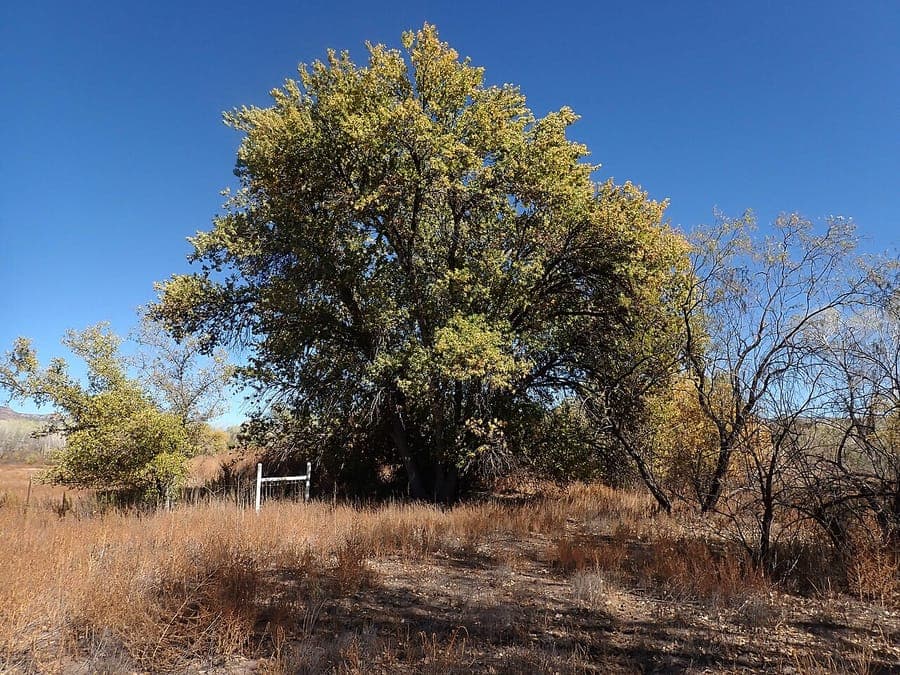
Kollibri1969 / CC0, via Wikimedia Commons
Arizona ash: complete guide
Fraxinus velutina
¿Quieres ver Arizona ash: complete guide en tu jardín?
1 minuto, sin tarjeta de crédito
Overview
Fraxinus velutina, also known as Arizona ash, Desert ash, or Velvet ash, is a graceful tree from the Oleaceae family. This American native tree originates from the southwestern USA and Mexico. Characterized by its elegant feathery leaves with a silvery tint and fine branch structure, it provides shade and beauty to any garden. As a true desert specialist, it's exceptionally drought-tolerant and thermo-hardy, making it ideal for hot, dry regions.
Appearance and bloom
The Arizona ash grows as a mid-size to large tree, typically 7-15 meters tall with a very elegant, open crown structure. The leaves are compound and feathery with small, irregular leaflets that are silvery-green, especially in younger growth. This gives the tree a very light, refined appearance. The flowers are small, inconspicuous green-purple flowers appearing in spring. Later, typical ash fruits form - thin, winged seed samaras. The tree becomes spectacular in autumn with yellow-red tones.
Ideal location
The Arizona ash requires full sun and thrives best with 8+ hours of direct sunlight daily. It grows in warm, open locations where it can spread freely. Plant it in a prominent position where the elegant leaf color is visible. The tree is very wind-tolerant and can be used in windy environments. In desert/semi-arid climates it's ideal as a shade tree.
Soil
The Arizona ash is remarkably adaptive to various soil types. It grows well in poor, stony soils where many other trees fail. Alkaline soils are no problem. Good drainage is essential; this tree doesn't tolerate waterlogging. In strongly clay-like soils add some sand/gravel. Once established the tree requires minimal soil care.
Diseño gratis
¿Quieres ver Arizona ash: complete guide en tu jardín? Crea un diseño gratis ahora.
Watering
Once established this tree is exceptionally drought-tolerant. Minimal water requirement: only water during drought periods or in young stage. Regular overwatering is bad for this species. The tree can survive months without supplemental water in natural rainfall. This is a perfect tree for water-saving gardens.
Pruning
Minimal pruning needed. Remove crossing branches or storm-damaged parts. The tree grows naturally in a pleasant form. In early stage light pruning can help shape oblique growth. Avoid heavy pruning that can disturb the natural form. Pruning best done during dormancy.
Maintenance calendar
January-February: Spring preparation, light pruning. March-April: Growth season, water during drought. May-June: Full bloom, minimal care. July-August: Summer drought, very drought-tolerant. September-October: Autumn colors, harvest preparation. November-December: Winter dormancy.
Winter hardiness
The Arizona ash can tolerate substantial frost to approximately -10 to -15 Celsius in established trees. It grows well in USDA zones 8-10. In northern European climates it can be frost-sensitive. In the UK, Netherlands and Belgium it can grow in protected locations in milder climate regions. Young trees need frost protection.
Companion planting
This tree forms a beautiful home for other desert specialists. Plant together with drought-loving shrubs and groundcovers. Suitable for xeriscape designs. The fine foliage combines well with coarse-textured plants.
Closing
The Arizona ash is a fantastic choice for warmer regions seeking an elegant, drought-tolerant shade tree. With its fine foliage, extreme drought tolerance and ornamental value, it offers years of beauty. Visit local tree nurseries for healthy specimens. This tree transforms your garden into a desert oasis! gardenworld.app/en offers inspiration for more summer plants.
¿Quieres ver Arizona ash: complete guide en tu jardín? Crea un diseño gratis ahora.
Sube una foto, elige un estilo y obtén un diseño fotorrealista con lista de plantas en menos de un minuto.
Más de 10.000 jardines diseñados
Sin tarjeta de crédito


Plantas similares
Rough menodora: complete guide
Menodora scabra
Full guide to Menodora scabra: a drought-tolerant desert subshrub with bright yellow flowers, ideal for rock gardens and xeriscapes.
Fraxinus dipetala: complete guide
Fraxinus dipetala
California ash or two-petal ash from southwestern USA. Beautiful spring flowers, drought-tolerant. Experimental choice for warm Mediterranean front gardens.
Syringa komarowii: complete guide
Syringa komarowii
Syringa komarowii is a striking lilac from central China with elegant flower spikes and lovely foliage. Discover the complete care guide here.