
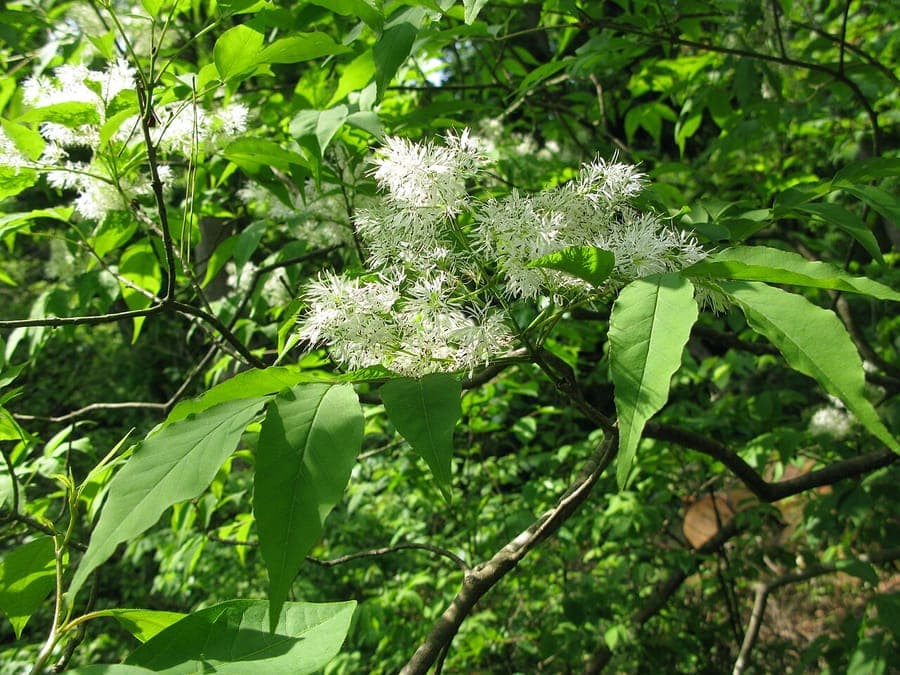
Qwert1234 / CC BY-SA 3.0, via Wikimedia Commons
Fraxinus sieboldiana: complete guide
Fraxinus sieboldiana
¿Quieres ver Fraxinus sieboldiana: complete guide en tu jardín?
1 minuto, sin tarjeta de crédito
Overview
Chinese flowering ash (Fraxinus sieboldiana) is a graceful deciduous tree from the Oleaceae family, originating from Southeast China, Japan, and Korea. This medium-sized tree reaches a height of 15-25 meters and is known for its elegant, symmetrical form, fine pinnate leaves, and delicate flowers. Fraxinus sieboldiana is a valuable tree choice for park-like gardens, avenues, and landscape design due to its ornamental aspects and robustness.
Appearance and bloom
Chinese flowering ash forms a broad, rounded crown with a neat trunk structure. Leaves are oppositely arranged, pinnately compound with 9-15 small leaflets approximately 2-5 centimeters long. Leaf color is bright green in summer with fall coloration in gold and brown tones. Flowers appear in early spring as panicles of small, greenish to purple-red flowers before leaves fully unfold. Fruits are winged samaras that appear attractive.
Ideal location
Chinese flowering ash grows optimally in fully sunny locations with at least 4-6 hours of direct sunlight daily. The tree tolerates partial shade well and grows reasonably. Plant the tree in open locations where it can grow unhindered to full size. The tree tolerates urban environments, polluted air, and windy climates reasonably well, despite its ornamental aspects.
Soil
Chinese flowering ash grows in virtually any draining soil type, from sandy to clay-containing mixes. The tree tolerates both neutral and slightly acidic soils well. Shallow rocky soils or prominent limestone need not be problematic. Good drainage is important; avoid prolonged waterlogged conditions. Robust and structural root development follows more quickly in nutrient-rich soils.
Watering
After planting, water regularly in the first growing season until a good root system is established. Once established, watering can be reduced considerably. Young trees may need extra water in dry summers. Mature trees are fairly drought-tolerant. Avoid excessively wet environments; well-drained trees cannot tolerate prolonged wet conditions.
Diseño gratis
¿Quieres ver Fraxinus sieboldiana: complete guide en tu jardín? Crea un diseño gratis ahora.
Pruning
Minimal pruning is needed for well-formed, healthy trees. In early growth periods, structural pruning can help form a strong central trunk. Strongly branching branches can be removed. Damaged or dead wood must be removed regularly. As a mature tree, the plant requires minimal pruning; follow the natural growth pattern.
Maintenance calendar
March-April: Bloom begins; leafless tree provides elegant structure. April-May: Leaf development; young leaves bright green. June-September: Full growth; healthy growth continues. October-November: Fall coloration gold and brown tones; fruits ripen. December-February: Leafless dormancy; structure visible; minimal care.
Winter hardiness
Chinese flowering ash is moderately winter-hardy in temperate climates and tolerates temperatures to about -15 to -20 degrees Celsius. The tree is however susceptible to very severe winters, especially as a young, unestablished plant. Young trees may experience structural damage; established trees recover well after frost damage. In very severe climates, protection of young trees is recommended.
Companion plants
Chinese flowering ash works well in tree groups or as a specimen tree in parkland settings. Underplanting with low-growing shrubs and flowering plants helps fill the groundcover space. Other ornamental trees such as Prunus, Acer, and Magnolia form attractive associations. Ensure groundwork does not create competition around trunk.
Closing
Chinese flowering ash brings elegant, subtle beauty to every garden design. With fine structure, seasonal interest, and robustness, this tree provides years of aesthetic value. Specialized tree nurseries throughout Europe stock this tree species. Visit gardenworld.app for more guides on trees and large landscape plants. With Fraxinus sieboldiana you have a proven, valuable tree choice. Ask gardenworld.app for more ideas for tree landscaping and park design.
¿Quieres ver Fraxinus sieboldiana: complete guide en tu jardín? Crea un diseño gratis ahora.
Sube una foto, elige un estilo y obtén un diseño fotorrealista con lista de plantas en menos de un minuto.
Más de 10.000 jardines diseñados
Sin tarjeta de crédito


Plantas similares
Rough menodora: complete guide
Menodora scabra
Full guide to Menodora scabra: a drought-tolerant desert subshrub with bright yellow flowers, ideal for rock gardens and xeriscapes.
Fraxinus dipetala: complete guide
Fraxinus dipetala
California ash or two-petal ash from southwestern USA. Beautiful spring flowers, drought-tolerant. Experimental choice for warm Mediterranean front gardens.
Syringa komarowii: complete guide
Syringa komarowii
Syringa komarowii is a striking lilac from central China with elegant flower spikes and lovely foliage. Discover the complete care guide here.