
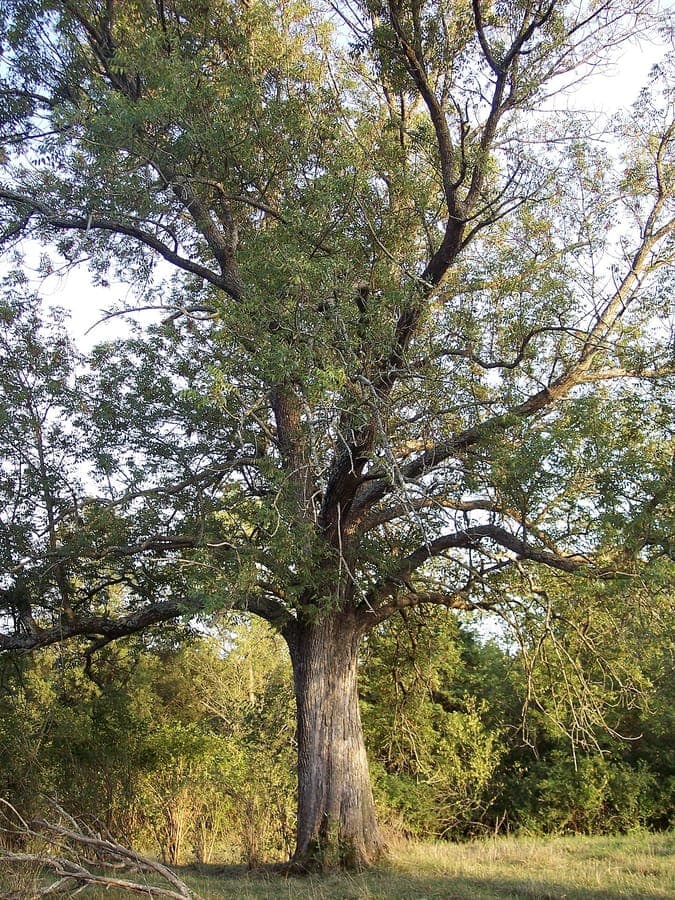
Mason Brock (Masebrock) / Public domain, via Wikimedia Commons
Fraxinus quadrangulata: complete guide
Fraxinus quadrangulata
¿Quieres ver Fraxinus quadrangulata: complete guide en tu jardín?
1 minuto, sin tarjeta de crédito
Overview
Fraxinus quadrangulata, known as blue ash or square ash, is a North American deciduous tree from the olive family. This exceptionally hardy and vigorous tree grows natively in open forests and along rivers in the central and eastern United States. The tree is a classic shade tree with beautiful autumn coloring and distinctive square branches.
Appearance & Foliage
The tree reaches 15-25 meters in height with a rounded crown. The characteristic square or rectangular branches are unique among ash species. The leaves are compound with 7-11 small leaflets with fine texture. The autumn color is bright yellow to gold. The bark is light gray with deep grooves. The fruits are winged seeds (samaras) in dense clusters.
Ideal Location
Fraxinus quadrangulata thrives best in full sun to partial shade with at least 4 hours of direct sunlight. The tree can also grow reasonably well in light shade under larger trees. Protection from strong winds helps. Plant in a location where the tree has space to reach mature height (15-25 meters).
Soil
The tree thrives in well-draining, moisture-retaining soil. The tree is adaptable to various soil types including clay, loam, and sand. A pH of 6.0-7.5 is ideal. The tree tolerates moisture and can also grow reasonably well during dry periods.
Watering
Water regularly during the first growing season until the tree is established. Once established, the tree is relatively drought-tolerant. However, moisture-retaining soil during dry summers helps keep foliage green. Avoid waterlogging.
Diseño gratis
¿Quieres ver Fraxinus quadrangulata: complete guide en tu jardín? Crea un diseño gratis ahora.
Pruning
Minimal pruning is needed. Remove only dead, damaged, or diseased branches. The tree naturally forms an attractive shape. Young trees can be lightly shaped by removing conflicting branches as the tree grows.
Maintenance Calendar
April: Spring inspection of branches, prepare planting locations. May-June: Growth, leaf expansion, regular watering. July-August: Full leaf canopy, minimal watering during normal rainfall. September-October: Fall color, no watering needed. November-March: Winter dormancy.
Winter Hardiness
Fraxinus quadrangulata is completely winter hardy in most temperate regions. The tree can withstand extremely low temperatures down to -30 degrees Celsius. No winter protection is needed. The tree is suitable for North American zones 4-8.
Companion Plants
Plant under Fraxinus quadrangulata shade tree interiors such as Helleborus, Hosta, Tiarella, and other shade-loving plants. The tree creates dappled shade that supports grass species and groundcovers. Combine with other native North American trees.
Closing
Fraxinus quadrangulata is an excellent native shade tree for large gardens and landscapes. The unique square branches and golden autumn color make it an interesting specimen tree. Available in tree nurseries. Learn more at gardenworld.app/en and gardenworld.app/nl.
¿Quieres ver Fraxinus quadrangulata: complete guide en tu jardín? Crea un diseño gratis ahora.
Sube una foto, elige un estilo y obtén un diseño fotorrealista con lista de plantas en menos de un minuto.
Más de 10.000 jardines diseñados
Sin tarjeta de crédito


Plantas similares
Rough menodora: complete guide
Menodora scabra
Full guide to Menodora scabra: a drought-tolerant desert subshrub with bright yellow flowers, ideal for rock gardens and xeriscapes.
Fraxinus dipetala: complete guide
Fraxinus dipetala
California ash or two-petal ash from southwestern USA. Beautiful spring flowers, drought-tolerant. Experimental choice for warm Mediterranean front gardens.
Syringa komarowii: complete guide
Syringa komarowii
Syringa komarowii is a striking lilac from central China with elegant flower spikes and lovely foliage. Discover the complete care guide here.