
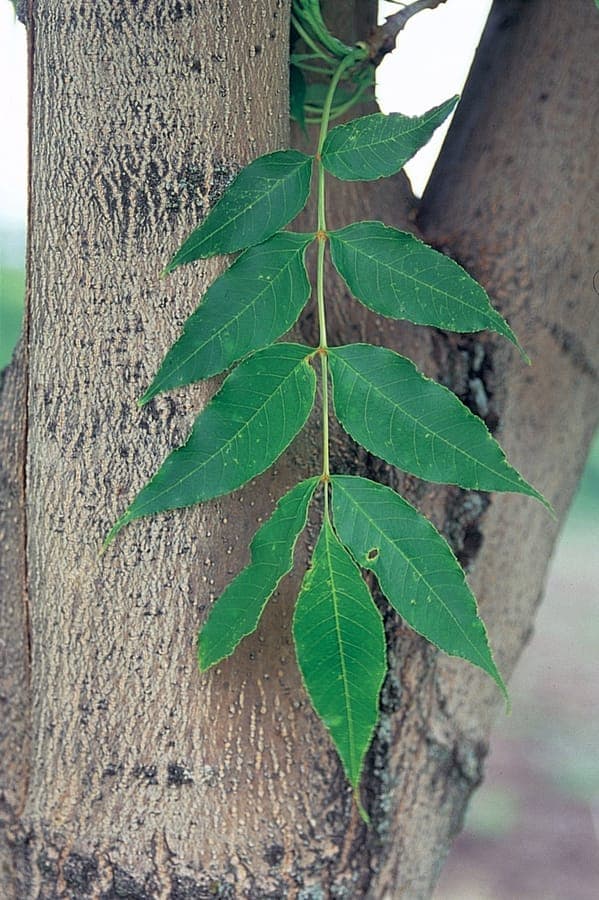
Herman, D.E., et al. North Dakota tree handbook. USDA NRCS. / Public domain, via Wikimedia Commons
Manchurian ash: complete guide
Fraxinus mandshurica
¿Quieres ver Manchurian ash: complete guide en tu jardín?
1 minuto, sin tarjeta de crédito
Overview
The Manchurian ash (Fraxinus mandshurica), also called Japanese ash, is a magnificent deciduous tree native to the Russian Far East, Manchuria, Korea, and Japan. Belonging to the Oleaceae family, this species is renowned for its robust growth, stunning autumn colors, and resilient branch structure. With its natural habitat in temperate climates with distinct seasonal variations, it thrives in regions with cold winters and warm summers. This tree is a popular choice in landscape architecture due to its fast growth and attractive appearance throughout the year.
Appearance & bloom
The Manchurian ash reaches an impressive height of 20-25 meters in its natural habitat, though in gardens typically 15-20 meters is achieved. The tree is characterized by opposite compound leaves that can reach 20-30 cm in length. The leaflets are lance-shaped with fine serration, elegantly arranged along the leaf stem. The veining is clearly visible, giving the leaves interesting texture. In autumn, the foliage displays stunning golden to deep red hues, providing a spectacular fall display. The flowers are inconspicuous, appearing in spring before the leaves fully emerge. They are arranged in dense clusters and are primarily interesting to pollinators. After flowering, characteristic winged seeds form that enable wind dispersal and are highly decorative.
Ideal location
Choose a location with full sun to partial shade for optimal growth and autumn coloration. The tree tolerates windy locations well due to its sturdy branch structure that does not break easily. Plant it in a spot where it has sufficient space to grow, as it can achieve a broad, rounded crown with a diameter of 12-15 meters. Avoid completely shaded corners, as this significantly slows growth. Avoid planting directly against buildings due to its ultimate size. The tree is also suitable for orchards, parks, and large gardens where its full potential can be realized.
Soil
The Manchurian ash performs best on well-draining, nutrient-rich soil with adequate organic matter. It tolerates both acidic and neutral soil, with a preference for pH 6.0-7.5. Sandy to loamy soils with good structure are ideal. When planting, add organic matter (compost, leaf mold, or aged manure) for better drainage and long-term nutrients. Avoid heavy clay soils without drainage improvements, as this can lead to poor growth and diseases. For the first few years, regular application of compost around the roots is beneficial for establishment.
Diseño gratis
¿Quieres ver Manchurian ash: complete guide en tu jardín? Crea un diseño gratis ahora.
Watering
Water regularly during the first growing season to establish a strong, deep root system. This is crucial for long-term drought tolerance. Once established, the tree is moderately drought-tolerant and can grow without supplemental water in regions with 600 mm or more annual precipitation. Water deeply but less frequently rather than shallowly and often, as this stimulates better root penetration. During hot, dry periods, supplemental watering may be necessary, especially for young trees. Avoid waterlogging and stagnation, as this can cause root rot. In very dry summers, weekly deep watering may be needed.
Pruning
The Manchurian ash requires minimal pruning once mature. Remove only dead, damaged, or crossing branches in late winter to early spring before sap begins to rise. The natural tree form is elegant and pyramidal when young, becoming more rounded later. Prune young growing trees lightly to encourage a strong central stem. This helps prevent vertical branches from competing with each other. Mature specimens need virtually no pruning except for maintenance purposes. Avoid heavy pruning that can lead to irregular growth patterns.
Maintenance calendar
Spring: Check for winter-damaged branches and remove carefully. Begin regular watering as growth begins. Apply a layer of compost around the root zone. Summer: Water regularly during dry periods. Monitor for pests and diseases. Ensure grass does not grow directly against trunk. Autumn: Enjoy the spectacular foliage display. Collect leaves for compost. Winter: No maintenance needed; the tree rests well. Pruning work can be done if necessary.
Winter hardiness
The Manchurian ash is extremely hardy and can tolerate temperatures from -25 to -30 degrees Celsius, making it suitable for continental climates. This makes it an excellent choice for Northern Europe, Russia, and northern North America. Once established, it requires no extra winter protection. Young trees can be lightly wrapped with burlap around the trunk and lower branches during severe winters to minimize damage from snow and ice.
Companion plants
Plant the Manchurian ash with other deciduous trees such as European beech, Summer oak, or Norway maple for diverse tree landscape. Understory can consist of shade-tolerant shrubs like hazelnut, barberry, or forsythia that bloom in spring. For low-growing companions, choose shade-tolerant ferns, woodland moss species, or shade-holding evergreens. Also combine with other heritage fruit trees for diversity.
Closing
The Manchurian ash is an excellent choice for those seeking an impressive, winter-hardy deciduous tree that can grow for decades. With its beautiful autumn foliage, robust growth, and low maintenance requirements, it serves as the centerpiece of any garden or landscape. Follow the guidelines in this guide and enjoy years of splendor and beauty in your landscape.
Available at leading garden centers. For more information, visit gardenworld.app/en for further advice and designs featuring this magnificent tree.
¿Quieres ver Manchurian ash: complete guide en tu jardín? Crea un diseño gratis ahora.
Sube una foto, elige un estilo y obtén un diseño fotorrealista con lista de plantas en menos de un minuto.
Más de 10.000 jardines diseñados
Sin tarjeta de crédito


Plantas similares
Rough menodora: complete guide
Menodora scabra
Full guide to Menodora scabra: a drought-tolerant desert subshrub with bright yellow flowers, ideal for rock gardens and xeriscapes.
Fraxinus dipetala: complete guide
Fraxinus dipetala
California ash or two-petal ash from southwestern USA. Beautiful spring flowers, drought-tolerant. Experimental choice for warm Mediterranean front gardens.
Syringa komarowii: complete guide
Syringa komarowii
Syringa komarowii is a striking lilac from central China with elegant flower spikes and lovely foliage. Discover the complete care guide here.