
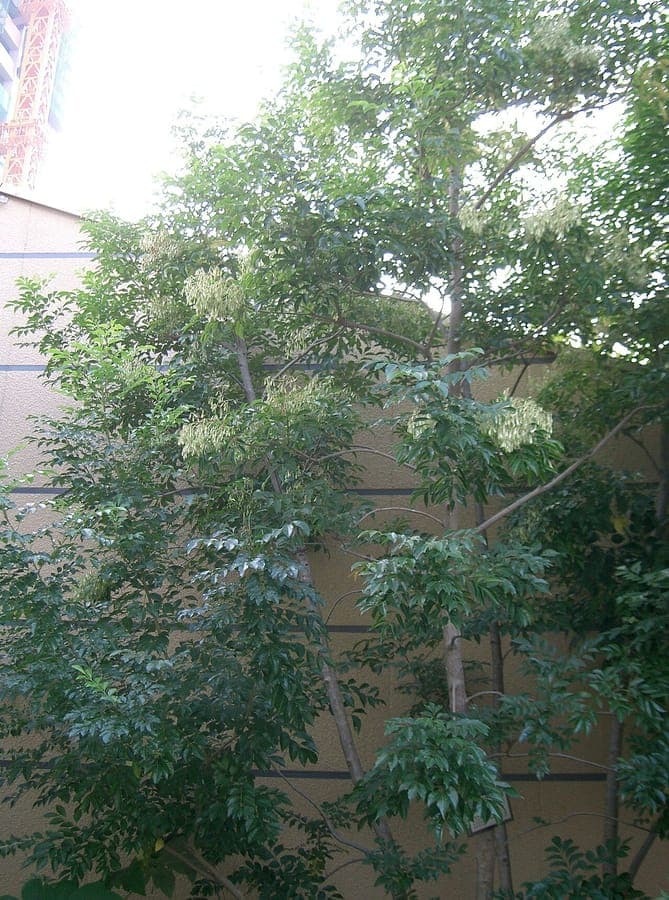
KENPEI / CC BY-SA 3.0, via Wikimedia Commons
Fraxinus griffithii: complete guide
Fraxinus griffithii
¿Quieres ver Fraxinus griffithii: complete guide en tu jardín?
1 minuto, sin tarjeta de crédito
Overview
Fraxinus griffithii, commonly known as Formosan ash or Griffith's ash, is an elegant tree species native to tropical and subtropical regions of Southeast Asia, with indigenous distribution from Bangladesh to the Philippines, Java, and Taiwan. This species belongs to the olive family (Oleaceae), the same family as the common ash. The Formosan ash is celebrated for its graceful, pinnate foliage and compact growth habit, making it suitable for larger gardens and urban greenscapes.
Growing wild in mountainous regions, this tree has demonstrated remarkable adaptability to diverse growing conditions. In subtropical climates, this specimen can provide interesting height and structural elements to the landscape.
Appearance and blooming
Fraxinus griffithii grows into a medium-sized tree reaching 6 to 10 meters tall with a relatively open, graceful crown. The trunk is gray and smooth in youth, becoming rough and fissured with age. The leaves are compound (pinnate), featuring 7 to 11 small leaflets per leaf, glossy green in color with slightly wavy margins.
In spring, small, inconspicuous yellowish-green flowers appear in dense, drooping panicles. These flowers are followed by winged fruits (samaras) that ripen to golden-brown coloration. The fruits disperse widely on the wind, forming an important component of the tree's natural reproductive strategy.
Ideal location
Formosan ash thrives in locations receiving full sun to light shade. For optimal growth, a minimum of four to six hours of daily sunlight is essential. The tree may be used as a specimen or planted in groups. Position it where it receives adequate space to develop naturally.
This species is perfect for those seeking a large, elegant tree with interesting foliage architecture. The tree grows at a moderate pace, so patience is warranted. Avoid locations with strong, consistent winds, as young specimens may flex excessively.
Soil requirements
Fraxinus griffithii grows well in virtually all soil types, from sand to clay. The tree prefers well-draining soil but can tolerate slightly wet conditions. Neutral to slightly acidic soil (pH 6.0 to 7.5) is ideal, though the tree tolerates more acidic substrates.
Amend soil with organic material at planting time to improve structure and water-holding capacity. In very poor soils, apply moderate annual fertilization, though this is not always necessary.
Diseño gratis
¿Quieres ver Fraxinus griffithii: complete guide en tu jardín? Crea un diseño gratis ahora.
Watering
Once well-established, Formosan ash is highly drought-resistant. Water regularly during the first growing year (ideally two years) to promote deep root development. Thereafter, minimal supplemental watering is needed except during extended droughts.
Young specimens require consistent moisture until deep rooting occurs. Avoid waterlogging, as this promotes root rot. During rainy seasons, supplemental irrigation is typically unnecessary.
Pruning
Formosan ash generally requires minimal pruning. Perform light pruning in early spring to remove dead branches and maintain form. Avoid making heavy pruning wounds, as this can weaken the tree.
Remove hanging branches that grow too low and obstruct pedestrians. Protect pruning wounds with tree-wound dressing to prevent infections. Avoid pruning after July, as this stimulates tender growth vulnerable to frost damage.
Maintenance calendar
March to April: Pruning and preparation for new growth. May to June: Flowering occurs; no special care needed. July to September: Monitor moisture, especially for young trees. October to February: Dormancy period; minimal care.
Winter hardiness
Formosan ash is not fully winter-hardy in average European climates. The tree tolerates temperatures down to approximately 5-10 degrees Celsius, but frost periods pose a threat. In milder regions such as southern Netherlands and Belgium, outdoor cultivation is possible.
In colder climates, grow the tree in containers that you move indoors during winter. Protect outdoor specimens from frost by positioning against south-facing buildings and wrapping with winter fleece if temperatures will drop below freezing.
Companion plants
Formosan ash combines beautifully with other subtropical plants including palms, bougainvillea, and other Asian shrubs. Underplant with shade-tolerant groundcovers. The tall tree creates shade allowing other understory plantings.
Given its elegant form, it stands magnificently as a specimen tree. Combine with green lawns and low borders for visual contrast.
Conclusion
Fraxinus griffithii offers elegance and tropical ambiance for those in milder climates. Its graceful pinnate foliage provides interesting architecture through all seasons. With patient cultivation, this becomes a magnificent, green sanctuary in your garden.
Available at gardenworld.app - your tropical retreat!
¿Quieres ver Fraxinus griffithii: complete guide en tu jardín? Crea un diseño gratis ahora.
Sube una foto, elige un estilo y obtén un diseño fotorrealista con lista de plantas en menos de un minuto.
Más de 10.000 jardines diseñados
Sin tarjeta de crédito


Plantas similares
Rough menodora: complete guide
Menodora scabra
Full guide to Menodora scabra: a drought-tolerant desert subshrub with bright yellow flowers, ideal for rock gardens and xeriscapes.
Fraxinus dipetala: complete guide
Fraxinus dipetala
California ash or two-petal ash from southwestern USA. Beautiful spring flowers, drought-tolerant. Experimental choice for warm Mediterranean front gardens.
Syringa komarowii: complete guide
Syringa komarowii
Syringa komarowii is a striking lilac from central China with elegant flower spikes and lovely foliage. Discover the complete care guide here.