
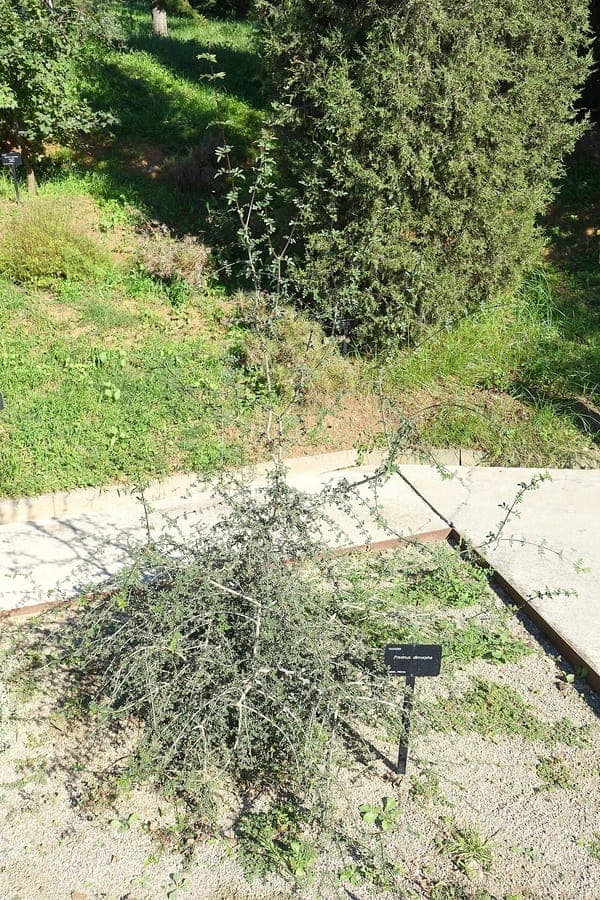
Daderot / CC0, via Wikimedia Commons
Fraxinus dimorpha: complete guide
Fraxinus dimorpha
¿Quieres ver Fraxinus dimorpha: complete guide en tu jardín?
1 minuto, sin tarjeta de crédito
Overview
Fraxinus dimorpha, commonly called wild ash or ash dimorph, is an elegant deciduous tree native to North Africa. This tree naturally occurs in Algeria and Morocco, where it grows on rocky hillsides. It belongs to the Oleaceae (olive) family and is valued for its graceful feathered foliage and architectural form.
The tree is known for its resilience in harsh, dry conditions. It excels in arid regions and degraded landscapes where other trees struggle. In northern Europe, it can be grown in protected southern locations or as containerized specimens.
Appearance and Bloom
Fraxinus dimorpha grows into an elegant, upright tree reaching 3-6 meters tall with slender branches. The foliage is pinnate (feathered) with numerous small leaflets, giving the tree a light, airy appearance. Leaves are green in summer, turning yellow-brown in autumn before drop.
Flowers are small, inconspicuous, mainly greenish, appearing in April-May before full leaf emergence. Seed fruits are elliptical and winged (samaras), promoting wind dispersal to new locations.
Ideal Location
Select a sunny location for Fraxinus dimorpha. The tree thrives with minimum 6-8 hours of direct sunlight daily. In shaded locations, growth suffers and disease susceptibility increases.
The tree is extremely wind-tolerant and can be planted in exposed, windy areas. Avoid very wet locations and areas with stagnant air that encourage fungal disease development.
Soil
Fraxinus dimorpha makes low soil demands. The tree grows in diverse soils from sandy to gravelly types. It accepts acidic to neutral to weakly alkaline pH.
The only requirement is good drainage: waterlogging causes rapid root rot. In heavy clay soils, work in gravel and sand. The tree thrives in nutrient-poor soils without supplementation.
Watering
Once established, Fraxinus dimorpha is highly drought-tolerant. The tree tolerates regular moisture but thrives in dry conditions. Young trees require consistent watering during establishment.
Mature trees can survive weeks without rain. Heavy rainfall or artificial irrigation is unnecessary. Good drainage is essential: avoid wet feet at all costs.
Diseño gratis
¿Quieres ver Fraxinus dimorpha: complete guide en tu jardín? Crea un diseño gratis ahora.
Pruning
Fraxinus dimorpha grows naturally elegant and requires minimal pruning. Remove dead wood in spring and thin lower-hanging branches for better form.
The tree naturally forms an attractive open crown without intervention. Aggressive pruning destroys natural elegance.
Maintenance Calendar
Spring: Inspect for winter damage and remove dead wood. Begin regular watering. Apply slow-release balanced fertilizer.
Summer: Gradually reduce watering toward zero. Inspect for pests and disease. Enjoy vigorous growth.
Autumn: Cease watering. Cease feeding. Enjoy autumn foliage display before leaf drop.
Winter: Tree dormant. No water or feeding. Check for winter damage.
Winter Hardiness
Fraxinus dimorpha is frost-sensitive. In northern Europe, frost protection is necessary in most regions. The tree tolerates temperatures to about 0 to -5 degrees Celsius.
In southern European regions, planting in protected locations works. In colder zones, container cultivation with winter protection is recommended.
Companion Plants
Combine Fraxinus dimorpha successfully with:
- Olea europaea (olive): shared Mediterranean ecology
- Quercus ilex (holm oak): matching drought preference
- Phillyrea angustifolia: Mediterranean composition
- Rosmarinus officinalis: low-growing companion
- Lavandula (lavender): color and fragrance contrast
- Cistus: pink flowers and growth form contrast
Avoid plants with very high water requirements.
Closing
Fraxinus dimorpha is an interesting tree for collectors and designers in southern regions. With elegant feathered foliage, robust character, and drought tolerance, it offers a valuable alternative to standard deciduous trees. In protected southern gardens, it brings genuine charm.
Limited availability in northern Europe; generally through specialized tree nurseries or online retailers. Suitable for southern regions where winters remain mild.
¿Quieres ver Fraxinus dimorpha: complete guide en tu jardín? Crea un diseño gratis ahora.
Sube una foto, elige un estilo y obtén un diseño fotorrealista con lista de plantas en menos de un minuto.
Más de 10.000 jardines diseñados
Sin tarjeta de crédito


Plantas similares
Rough menodora: complete guide
Menodora scabra
Full guide to Menodora scabra: a drought-tolerant desert subshrub with bright yellow flowers, ideal for rock gardens and xeriscapes.
Fraxinus dipetala: complete guide
Fraxinus dipetala
California ash or two-petal ash from southwestern USA. Beautiful spring flowers, drought-tolerant. Experimental choice for warm Mediterranean front gardens.
Syringa komarowii: complete guide
Syringa komarowii
Syringa komarowii is a striking lilac from central China with elegant flower spikes and lovely foliage. Discover the complete care guide here.