
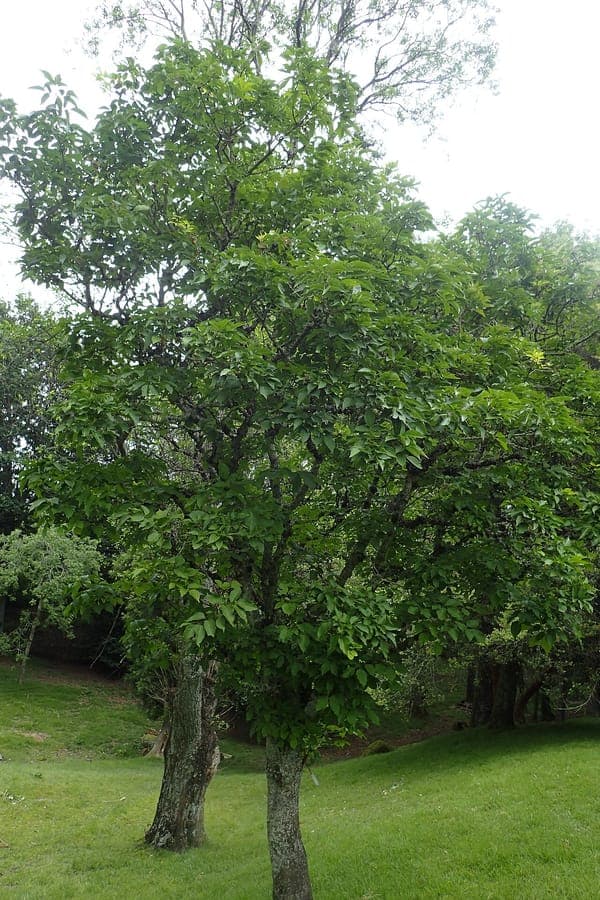
Krzysztof Ziarnek, Kenraiz / CC BY-SA 4.0, via Wikimedia Commons
Fraxinus chinensis: complete guide
Fraxinus chinensis
¿Quieres ver Fraxinus chinensis: complete guide en tu jardín?
1 minuto, sin tarjeta de crédito
Overview
Fraxinus chinensis, known as Chinese ash or White ash, is a refined deciduous tree native to East Asia, particularly China, Japan, and the Himalayan region. This tree is renowned for its light, graceful canopy, fine compound leaves, and spectacular golden autumn coloring. With mature heights of 15 to 25 meters, this tree forms an impressive yet elegant addition to both rural and contemporary gardens.
Fraxinus chinensis belongs to the Oleaceae family, the same family as olive and jasmine trees. This tree species is known for its resilience and adaptability to various growing conditions, although it prefers cool to temperate climates.
Appearance and bloom
Fraxinus chinensis grows as an upright, branching tree with a refined canopy. The trunk is smooth grey in young years, becoming more furrowed with age. The leaves are compound (pinnate), consisting of many small leaflets arranged along a central rib, giving a very fine, airy texture.
The flowers appear before the leaves in early spring as small, yellowish-green clusters. These are significant but inconspicuous. Later come characteristic winged seed fruits that aid wind dispersal. In autumn, the leaves turn spectacular gold, sometimes with red or purple tints.
Ideal location
Fraxinus chinensis thrives best in sunny locations with at least four to six hours of direct sunlight daily. The tree can also grow in light shade, but full sun leads to richer autumn colors.
This tree functions well as a specimen, screen, avenue tree, or in large mixed plantings. The open canopy provides dappled shade, ideal for underplanting with shade-tolerant plants. Plant where you can enjoy the autumn display.
Soil
Fraxinus chinensis grows in diverse soil types but prefers well-draining, moderately moist soil. Sandy to loamy soils are good. Avoid excessively wet or oxygen-poor conditions.
The pH can vary fairly broadly, with tolerance for neutral to slightly acidic or even slightly basic soil. A modest amount of incorporated organic matter helps water retention in dry years.
Diseño gratis
¿Quieres ver Fraxinus chinensis: complete guide en tu jardín? Crea un diseño gratis ahora.
Watering
Young trees need regular, deep watering to establish a good root system. Once established (after 2-3 years), Fraxinus chinensis is fairly drought-tolerant and can sustain itself with normal rainfall in temperate climates.
In very dry periods, supplemental watering can be helpful, especially during the growing season. Mulch around the tree helps retain moisture.
Pruning
Minimal pruning is generally needed. Fraxinus chinensis grows in a naturally elegant form. Remove dead, damaged, or weakly attached branches in early spring. Lateral branches can be shortened to control form.
Avoid heavy pruning, as this can disrupt the tree's natural form. Allow the tree to grow in its natural shape as much as possible.
Maintenance calendar
Spring: Check for winter damage. Begin supplemental watering. Summer: Ensure adequate moisture. Monitor for disease. Fall: Enjoy the colors. Collect seed. Winter: No maintenance required.
Winter hardiness
Fraxinus chinensis is fairly cold-hardy and can tolerate winter temperatures down to about -15 to -20 degrees Celsius, although young trees should be treated carefully in harsh winters. Once established, the tree is robust.
In temperate climates, the tree will become leafless annually, which is normal for this species.
Companion plants
Plant Fraxinus chinensis with shade-tolerant underplanting: Helleborus, Heuchera, Hosta, Astilbe, Polystichum, and other woodland plants. In more open settings, combine it with other seasonal interest trees: Betula, Acer, and Liquidambar. Beneath the tree, groundcovers, light-seeded plants, or autumn-flowering perennials can grow.
Closing thoughts
Fraxinus chinensis is an elegant addition to large gardens and landscapes where space permits. This tree offers years of interest thanks to fine summer foliage, refined flowers, and spectacular autumn coloring. Its adaptability to various conditions makes it a reliable choice for gardeners seeking a structural plant. Visit gardenworld.app for inspiration on how to incorporate this tree into your garden design. You'll find this tree in specialized tree nurseries in the Netherlands and Europe. At gardenworld.app, our experts can help you select and place this beautiful tree species.
¿Quieres ver Fraxinus chinensis: complete guide en tu jardín? Crea un diseño gratis ahora.
Sube una foto, elige un estilo y obtén un diseño fotorrealista con lista de plantas en menos de un minuto.
Más de 10.000 jardines diseñados
Sin tarjeta de crédito


Plantas similares
Rough menodora: complete guide
Menodora scabra
Full guide to Menodora scabra: a drought-tolerant desert subshrub with bright yellow flowers, ideal for rock gardens and xeriscapes.
Fraxinus dipetala: complete guide
Fraxinus dipetala
California ash or two-petal ash from southwestern USA. Beautiful spring flowers, drought-tolerant. Experimental choice for warm Mediterranean front gardens.
Syringa komarowii: complete guide
Syringa komarowii
Syringa komarowii is a striking lilac from central China with elegant flower spikes and lovely foliage. Discover the complete care guide here.