
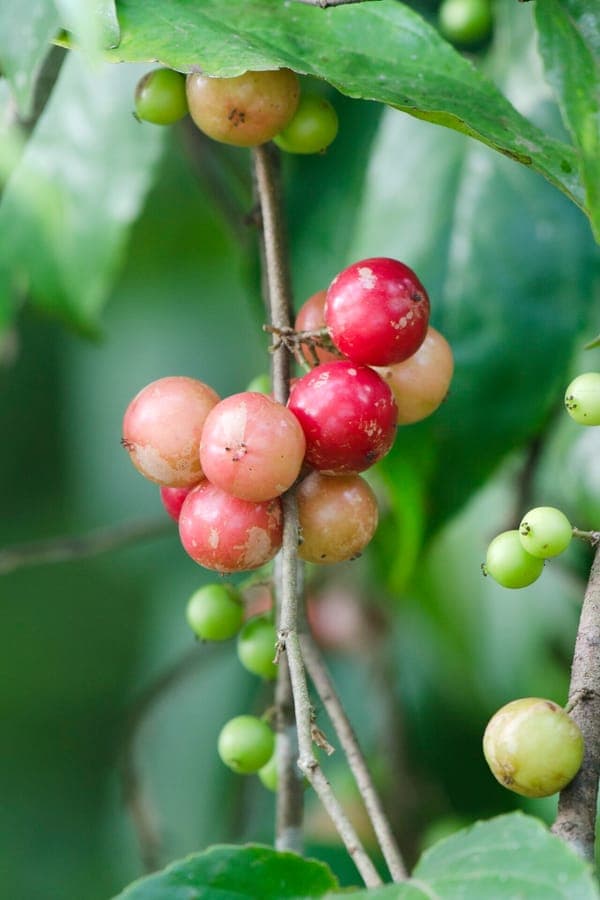
Augustus Binu : flickr / CC BY-SA 3.0, via Wikimedia Commons
Flacourtia jangomas: complete guide
Flacourtia jangomas
¿Quieres ver Flacourtia jangomas: complete guide en tu jardín?
1 minuto, sin tarjeta de crédito
Overview
Flacourtia jangomas, commonly known as the Indian plum or jambul, is an interesting tropical fruit tree native to the Himalayan region and South Asian countries. The tree belongs to the Salicaceae family and is known for its small, juicy fruits and adaptive growth.
Although the tree primarily thrives in tropical and subtropical regions, it can be grown in sheltered microclimates in temperate areas. The fruits are edible and have a nice tart-sweet flavor. Additionally, the tree also has ornamental value.
Appearance and Bloom
Flacourtia jangomas grows into a medium-sized tree approximately 6-12 meters tall in natural conditions, though much smaller specimens occur in gardens. The tree has a dense, broad crown with smooth gray bark.
The leaves are finely-toothed, elongated leaves of 5-15 centimeters long. They are dark green and have a glossy surface. The leaves are alternately arranged along the twigs.
The blooms are subtle. Small yellow-green flowers appear in clusters along the twigs. These flowers are not very showy, but attract insects for pollination. The resulting fruits are small, dark red to black berries, approximately 1 centimeter in diameter. These fruits ripen in summer and autumn.
Ideal Location
Flacourtia jangomas thrives optimally in full sun to light shade. The tree needs at least 6-8 hours of direct sunlight daily for optimal growth and fruit production.
A sheltered location is important, especially in temperate climates where the tree can be susceptible to cold wind. The tree grows better in warm locations and can suffer in harsh winters.
In cold climates, greenhouse protection or nursery cultivation is recommended, especially for young plants.
Soil
Flacourtia jangomas grows best in fertile, well-draining soils. A soil pH between 6.0 and 7.0 is ideal. The tree can adapt to various soil types, from sand to light clay.
Add plenty of compost or organic material when planting to improve soil fertility and water retention. This helps young trees establish quickly.
The tree tolerates slightly acidic soils better than very alkaline ones. Add sulfate if the soil is too alkaline.
Diseño gratis
¿Quieres ver Flacourtia jangomas: complete guide en tu jardín? Crea un diseño gratis ahora.
Watering
Flacourtia jangomas requires regular moisture, especially as a young tree and during growing seasons. After planting, water regularly until the tree is well-established.
Once established, the tree needs less frequent watering, but water should be given regularly during dry periods. However, excessive moisture must be avoided.
During the growing period, weekly watering may be needed. During dormancy, less water is needed.
Pruning
Flacourtia jangomas responds well to pruning. Regular pruning in early spring helps form a compact, productive tree. Remove dead wood and weak twigs.
Thinning of overlapping branches stimulates better light penetration and better fruit production. Limit pruning to about 20-30 percent of the volume per year.
Because this tree can regenerate from dormant buds, aggressive pruning can be done without much damage.
Maintenance Calendar
Spring: Prune for shape and productivity. Add organic fertilizer or commercial fertilizer for growth.
Summer: Water regularly. Monitor for fungal diseases in humid conditions. Harvest ripe fruits.
Autumn: Fruits continue to ripen. Reduce water supply in preparation for dormancy.
Winter: Dormancy period. Minimal maintenance needed.
Winter Hardiness
Flacourtia jangomas is frost-sensitive and cannot normally grow outdoors in temperate European winters. The tree dies off at temperatures below -5 to 0 degrees Celsius.
For cultivation in temperate climates, protection is necessary. The tree can be grown in warm greenhouses, sheltered courtyards, or very warm microclimates (for example, against south-facing walls).
In very warm European areas (southern Spain, southern Italy, Cyprus), young plants can grow outdoors with winter protection.
Companion Plants
Combine Flacourtia jangomas with other heat-loving plants for tropical garden effects. Suitable companion plants include:
- Mango (Mangifera indica)
- Avocado (Persea americana)
- Passion fruit (Passiflora)
- Fig (Ficus carica)
- Cymbidium orchids
This combination works well in sheltered warm pocket gardens. Flacourtia jangomas provides ornamental value and fruit.
Closing Remarks
Flacourtia jangomas is an interesting choice for collectors of exotic fruit trees. The tree offers beautiful foliage, modest flowers, and delicious fruits. In temperate climates, however, it requires special protection.
Find warm microclimates or nursery setups. For specific garden advice, consult gardenworld.app. Also check gardenworld.app for information on heat requirements and protection.
¿Quieres ver Flacourtia jangomas: complete guide en tu jardín? Crea un diseño gratis ahora.
Sube una foto, elige un estilo y obtén un diseño fotorrealista con lista de plantas en menos de un minuto.
Más de 10.000 jardines diseñados
Sin tarjeta de crédito


Plantas similares
Grey poplar: complete guide
Populus x canescens
Everything about Populus x canescens - a fast-growing hybrid poplar with silver-grey foliage, ideal as a windbreak or specimen tree in large gardens.
Populus adenopoda: complete guide
Populus adenopoda
Chinese aspen: a fast-growing tree for large gardens. Cultivation tips, pruning, and use as windbreak or shade tree.
Populus fremontii: complete guide
Populus fremontii
Fremont's cottonwood is a majestic American tree with rapid growth and drought tolerance. Read our guide for cultivation tips and garden integration.