
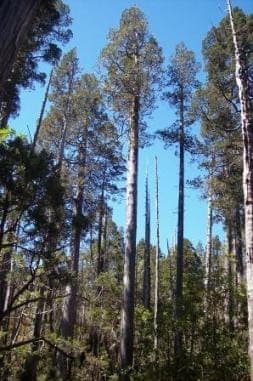
Fernando Bórquez, subida a Commons por Lin linao / CC BY-SA 3.0, via Wikimedia Commons
Fitzroya cupressoides: complete guide
Fitzroya cupressoides
¿Quieres ver Fitzroya cupressoides: complete guide en tu jardín?
1 minuto, sin tarjeta de crédito
Overview
Fitzroya cupressoides, known as the Chilean false larch or Patagonian cypress, is a striking conifer native to the temperate forests of southern Chile and Argentina. This species belongs to the Cupressaceae family and is known for its majestic appearance and exceptional longevity.
Although Fitzroya cupressoides primarily grows in the Southern Hemisphere, adapted cultivars can be grown in suitable climate zones in Europe. The tree offers exotic beauty and structure to larger gardens, particularly for enthusiasts of unusual conifers.
Appearance and Bloom
Fitzroya cupressoides is a slender, columnar tree that normally reaches 25-50 meters tall in natural habitats, though much smaller specimens occur in gardens. The tree has a compact, conical form with densely branched foliage.
The needle-like leaves are fine, scaly, and green, arranged in two rows along the twigs. In sunlight, the foliage often takes on a warm bronze-green color. The tree bark is long-striped and brown to reddish-brown in color, adding to the tree's beauty.
The blooms are not very conspicuous. Male and female flowers occur on the same tree. The female flower heads form small brown cones that mature in one to two years. These cones are small and discrete, but give structure to the tree.
Ideal Location
Fitzroya cupressoides thrives optimally in a location with abundant sunlight. Full sun to light shade is ideal. The tree tolerates shade, but grows more lanky and less compact in heavy shade.
The tree is adapted to cool to mild climates with regular rainfall. In warm, dry climates, the tree may experience stress. A sheltered location is beneficial, especially against strong western winds.
Note: Fitzroya cupressoides is better suited for larger gardens due to its potential size. In smaller gardens, it may be challenging to provide adequate space.
Soil
Fitzroya cupressoides grows best in well-draining, moist soils. The tree tolerates acidic soils better than alkaline. A soil pH between 5.5 and 7.0 is ideal.
The tree can adapt to diverse soil types, from sand to light clay, as long as drainage is good. In heavy clay soils, water logging can lead to root rot.
Add some compost or peat when planting to improve soil structure. This helps with water retention without excessive congestion.
Diseño gratis
¿Quieres ver Fitzroya cupressoides: complete guide en tu jardín? Crea un diseño gratis ahora.
Watering
Fitzroya cupressoides is not very drought-tolerant and requires regular moisture, especially as a young tree. After planting, water regularly for the first season.
Once established, the tree still needs regular moisture, especially during dry summer periods. In normal conditions, rainfall is sufficient, but supplemental irrigation may be needed during dry spells.
Excessive moisture, however, is harmful. Ensure water drains well.
Pruning
Fitzroya cupressoides requires minimal pruning. The tree naturally grows in an attractive form without much intervention. Remove only damaged, diseased, or dead wood.
Because the tree grows slowly, regular cutting back is unnecessary and can disturb the natural form. Let the tree determine its own shape.
In very dense plantings, light thinning can be useful to allow more light inside.
Maintenance Calendar
Spring: Check for winter damage and remove damaged wood. Add mulch to improve moisture retention.
Summer: Water regularly during dry periods. Monitor for fungal diseases in humid conditions.
Autumn: The tree prepares for winter. No special maintenance needed.
Winter: Fitzroya cupressoides can suffer from heavy snow or ice. Carefully remove snow without breaking wood.
Winter Hardiness
Fitzroya cupressoides is fairly winter-hardy in temperate European climates. The tree can tolerate temperatures down to about -10 to -15 degrees Celsius, depending on the growing site and formulation.
In severe winters, however, the tree may suffer damage, especially young trees. Protective measures such as wrapping the trunk can help in very cold winters.
In very harsh climates (northern Europe), Fitzroya cupressoides can only be successfully grown in very sheltered gardens.
Companion Plants
Combine Fitzroya cupressoides with other conifers and structural plants for a balanced tree composition. Suitable companions include:
- Taxus baccata (yew)
- Abies (fir)
- Pinus sylvestris (Scots pine)
- Ilex aquifolium (holly)
- Acer (maple)
- Hedera helix (ivy)
This combination works well for larger gardens with a woodland-like character. Fitzroya cupressoides serves as a vertical accent among lower plantings.
Closing Remarks
Fitzroya cupressoides is a beautiful choice for conifer enthusiasts in larger, sheltered gardens. Its exotic origins and majestic growth add a unique dimension to European gardens.
Seek out cultivars selected for European climates. Not a common species, so consult specialist tree nurseries. For specific advice based on your garden, visit gardenworld.app.
¿Quieres ver Fitzroya cupressoides: complete guide en tu jardín? Crea un diseño gratis ahora.
Sube una foto, elige un estilo y obtén un diseño fotorrealista con lista de plantas en menos de un minuto.
Más de 10.000 jardines diseñados
Sin tarjeta de crédito


Plantas similares
Cupressus macnabiana: complete guide
Cupressus macnabiana
The Fragrant Cypress offers elegant growth with fine, aromatic foliage. Perfect for temperate climates and as specimen trees in contemporary gardens.
Cupressus guadalupensis: complete guide
Cupressus guadalupensis
The Guadalupe cypress: an elegant conifer for gardens. Complete cultivation guide for this Mexican cypress. Information about care, location, form and maintenance.
Austrocedrus chilensis: complete guide
Austrocedrus chilensis
Discover Austrocedrus chilensis, the Chilean Cedar ornamental conifer. Elegant specimen with fine foliage and columnar form for permanent structure.