
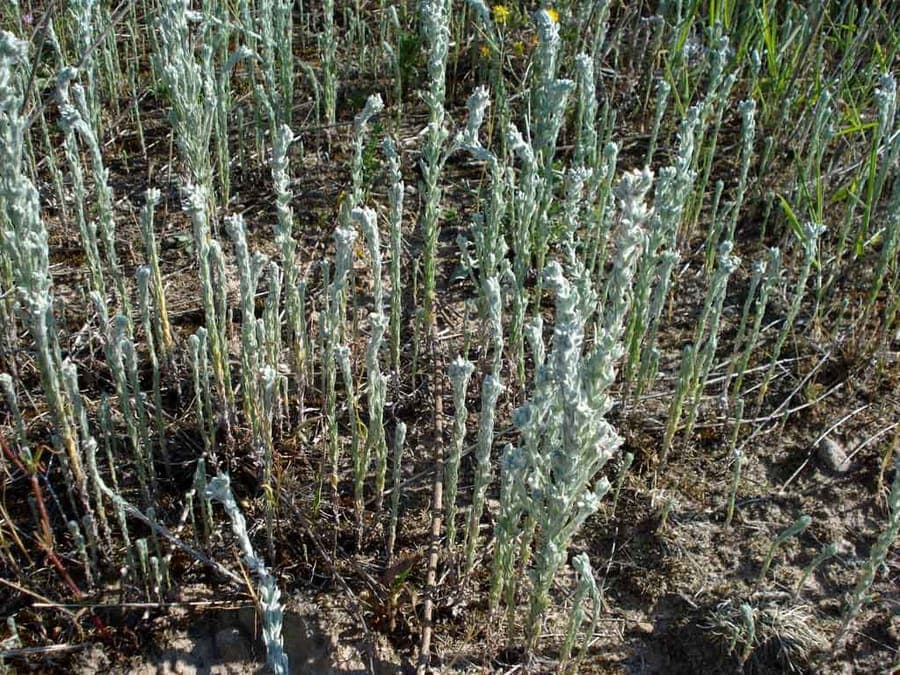
Fornax / CC BY-SA 3.0, via Wikimedia Commons
Field cotton-rose: complete guide
Filago arvensis
¿Quieres ver Field cotton-rose: complete guide en tu jardín?
1 minuto, sin tarjeta de crédito
Overview
Field cotton-rose (Filago arvensis) is a delicate annual wildflower plant from the aster family (Asteraceae). This European field plant is known for its remarkably hairy, gray-green stems and foliage, giving it a woolly appearance. With small yellow flowers in dense, clever-colored heads and very fine seeds, field cotton-rose forms a unique grower for wild borders on gardenworld.app.
This is a plant for those who appreciate the subtle beauty of wildflowers.
Appearance and Bloom
Field cotton-rose is characterized by:
- Stems: Gray-green, densely hairy, finely branched
- Leaves: Lanceolate, gray-hairy, very fine
- Flowers: July through September, yellowish small flowers in dense heads (3-4 mm)
- Plant: Compact, understated presence, fine branching
- Growth: 10-30 cm tall, 15-25 cm wide, decentralized upright
Flower development is subdued: flowers appear yellow but shift through multiple tones as they mature. Highly attractive to small insects.
Ideal Location
Field cotton-rose grows best in:
- Full sun to half-shade (4-6 hours direct light)
- Open, sheltered locations
- Well-draining, poor soils
- Wild borders in gardenworld.app
- Dry field ecotypes and wildflower meadows
Soil
- Type: Well-draining, very poor soil
- pH: Neutral to slightly acidic (6.0-7.0)
- Nutrients: Very poor; promotes blooming
- Moisture: Dry to moderately dry
- Preparation: Sandy soils ideal; avoid rich compost
Watering
- Growth: Very limited water; plant is drought-lover
- Bloom: No supplemental water needed
- Summer: Keep dry; plant tolerates heat
- Winter: Plant passes as annual; no care
- Warning: Too much moisture leads to fungal disease
Diseño gratis
¿Quieres ver Field cotton-rose: complete guide en tu jardín? Crea un diseño gratis ahora.
Pruning and Maintenance
- No pruning required; plant branches finely naturally
- Seed heads ripen in situ; plant does its own sowing
- Seed falls very fine and sows itself spontaneously
- Extremely minimal maintenance; let plant do itself
- Plant dies back with frost; seed overwinters
Maintenance Calendar
| Month | Activity |
|---|---|
| Jan-Apr | Seedlings appear from previous year seed |
| May-Jun | Young plants grow, thinning possible |
| Jul-Aug | Bloom and seed set |
| Sep-Oct | Seed ripens and drops spontaneously |
| Nov-Dec | Plant recedes; seed rests |
Winter Hardiness
- Type: Annual; not winter-hardy in classical sense
- Self-seeding: Plant self-seeds; generations follow
- Seed dormancy: Seed overwinters; springs in spring
- Frost resistance: Young plants tolerate light frosts
- Long-term: Via self-seeding persistent in gardens
Companion Plants
Field cotton-rose combines interestingly with:
- Field scabious (Knautia arvensis)
- Cornflower (Centaurea cyanus)
- Dandelion (Taraxacum officinale)
- Chamomile (Matricaria chamomila)
- Ragged robin (Lychnis flos-cuculi)
Mix in wildflower borders for ecological value.
Wild Garden Principles
Field cotton-rose is ideal for:
- Self-seeding: Sow once; plant repeats itself
- Pollinator support: Attractor for small insects
- Bird seed: Very fine seed for birds
- Ecological value: Wildflower specifier
- Zero-maintenance: Plant asks for almost no care
Final Thoughts
Field cotton-rose is the expression of peace and wildness in domesticated gardens. Its gray-hairy foliage, fine flowers, and automatic self-seeding make it ideal for gardenworld.app gardens with ecological goals. Plant once and let it do its thing - this is gardening in harmony with nature. Expect no fancy-pants flowers; expect subtle beauty that continuously springs forth in generations.
¿Quieres ver Field cotton-rose: complete guide en tu jardín? Crea un diseño gratis ahora.
Sube una foto, elige un estilo y obtén un diseño fotorrealista con lista de plantas en menos de un minuto.
Más de 10.000 jardines diseñados
Sin tarjeta de crédito


Plantas similares
Calendula stellata: complete guide
Calendula stellata
Complete guide to Calendula stellata, the star-flowered marigold from Sicily: location, soil, watering and companion planting tips.
Korean chrysanthemum: complete guide
Chrysanthemum x rubellum
Chrysanthemum x rubellum is a hardy autumn perennial with single pink to copper flowers from August to November. Care and combinations.
Helianthus divaricatus: complete guide
Helianthus divaricatus
Helianthus divaricatus is a North American woodland sunflower with yellow summer blooms, ideal for naturalistic borders and shady edges.