
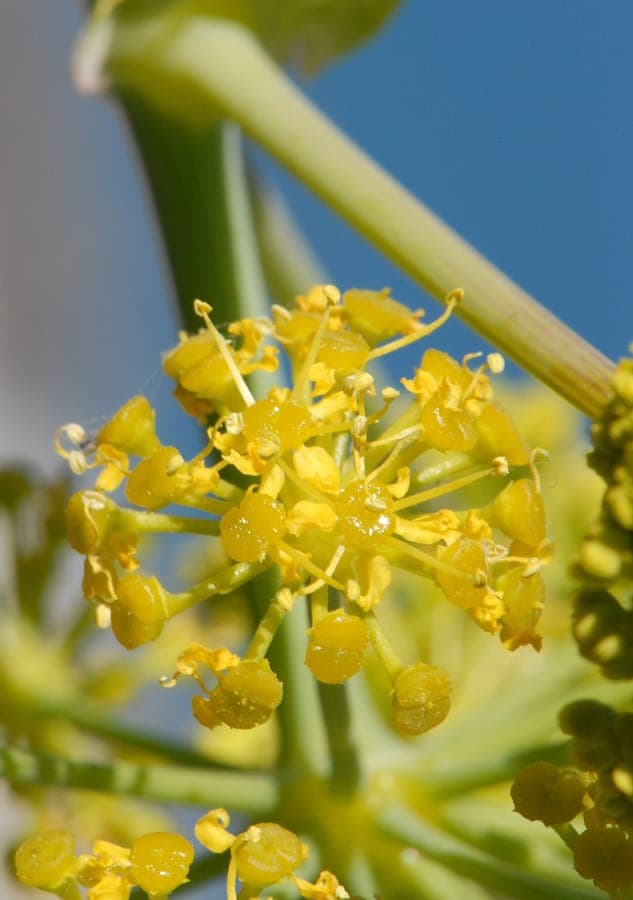
Yan Wong from Oxford / CC BY 2.0, via Wikimedia Commons
Ferula tingitana: complete guide
Ferula tingitana
¿Quieres ver Ferula tingitana: complete guide en tu jardín?
1 minuto, sin tarjeta de crédito
Overview
Ferula tingitana, commonly called Tangier fennel or Tangier giant-fennel, is a striking plant from the Ferula genus within the Apiaceae family. This impressive species is noted for its exquisitely divided foliage and delicate yellow flower clusters. Native to North Africa and the Eastern Mediterranean, this ferula behaves in temperate climates as a short-lived annual or short-lived perennial.
Appearance & Bloom
Ferula tingitana grows 1-2 meters tall, forming elegant, highly divided leaves that appear light and airy. The plant develops large, flat yellow-green flower panicles in summer, composed of countless tiny florets. This creates an ethereal lightness and structural drama in the border.
Full bloom occurs June-July, followed by attractive seed capsules that remain ornamental into autumn. The architectural silhouette makes Ferula tingitana invaluable as a focal point in summer and fall compositions.
Ideal Location
Full sun is essential. Aim for at least 8 hours of direct sunlight daily. Ferula tingitana performs best in open, warm locations with good air movement. Shelter from strong winds helps preserve foliage integrity.
Plant in front borders or prominent sunny beds. Avoid partial shade and shadowed corners.
Soil
Drainage matters far more than fertility. Mix 60 percent sand/gravel with 40 percent compost. Ferula tingitana tolerates chalky, lean soils well and actually prefers nutrient-poor conditions.
Waterlogging is the chief nemesis; winter rot ends many plants. On clay soils, incorporate substantial sand and gravel.
Watering
Once established, Ferula tingitana is drought-resistant. During the growing season (April-June), water regularly to maintain moderate moisture. Post-bloom (July+), reduce considerably. Winter should be quite dry.
Young plants in their first season need consistent but well-drained moisture. Thereafter, water far less frequently.
Diseño gratis
¿Quieres ver Ferula tingitana: complete guide en tu jardín? Crea un diseño gratis ahora.
Pruning
Minimal pruning is needed. Spent flowers may be removed for tidiness, though many gardeners retain seed heads for their ornamental value. Dead leaf bases can be carefully removed.
The plant does not regenerate well from old wood, so avoid severe cutbacks.
Maintenance Calendar
- April-May: Active growth; water regularly. Stake young plants if needed.
- June-July: Bloom period; water less frequently.
- August-September: Seed capsules form; water sparingly.
- October-March: Winter dormancy; keep very dry. Risk of rot in very wet winters.
Winter Hardiness
Half-hardy to moderately frost-sensitive (-2 to -5 C). In mild southern winters, outdoor survival is possible, but northern regions face winterkill risk. Protection from excessive winter moisture is critical.
Best practice: grow in containers, relocating to shed/greenhouse October-March, or cultivate as an annual. Spring sowing provides fresh plants yearly.
Companion Plants
Ferula tingitana pairs beautifully with:
- Verbena bonariensis (purple verbena)
- Delphinium (larkspur)
- Scabiosa (pincushion flower)
- Agastache (hyssop)
- Achillea (yarrow)
These combinations accentuate the light, architectural form of Tangier fennel.
Closing
Ferula tingitana brings Mediterranean elegance and summer structure to gardens. Despite its warmth preference, it performs well as a seasonal or container specimen. With attention to drainage and sun exposure, this striking plant delivers ornamental interest from June through September. Find it through specialty nurseries. Use gardenworld.app to integrate this spectacular plant into harmonious garden designs.
¿Quieres ver Ferula tingitana: complete guide en tu jardín? Crea un diseño gratis ahora.
Sube una foto, elige un estilo y obtén un diseño fotorrealista con lista de plantas en menos de un minuto.
Más de 10.000 jardines diseñados
Sin tarjeta de crédito


Plantas similares
Whorled carrot: complete guide
Daucus involucratus
Daucus involucratus is a Mediterranean umbellifer with white flower heads framed by lacy bracts. Growing this gravel garden gem.
Daucus muricatus: complete guide
Daucus muricatus
Daucus muricatus, the spiny wild carrot, grows wild on Mediterranean coasts. Discover sowing, June-July bloom, and wildflower meadow use.
Daucus pumilus: complete guide
Daucus pumilus
Daucus pumilus is a dwarf wild carrot relative with white lacy umbels, thriving on dunes and coastal rock in poor, fast-draining soil.