
Wikimedia Commons / CC BY-SA 3.0, via Wikimedia Commons
Common Giant-fennel: complete guide
Ferula communis
¿Quieres ver Common Giant-fennel: complete guide en tu jardín?
1 minuto, sin tarjeta de crédito
Overview
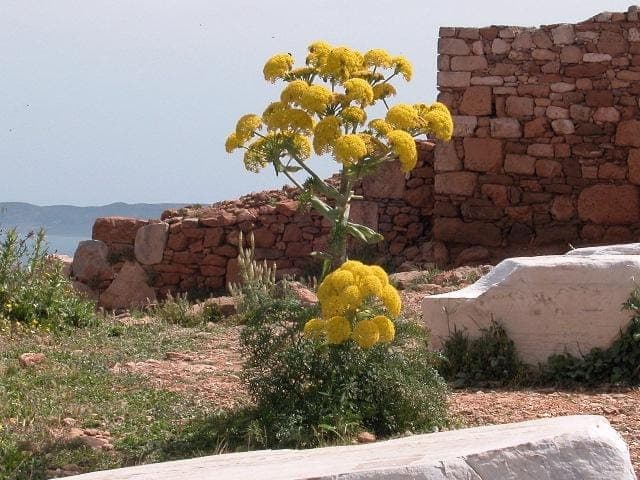
Common Giant-fennel (Ferula communis) is a stately Mediterranean plant from the Apiaceae family. This imposing species is native to Mediterranean regions and grows wild in dry, stony habitats from North Africa through West Asia. In gardens, it serves as a spectacular architectural plant with dramatic, umbrella-shaped clusters of golden-yellow flowers.
Appearance and Bloom
Common Giant-fennel forms a powerful plant with fine, feathery foliage creating an airy, plume-like silhouette. It reaches heights of 1.5 to 3 meters with striking yellow flower clusters (umbels) in May through June. The plant is pollinator-friendly and produces abundant seeds that offer bird food.
Ideal Location
This plant thrives in full sun and warm positions. It tolerates wind well and is thus suitable for exposed locations. The plant is ideal for Mediterranean gardens, dry sunny spots, and very hot, stony sites where other plants struggle.
Soil
Common Giant-fennel grows in lean, well-draining, sandy soils. It tolerates very poor ground and is thus ideal for locations where other ornamentals fail. A pH of 6.5 to 8.0 is suitable. It prefers stony, gritty soils with minimal nutrient content.
Watering
Once established, Common Giant-fennel is extremely drought-tolerant. It requires little water after roots penetrate deeply. During very dry periods, supplemental water may be given, but this is rarely necessary. Avoid waterlogging.
Diseño gratis
¿Quieres ver Common Giant-fennel: complete guide en tu jardín? Crea un diseño gratis ahora.
Pruning
Minimal pruning is necessary. Spent flower clusters may be removed for aesthetic effect. The plant is typically a biennial or short-lived perennial, so it will die after blooming. Allow self-seeding for continuous presence.
Maintenance Calendar
Year 1 (establishment): Water regularly until established (3-6 months). Year 2 (flowering): Minimal care; water only in extreme drought. Post-bloom: Allow seeds to ripen; permit self-seeding. Winter: No care needed.
Winter Hardiness
Common Giant-fennel is sensitive to severe frost and is best suited to temperate climates (USDA zone 8-10). In colder areas, it may be grown in a greenhouse or as an annual. In temperate zones, winter protection may be beneficial.
Companion Plants
Excellent companions include: Gum Cistus (Cistus ladanifer), Meadow Sage (Salvia nemorosa), and French Lavender (Lavandula stoechas). These plants share drought tolerance and Mediterranean preferences.
Closing
Common Giant-fennel is an impressive, low-maintenance plant for sunny, dry gardens. Its spectacular yellow flowers and architectural form make it a statement plant. Seek seeds or young plants from Mediterranean plant suppliers or online vendors.
Explore more plant guides at gardenworld.app/en and gardenworld.app/nl
¿Quieres ver Common Giant-fennel: complete guide en tu jardín? Crea un diseño gratis ahora.
Sube una foto, elige un estilo y obtén un diseño fotorrealista con lista de plantas en menos de un minuto.
Más de 10.000 jardines diseñados
Sin tarjeta de crédito


Plantas similares
Whorled carrot: complete guide
Daucus involucratus
Daucus involucratus is a Mediterranean umbellifer with white flower heads framed by lacy bracts. Growing this gravel garden gem.
Daucus muricatus: complete guide
Daucus muricatus
Daucus muricatus, the spiny wild carrot, grows wild on Mediterranean coasts. Discover sowing, June-July bloom, and wildflower meadow use.
Daucus pumilus: complete guide
Daucus pumilus
Daucus pumilus is a dwarf wild carrot relative with white lacy umbels, thriving on dunes and coastal rock in poor, fast-draining soil.