
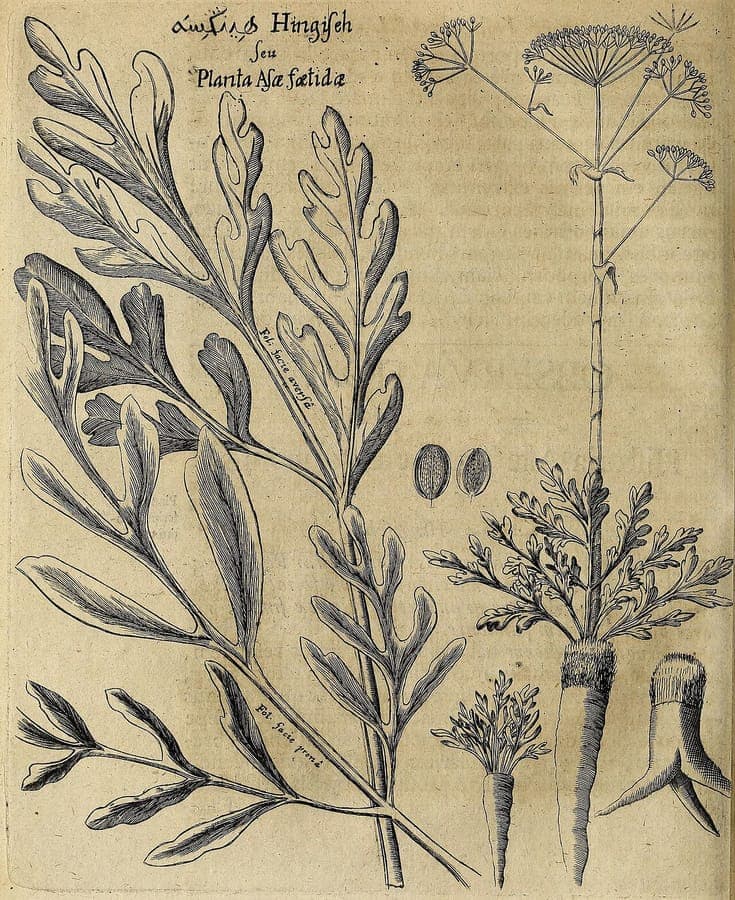
Engelbert Kaempfer / Public domain, via Wikimedia Commons
Ferula assa-foetida: complete guide
Ferula assa-foetida
¿Quieres ver Ferula assa-foetida: complete guide en tu jardín?
1 minuto, sin tarjeta de crédito
Overview
Ferula assa-foetida, also known as Devil's dung, Asafetida, or Stinkasant, is a fascinating medicinal plant from the arid mountain regions of Iran. This plant is renowned for its strongly odorous yellow resin that has been used for centuries in medicine and cooking. Despite its infamous odor, Ferula assa-foetida is a botanical curiosity many gardeners wish to cultivate.
The plant belongs to the Apiaceae family, the same family as carrots, parsley, and fennel. This group is known for aromatic and useful properties. Ferula assa-foetida distinguishes itself through its unique scent profile and ancient history of human use.
Appearance and bloom
Ferula assa-foetida grows as a large stately specimen with very fine, feathery, light blue-green leaves that radiate from the central stem. The plant reaches heights of 100 to 150 centimeters under optimal conditions. The leaves are delicate and much divided, making the whole plant appear airy and elegant.
The flowers are small, yellow, and appear in flat-topped clusters above the foliage. They typically bloom in early summer and are later followed by characteristic seed discs. The most striking feature, however, is the characteristic gum-resin that exudes from crushed parts of the plant.
Ideal location
Ferula assa-foetida thrives in warm, full sun environments. At least six to eight hours of direct sunlight daily is essential. The plant is very tolerant of large temperature fluctuations and windy conditions.
Plant this specimen where you tolerate wind drift, as the foliage can be somewhat fragile. In gardens with warm, dry climates, Ferula assa-foetida will feel like it's in Iran, Afghanistan, and Central Asia.
Soil
Sandy to silty, well-draining soil is essential. This plant grows in very poor, lean soil and tolerates low nutrient levels. Too much fertilizer can actually lead to excessive leaf growth without flowering. In gardens where the soil is naturally poorer, this plant will perform better.
The pH can be neutral to slightly acidic. This plant grows completely without fertilizer, if you prefer.
Diseño gratis
¿Quieres ver Ferula assa-foetida: complete guide en tu jardín? Crea un diseño gratis ahora.
Watering
Moderate watering during growth. In the growing season (spring and summer), water when the soil feels dry to about 2-3 centimeters below the surface. In winter, reduce significantly.
Once established, Ferula assa-foetida is fairly drought-tolerant. The deep root system helps it access water in deeper soil layers. Overwatering can cause root rot.
Pruning
Minimal pruning is needed. This plant naturally maintains a neat form. Remove only damaged leaves or stems. Flower heads can be removed after seed set if you want to prevent self-seeding.
Be cautious with pruning as plant sap smells strongly and can irritate skin.
Maintenance calendar
Spring: Resume watering after winter. Check for pests. Summer: Water when soil feels dry. Monitor for disease. Fall: Reduce watering. Collect seed. Winter: Minimal care. Plant may go dormant.
Winter hardiness
Ferula assa-foetida is fairly cold-hardy and can tolerate winter temperatures down to about -10 to -15 degrees Celsius. In very cold climates, however, protection or bringing seeds indoors is recommended.
In temperate climates, the plant will likely die back yearly, with some remains visible during winter.
Companion plants
Pair Ferula assa-foetida with other herb plants and xeriscape favorites: Sedum, Achillea, Salvia, Artemisia, and other Apiaceae species such as fennel or Angelica. The fine structure creates beautiful contrast with more compact plants. Yellow flowers harmonize well with yellow Achillea or Solidago.
Closing thoughts
Ferula assa-foetida is not for everyone, especially not for the scent-sensitive. However, for gardeners who appreciate unique, medicinal plants and prefer the dry garden type, this is undoubtedly a fascinating choice. The plant is known in traditional medicine and Ayurvedic practice, and its historical significance makes growing it meaningful. Visit gardenworld.app for inspiration on how to incorporate this plant into your garden design. You'll find this plant in specialized herb nurseries. At gardenworld.app, our experts can help you design a garden where this unique plant can thrive.
¿Quieres ver Ferula assa-foetida: complete guide en tu jardín? Crea un diseño gratis ahora.
Sube una foto, elige un estilo y obtén un diseño fotorrealista con lista de plantas en menos de un minuto.
Más de 10.000 jardines diseñados
Sin tarjeta de crédito


Plantas similares
Whorled carrot: complete guide
Daucus involucratus
Daucus involucratus is a Mediterranean umbellifer with white flower heads framed by lacy bracts. Growing this gravel garden gem.
Daucus muricatus: complete guide
Daucus muricatus
Daucus muricatus, the spiny wild carrot, grows wild on Mediterranean coasts. Discover sowing, June-July bloom, and wildflower meadow use.
Daucus pumilus: complete guide
Daucus pumilus
Daucus pumilus is a dwarf wild carrot relative with white lacy umbels, thriving on dunes and coastal rock in poor, fast-draining soil.