
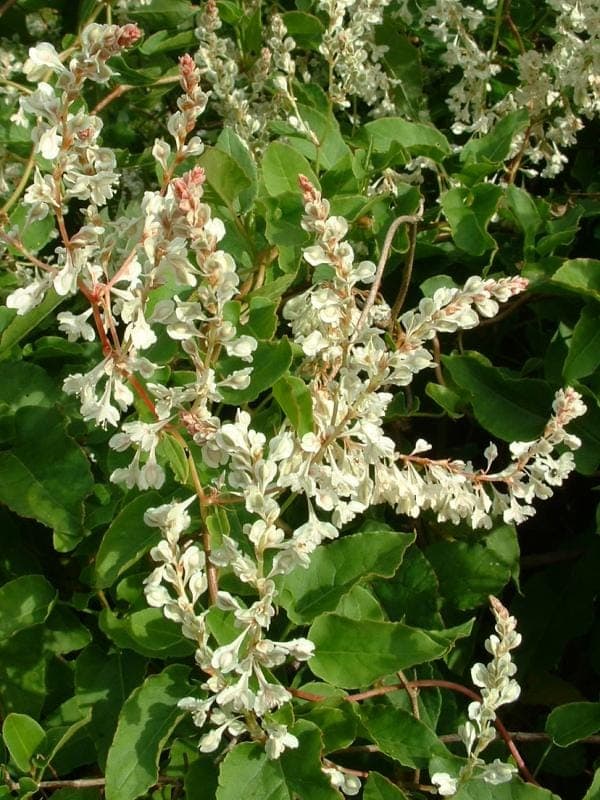
J.F. Gaffard Jeffdelonge at fr.wikipedia / CC BY-SA 3.0, via Wikimedia Commons
Fallopia aubertii: complete guide
Fallopia aubertii
¿Quieres ver Fallopia aubertii: complete guide en tu jardín?
1 minuto, sin tarjeta de crédito
Overview
Chinese fleecevine (Fallopia aubertii) is a frost-hardy climbing plant from the Polygonaceae family. This extremely vigorous scrambling plant originates from the Himalayas and Central China, where it grows in natural mountain environments. Fallopia aubertii reaches great heights quickly and covers large surfaces with dense growth. The plant is famous for its extremely rapid growth, elegant appearance, and abundant white flowers that appear throughout the summer season.
Appearance and bloom
Chinese fleecevine forms strong, woody-growing vines that can reach tens of meters in favorable environments. Leaves are lance-shaped, approximately 5-10 centimeters long, bright green, and finely branched. In summer and autumn, numerous white to pink flowers appear in slender plumes that are highly decorative. These flowers attract pollinators and are later replaced by brown seeds.
Ideal location
Fallopia aubertii blooms optimally in fully sunny locations but tolerates partial shade well. The plant needs at least 4-6 hours of sunlight daily for vigorous growth. In full sun, more flowers develop and more compact growth occurs. Position the plant where strong support is needed - against sturdy pergolas, heavy fencing, or strong screens. The plant can reach enormous sizes, so plan on grand scale.
Soil
Fallopia aubertii grows in virtually any soil type, from sandy to clayish. Neutral to slightly acidic soils are ideal. Well-draining soil is appreciated, but the plant tolerates moderately moisture-retentive soils. Fertilization need not be intense; moderate nutrient levels suffice. In very nutrient-poor soils, initial fertilization can help start growth.
Watering
After planting, water regularly in the first growing season until a deep root system is established. Once established, watering can be reduced considerably. The plant is fairly drought-tolerant, though regular moisture gives better growth. In dry summers, extra water can help encourage growth. Avoid waterlogged conditions; good drainage is essential.
Diseño gratis
¿Quieres ver Fallopia aubertii: complete guide en tu jardín? Crea un diseño gratis ahora.
Pruning
Pruning is periodically needed to control growth and maintain shape. In late winter or early spring, severe pruning measures can take place to limit growth. Uncontrolled growth can become very dominant. Regular pruning during the growing season can help stimulate more compact forms. Many growers prune this plant heavily annually.
Maintenance calendar
April-May: Growth begins; apply water; initial pruning possible. June-August: Full growth; white flowers appear. September-October: Continuing bloom; seed ripening. November-February: Dormancy; heavy pruning in February possible. March-April: Growth resumes; rebuild structure.
Winter hardiness
Chinese fleecevine is very winter-hardy and tolerates temperatures to -20 degrees Celsius without damage. The plant is fully hardy in European climates. However, very severe winters can damage young growth. Established roots are very robust against frost. The plant does not die back and retains much woody structure.
Companion plants
Fallopia aubertii works well with other climbers, though dominance must be managed. Underneath, good groundwork can be placed - low growers that avoid competition. Wild roses, clematis, and other softer climbers can grow mixed with Fallopia. Ensure support structure is robust enough for all this mass.
Closing
Chinese fleecevine is a spectacular screening plant for large, open spaces. With rapid growth and abundant flowers, this climbing plant delivers years of beauty. Plant centers throughout Europe regularly stock this climbing plant. Visit gardenworld.app for more ideas on screens and pergolas. With Fallopia aubertii you have a proven, powerful climbing plant. Ask gardenworld.app for more large climbing and screen design ideas.
¿Quieres ver Fallopia aubertii: complete guide en tu jardín? Crea un diseño gratis ahora.
Sube una foto, elige un estilo y obtén un diseño fotorrealista con lista de plantas en menos de un minuto.
Más de 10.000 jardines diseñados
Sin tarjeta de crédito


Plantas similares
Crosby's wild buckwheat: complete guide
Eriogonum crosbyae
Full guide to growing Eriogonum crosbyae: ideal site, soil, watering, winter hardiness and companion plants for this rare western wild buckwheat.
Spreading buckwheat: complete guide
Eriogonum effusum
Full guide to growing Eriogonum effusum: ideal site, soil, watering, winter hardiness and companion plants for this prairie subshrub from the American West.
Tall woolly buckwheat: complete guide
Eriogonum elatum
Full guide to Eriogonum elatum: siting, soil, watering, pruning and companion plants for this elegant white-flowered buckwheat from the western United States.