
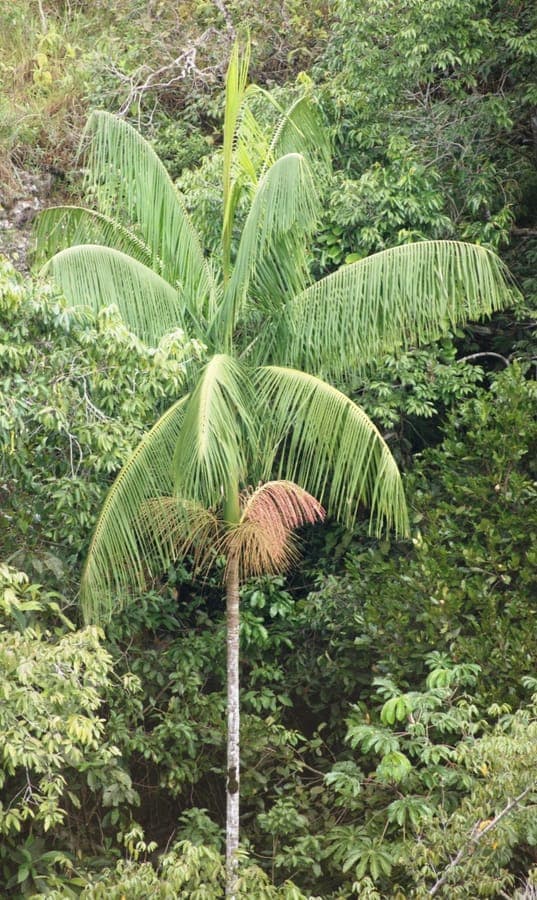
João Medeiros / CC BY 2.0, via Wikimedia Commons
Euterpe edulis: complete guide
Euterpe edulis
¿Quieres ver Euterpe edulis: complete guide en tu jardín?
1 minuto, sin tarjeta de crédito
Overview
Euterpe edulis, known as assai palm or jicara, is a fascinating palm species originating from the tropical regions of Brazil and neighbouring countries in South America. In its native habitat this palm grows in rainforests and forms elegant trunks with graceful feathered leaves. The plant is known for its edible fruits that have become famous worldwide. This palm brings tropical beauty and exoticism to gardens in warmer climates.
Appearance & bloom
Euterpe edulis grows as a slender palm with a single trunk that can reach 20-30 metres in natural conditions, but typically stays smaller in gardens. The leaves are beautifully feathered and can reach up to 2 metres long. The plant produces small yellow or greenish flowers of little conspicuousness, but very abundant in flower clusters. After flowering, small dark purple berries follow, about the size of a blueberry. These fruits are very ornamental and attractive to birds.
Ideal location
Euterpe edulis wants a warm, sunny location. Place this palm where it receives at least 6-7 hours of direct sunlight per day. In tropical and subtropical climates it grows best. In temperate climates this palm can be grown in a greenhouse or winter garden. Full sun promotes more compact growth, but in very hot climates the plant appreciates some afternoon shade. Sheltered locations are better than strong wind.
Soil
Euterpe edulis thrives in rich, well-draining soil. Make a mixture of garden soil, leaf and gravel compost. The palm prefers slightly acidic to neutral soil with a pH between 6 and 7. Heavy clay must be improved with sand. In containers, prefers loose, nutrient-rich potting soil. Regular supply of organic material helps growth.
Diseño gratis
¿Quieres ver Euterpe edulis: complete guide en tu jardín? Crea un diseño gratis ahora.
Watering
Euterpe edulis likes regular watering. Keep soil moderately moist during growing season. Do not overwater - waterlogging leads to problems. Water less in winter. Container-grown palms need regular watering, especially in warm months. Prefer to use rainwater or standing water. Humidity helps growth.
Pruning
Euterpe edulis requires minimal pruning. Only remove dead leaves and fruits. Damaged leaflets can be carefully removed. Prefer never to prune trunks. The palm grows carefully at its natural height. Too much pruning can disrupt growth.
Maintenance calendar
May through October are growth months with regular watering. Flowering happens continuously. Fruit setting in summer through autumn. Winter is rest period with less water. Regular feeding during growth time with palm fertiliser pellets helps. Check for insects and fungi.
Winter hardiness
Euterpe edulis is not winter hardy in temperate climates. In the Netherlands and Belgium this palm must be grown in a greenhouse or frost-protected location. Temperatures below 10 degrees Celsius can damage the plant. In containers the plant can be moved to a protected environment in winter. This is a true tropical plant.
Companion plants
Euterpe edulis fits in tropical garden arrangements with other palms and tropical plants. Combine with other heat-lovers such as banana plants, exotic broad-leaved plants and climbing plants. In containers this palm can grow beautifully alone. Ensure sufficient space around growth.
Closing thoughts
Euterpe edulis is an exotic choice for those seeking tropical atmosphere. The elegant leaves and purple fruits bring character. In warm climates and greenhouse gardens this palm can grow well. Discover more garden plants and inspiration on gardenworld.app.
¿Quieres ver Euterpe edulis: complete guide en tu jardín? Crea un diseño gratis ahora.
Sube una foto, elige un estilo y obtén un diseño fotorrealista con lista de plantas en menos de un minuto.
Más de 10.000 jardines diseñados
Sin tarjeta de crédito


Plantas similares
Needle palm: complete guide
Rhapidophyllum hystrix
Everything about the needle palm: the world's hardiest palm, suitable for gardens in temperate climates down to USDA zone 7b.
Saw palmetto: complete guide
Serenoa repens
A complete guide to saw palmetto (Serenoa repens), the iconic fan palm from Florida and the southeastern United States, prized for its toughness.
Puerto Rican hat palm: complete guide
Sabal causiarum
Grow Puerto Rican hat palm successfully. A majestic fan palm with tropical presence suited to sheltered Mediterranean-style gardens.