
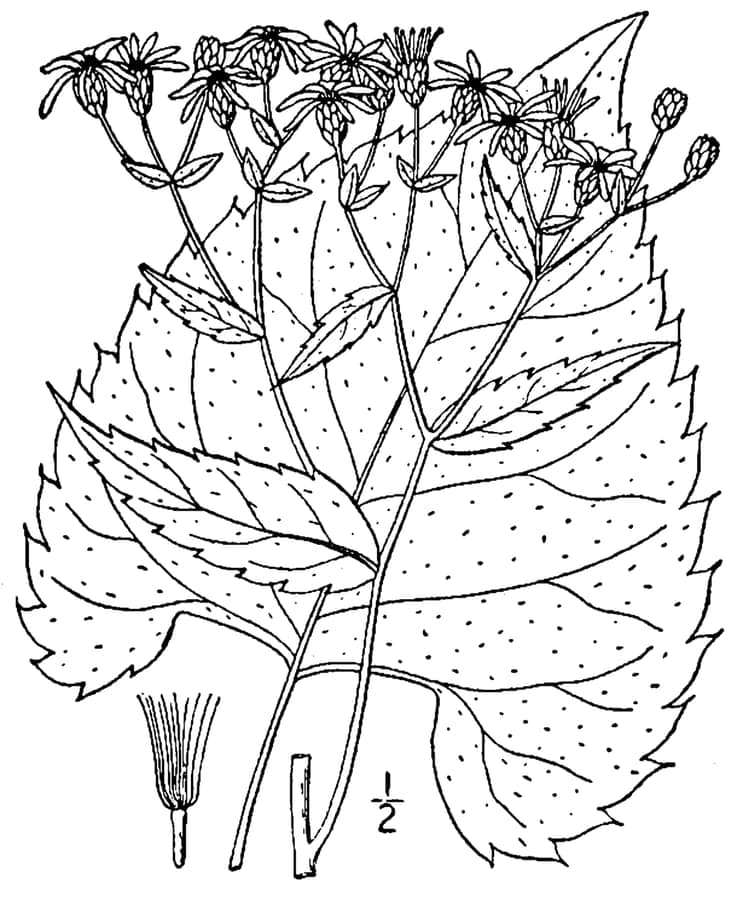
Britton, N.L., and A. Brown. 1913. An illustrated flora of the northern United States, Canada and the British Possessions. 3 vols. Charles Scribner's Sons, New York. Vol. 3: 411. Courtesy of Kentucky Native Plant Society. Scanned by Omnitek Inc. / Public domain, via Wikimedia Commons
Eurybia schreberi: complete guide
Eurybia schreberi
¿Quieres ver Eurybia schreberi: complete guide en tu jardín?
1 minuto, sin tarjeta de crédito
Overview
Eurybia schreberi, commonly known as Schreber's Aster or Nettle-leaved Aster, is a modest yet beautiful perennial from North America. This aster grows wild from southeastern Canada to the mid-southern United States. The plant is valuable for any garden as it provides fall flowers when many other plants have faded.
It is a compact plant reaching 30 to 60 centimeters tall. The plant bears hundreds of small purple to pink flowers that are important for late bees, butterflies, and other pollinators. The plant is easy to grow and requires minimal maintenance.
Appearance and Bloom
Eurybia schreberi is recognizable by its characteristic nettle-like leaves, hence the name Nettle-leaved Aster. The leaves are slightly rough and have a fine texture. The plant bears countless small, radiate flowers usually purple to lilac, sometimes with a yellowish tint.
Flowering occurs from August through October, sometimes extending to November in milder years. This makes it an important fall pollinator plant. The flowers grow in dense clusters at the stem tips, producing a very full blooming period.
The plant reaches about 40 to 60 centimeters tall and equally wide. This makes it suitable for borders and smaller garden spaces.
Ideal Location
Eurybia schreberi grows best in full sun to light shade. The plant can tolerate slightly more shade in southern regions, especially in very hot climates. In temperate zones, a location with at least four to six hours of sunlight is ideal.
The plant is extremely tough and adapts to various growing conditions. It grows well in woodlands, on slopes, and in open fields, demonstrating its tolerance.
Full sun produces the most flowers. In partial shade the plant grows well but may flower more sparsely.
Soil
Eurybia schreberi needs no special soil type. It grows well in virtually any well-draining soil. The plant tolerates dry, wet, clay, and sandy soils.
Look for soil with a pH between 4.5 and 7.0. The plant is not fussy. In very heavy clay soil, adding some coarse sand can improve drainage.
The plant even grows well in less fertile soils, so special enrichment is not necessary.
Diseño gratis
¿Quieres ver Eurybia schreberi: complete guide en tu jardín? Crea un diseño gratis ahora.
Watering
Eurybia schreberi is reasonably drought-tolerant once established. After planting, the plant needs regular watering until its first growing season concludes.
In most temperate climates, supplemental watering is not needed after the first months. The plant tolerates both dry weather and wet conditions, though it prefers moderately moist soil.
During intense drought, regular watering helps strengthen flowering.
Pruning
Deadheading spent flowers encourages further blooming. This can continue deep into fall if you continuously remove dead flowers.
In spring you can cut the plant back to about 15 centimeters height. This promotes a more compact form and more flowers.
In late winter or early spring, remove all dead, damaged, or diseased stems.
Maintenance Calendar
Preparation: Plant in spring (March-May) or fall (September-October). Ensure regular watering the first year.
Growing: During the growing season (April-August), the plant requires minimal care. Deadhead as needed.
Blooming: August through October. Remove spent flowers for continuous blooms. Keep the plant lightly groomed.
Resting: Winter dormancy. No special care needed. Cut back in early spring if desired.
Winter Hardiness
Eurybia schreberi is completely hardy throughout temperate regions. The plant tolerates temperatures far below -20 degrees Celsius. The plant dies back to ground level in winter and regrows in spring.
The plant needs no protection in harsh winters. It is an extremely robust, resilient plant.
Companion Plants
Eurybia schreberi pairs well with other fall-blooming plants:
- Rudbeckia (Black-eyed Susan)
- Sedum (Stonecrop)
- Solidago (Goldenrod)
- Helenium (Sneezeweed)
- Other Aster species
- Late-blooming Salvia
Combine these in borders for continuous fall color.
Closing Remarks
Eurybia schreberi is an underrated gem in the fall garden. With its beautiful flowers, low maintenance requirements, and attraction for pollinators, it deserves a place in every garden.
The plant is practically foolproof. Plant it in full sun to light shade, ensure regular watering the first year, and you will have fall blooms for years.
For more information, visit gardenworld.app for guides and design ideas. Enjoy growing this charming aster!
¿Quieres ver Eurybia schreberi: complete guide en tu jardín? Crea un diseño gratis ahora.
Sube una foto, elige un estilo y obtén un diseño fotorrealista con lista de plantas en menos de un minuto.
Más de 10.000 jardines diseñados
Sin tarjeta de crédito


Plantas similares
Calendula stellata: complete guide
Calendula stellata
Complete guide to Calendula stellata, the star-flowered marigold from Sicily: location, soil, watering and companion planting tips.
Korean chrysanthemum: complete guide
Chrysanthemum x rubellum
Chrysanthemum x rubellum is a hardy autumn perennial with single pink to copper flowers from August to November. Care and combinations.
Helianthus divaricatus: complete guide
Helianthus divaricatus
Helianthus divaricatus is a North American woodland sunflower with yellow summer blooms, ideal for naturalistic borders and shady edges.