
Mets501 / CC BY-SA 4.0, via Wikimedia Commons
Eurybia divaricata: complete guide
Eurybia divaricata
¿Quieres ver Eurybia divaricata: complete guide en tu jardín?
1 minuto, sin tarjeta de crédito
Overview
Eurybia divaricata, commonly known as White wood aster or Heart-leaf aster, is an elegant and effortless perennial native to Eastern Canada and the USA. This wildflower grows naturally in forests and shaded areas from Alabama to Maine.
With its refined white blossoms and heart-shaped foliage, this plant creates a perfect addition to shady woodland gardens.
Appearance and Bloom
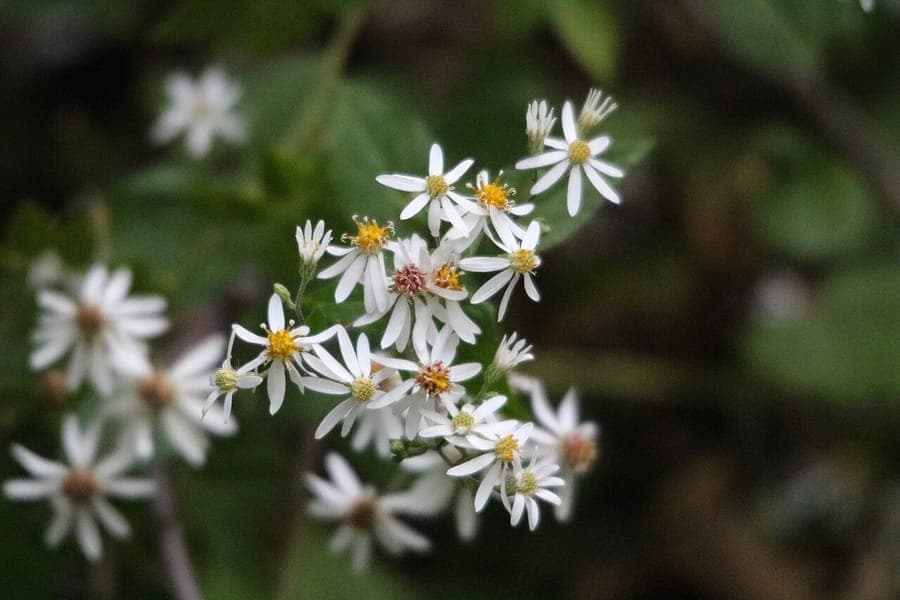
Eurybia divaricata develops into a slender perennial approximately 30-60 cm tall. Leaves are heart-shaped, dark green, and attractive, growing in a basal cluster. Thin, wiry stems carry themselves elegantly and create wonderful texture.
Flowers are small white composites with yellow discs appearing from August through October. These gentle blooms offer charming contrast to the advancing season.
Ideal Location
Eurybia divaricata thrives in dappled shade to full shade. This is an ideal wildflower for woodlands and under trees. The plant also accepts full sun in cooler climates. In temperate regions, it is frequently grown in part shade.
Provide shelter from harsh midday sun in very warm regions.
Soil
Use moist, humus-rich soil with good drainage. The plant prefers neutral to slightly acidic soil (pH 6.0-7.0). Add compost to poorer soils for improved flowering.
This plant thrives in woodland soil rich in organic matter.
Watering
Water regularly during dry periods, especially the first season. Once established, these plants tolerate moderate drought, though they prefer consistently moist soil. Mulch around the base to promote moisture retention.
In containers, water regularly and do not allow drying out.
Diseño gratis
¿Quieres ver Eurybia divaricata: complete guide en tu jardín? Crea un diseño gratis ahora.
Pruning
Eurybia divaricata requires minimal pruning. Remove spent flowers to encourage a longer season. In early spring, dead stems may be removed. After blooming, the plant can be cut back to base for more compact growth next season.
Maintenance Calendar
- Spring: Remove dead wood, add compost, water
- Summer: Regular watering
- Autumn: Enjoy blooms, do not prune until after flowering
- Winter: Add mulch for protection
Winter Hardiness
Eurybia divaricata is fully winter hardy in temperate European zones. In fact, it will thrive in many regions of the Netherlands, Belgium, and northern France. Cold winters present no problem.
Plant this with confidence in permanent borders. Visit gardenworld.app/en for woodland garden design inspiration.
Companion Plants
Combine with other shade-tolerant bloomers like Tiarella polyphylla or Hosta species. In woodland gardens, it pairs well with fern varieties and other native wildflowers.
In formal shade borders, pair with Liriope muscari for extended interest.
Final Thoughts
Eurybia divaricata is an effortless, reliable perennial for shady gardens. The gentle white autumn blooms offer refinement and elegance. Once established, this plant will provide years of gentle, elegant contrast in woodland settings.
Seek seeds from native plant nurseries across Europe.
¿Quieres ver Eurybia divaricata: complete guide en tu jardín? Crea un diseño gratis ahora.
Sube una foto, elige un estilo y obtén un diseño fotorrealista con lista de plantas en menos de un minuto.
Más de 10.000 jardines diseñados
Sin tarjeta de crédito


Plantas similares
Calendula stellata: complete guide
Calendula stellata
Complete guide to Calendula stellata, the star-flowered marigold from Sicily: location, soil, watering and companion planting tips.
Korean chrysanthemum: complete guide
Chrysanthemum x rubellum
Chrysanthemum x rubellum is a hardy autumn perennial with single pink to copper flowers from August to November. Care and combinations.
Helianthus divaricatus: complete guide
Helianthus divaricatus
Helianthus divaricatus is a North American woodland sunflower with yellow summer blooms, ideal for naturalistic borders and shady edges.