
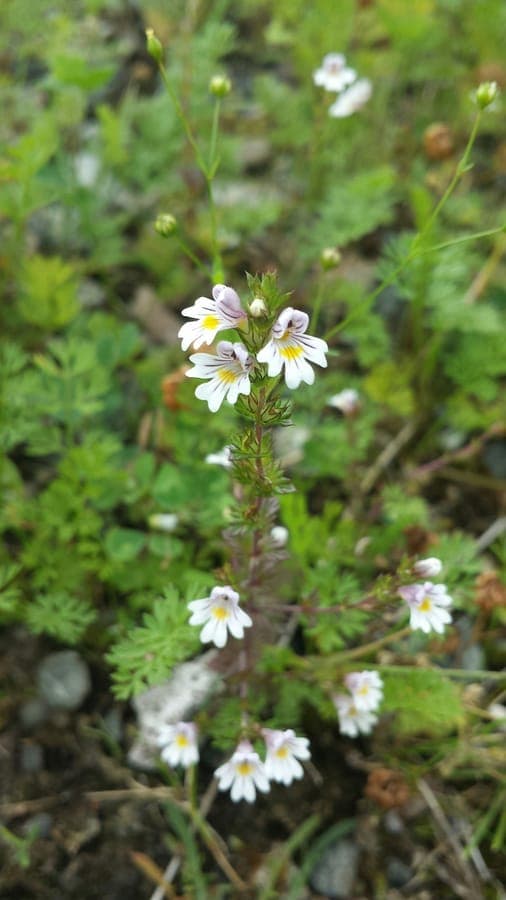
alicia penney / CC BY 4.0, via Wikimedia Commons
Euphrasia nemorosa: complete guide
Euphrasia nemorosa
¿Quieres ver Euphrasia nemorosa: complete guide en tu jardín?
1 minuto, sin tarjeta de crédito
Overview
Euphrasia nemorosa, better known as common eyebright or woodland eyebright, is a charming plant from the Orobanchaceae family. This European wildflower is known for its delicate flowers and traditional use in herbal medicine. With its elegant forms and botanical value, Euphrasia nemorosa adds subtle beauty to natural gardens.
Appearance and bloom
Euphrasia nemorosa is a compact herbaceous plant producing fine, violet or white flowers. Flowers appear in summer (May to August) and attract pollinators. Typical for Euphrasia species, the flowers are two-lipped with refined patterns. The plant reaches only 10-30 cm in height, making it ideal for foreground placements.
Ideal location
Common eyebright thrives best in half-shade to full sun, depending on soil moisture. This is a plant at home on grasslands, open woodland edges and damper terrains. Though not prevalent in gardens, it grows well in wildflower mixes and disturbed areas.
Soil
Euphrasia nemorosa prefers slightly acidic soils (pH 5-5.5) and less fertile terrain. It often establishes on grasslands with lower nitrogen. Good drainage is important, though the plant is fairly flexible. As a hemi-parasitic plant (typical for Euphrasia), it may extract nutrients from neighboring roots.
Diseño gratis
¿Quieres ver Euphrasia nemorosa: complete guide en tu jardín? Crea un diseño gratis ahora.
Watering
Once established, Euphrasia nemorosa is fairly drought-tolerant. Water regularly during the first growing season. After that, it can usually manage with rainfall alone. In dry summers you may light sprinkle. Avoid overwatering, especially in winter when the plant tolerates damper soils.
Pruning
Minimal pruning is required for this plant. Leave seed heads for self-seeding. Remove dead material after flowering if desired, but many gardeners leave this for pollinating insects.
Maintenance calendar
MAY-JUNE: Bloom start, basic maintenance. JULY-AUGUST: Peak bloom, minimal watering if needed. SEPTEMBER-OCTOBER: Seed setting, no maintenance. NOVEMBER-APRIL: Winter period, plant is largely dormant.
Winter hardiness
Euphrasia nemorosa is extremely hardy in Europe (zones 3-8) and thrives in much milder climates. This is a true aboveground plant that tolerates considerable cold. It grows wild in many places across the UK and northern Europe.
Companion plants
In wildflower mixes, Euphrasia nemorosa works well with other woodland-edge specialists: self-heal, agrimony and various grasses. For gardens, combine with low-growing succulents and Primula species.
Closing
Euphrasia nemorosa brings natural elegance and pollinator value to gardens. Perfect for those wanting a more natural, low-maintenance garden landscape. For more wildflower suggestions and garden design, visit gardenworld.app/en.
Gardenworld.app helps you design ecosystem-friendly gardens with AI recommendations.
¿Quieres ver Euphrasia nemorosa: complete guide en tu jardín? Crea un diseño gratis ahora.
Sube una foto, elige un estilo y obtén un diseño fotorrealista con lista de plantas en menos de un minuto.
Más de 10.000 jardines diseñados
Sin tarjeta de crédito


Plantas similares
Northwestern Indian paintbrush: complete guide
Castilleja angustifolia
All about Castilleja angustifolia, the northwestern Indian paintbrush from dry western US steppes. Growing, care, and companion plant advice.
Wavyleaf Indian paintbrush: complete guide
Castilleja applegatei
Everything about Castilleja applegatei, the wavyleaf paintbrush from Oregon and California. Host plants, care, location, and garden use covered.
Bushy bird's-beak: complete guide
Cordylanthus ramosus
Complete guide to Cordylanthus ramosus, the hemiparasitic annual of western US steppes: ecology, host plants, cultivation and uses.