
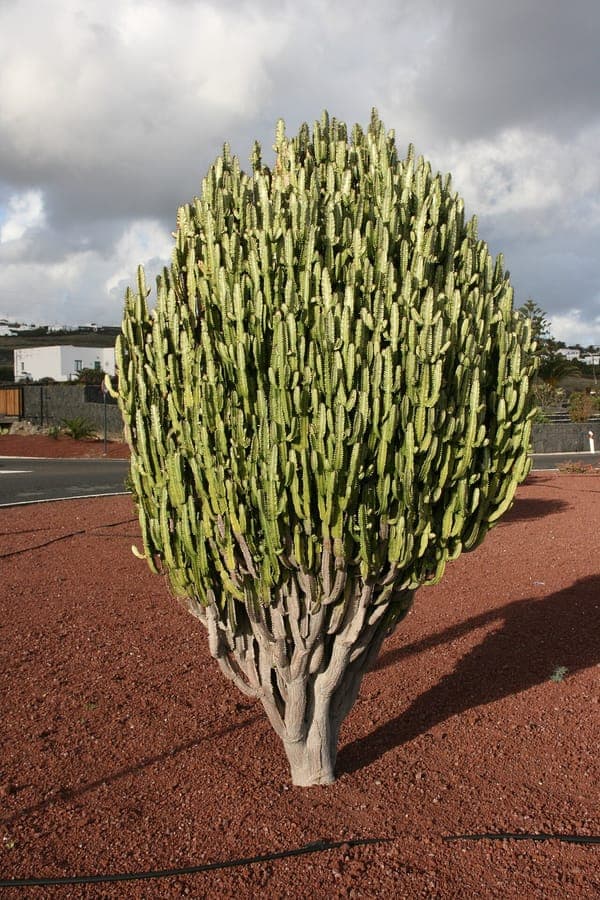
Frank Vincentz / CC BY-SA 3.0, via Wikimedia Commons
Euphorbia trigona: complete guide
Euphorbia trigona
¿Quieres ver Euphorbia trigona: complete guide en tu jardín?
1 minuto, sin tarjeta de crédito
Overview
Euphorbia trigona, African milktree, is a striking succulent native from Gabon to Malawi in Africa. This impressive plant grows as a sculptural tree with triangular, fleshy stems. With its geometric form and commanding presence, it is a must-have plant for modern interior design.
Appearance and bloom
Euphorbia trigona grows vertically up to 1-2 meters indoors and much larger in natural habitat. The stems are deep green to grey-green, triangular in cross-section, with weak spines along edges. Small red tips appear on stems. Foliage is minimal and deciduous. Small red flowers rarely appear indoors but give way to red fruits.
Ideal location
Full sun is essential - at least 6-8 hours of direct sunlight. Very high light intensity promotes best color and growth. Even light shade causes weak growth. Good air circulation strengthens stems.
Soil
Extremely well-draining soil mandatory. Cactus mix pure or with 30 percent extra sand. Large terracotta pot with drainage holes much better than plastic. No nutrient-rich soil; poor is fine.
Watering
Minimal watering required. Summer: water less than once per 2 weeks. Winter: almost no water. Wait until soil is completely dry. Excessive moisture causes inevitable root rot.
Diseño gratis
¿Quieres ver Euphorbia trigona: complete guide en tu jardín? Crea un diseño gratis ahora.
Pruning
Minimal pruning necessary. Plant grows upright; pruning encourages branching. Remove damaged branches. Top pruning can control form.
Maintenance calendar
January-March: Absolute rest; no water. April-May: Minimal watering. June-September: Light water every 2-3 weeks. October-December: Reduce water; winter approaching. No fertilizer in winter.
Winter hardiness
Not hardy. Minimum temperature 5 degrees Celsius; ideal 15-25 degrees. Frost damages or kills. Keep indoors in cold areas. Protect from drafts and cold windows.
Companion plants
Pair with other upright succulents: Sansevieria, Zamioculcas. Large Aloes create drama. Echeveria types add form. Small creeping Senecio's add texture. Gravel/stone arrangement enhances effect.
Closing thoughts
Euphorbia trigona is for minimalist interior design and independent growers. Its architectural form makes it a statement plant that easily lasts decades.
Find this plant at plant shops and online gardeners. UK garden centers stock large succulents. German OBI and Hornbach offer architectural plants. French Truffaut and Jardiland provide succulent collections.
Want to learn more about large succulents? Visit gardenworld.app/en. Or check gardenworld.app/en for more plant profiles.
¿Quieres ver Euphorbia trigona: complete guide en tu jardín? Crea un diseño gratis ahora.
Sube una foto, elige un estilo y obtén un diseño fotorrealista con lista de plantas en menos de un minuto.
Más de 10.000 jardines diseñados
Sin tarjeta de crédito


Plantas similares
Woolly mercury: complete guide
Mercurialis tomentosa
All about Mercurialis tomentosa, the woolly mercury from southwestern Europe: site, soil, watering, care and garden design tips.
Shurur: complete guide
Euphorbia fruticosa
Everything about Shurur: cultivation in dry climates, xeriscaping, care and tips for drought-resistant gardens in warm climates
Glary spurge: complete guide
Euphorbia glareosa
Everything about glary spurge: cultivation, maintenance, frost hardiness and use in Mediterranean and mountain-inspired gardens