
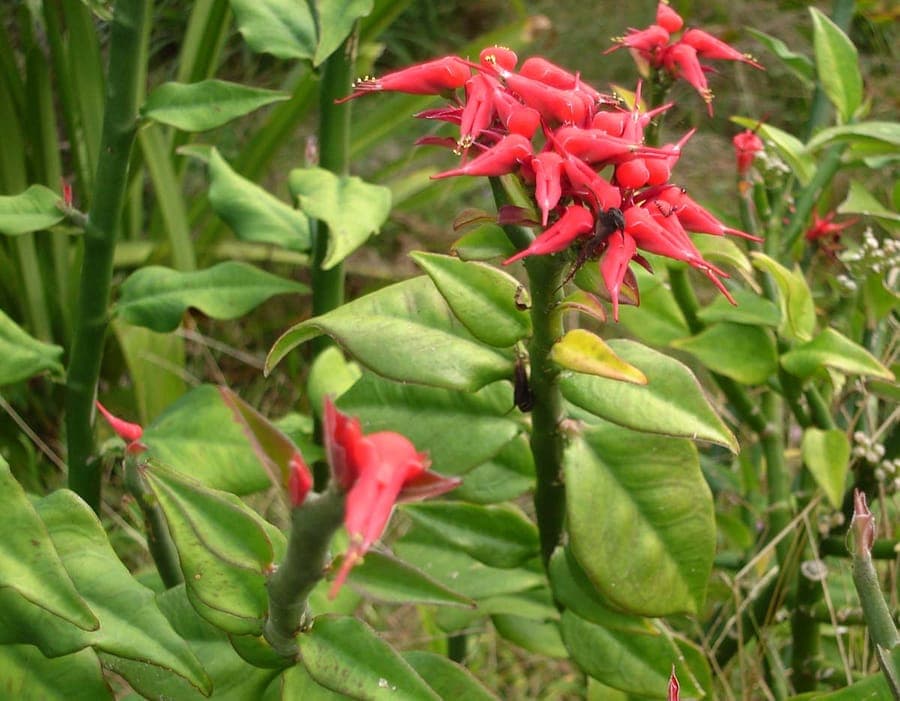
Tauʻolunga / CC BY-SA 3.0, via Wikimedia Commons
Euphorbia tithymaloides: complete guide
Euphorbia tithymaloides
¿Quieres ver Euphorbia tithymaloides: complete guide en tu jardín?
1 minuto, sin tarjeta de crédito
Overview
Euphorbia tithymaloides, known as Redbird flower, Slipper flower, or Devil's backbone, is a spectacular tropical plant native to Florida, Mexico, and Tropical America. This shrub is renowned for its distinctive zigzag stems and stunning red flower crowns that provide exceptional visual impact.
As a houseplant or greenhouse specimen, this Euphorbia is a true showstopper that will fascinate visitors.
Appearance and Bloom
Euphorbia tithymaloides develops into a shrub 60-120 cm tall indoors. The most striking feature is the zigzag-shaped stems that may be green, red, or purple. Leaves are oval, green, and glossy.
The flowers are the real sensation: brilliant red, slipper-shaped "flower crowns" that are actually modified cyathia. These flowers appear regularly throughout the year, with peak periods in winter.
Ideal Location
Euphorbia tithymaloides thrives in bright, indirect light conditions. Position near a window but away from direct sun. In greenhouses, it can grow under shade cloth. A warm location (minimum 15°C) is essential for blooming.
Spectacular flowering specimens develop in warm greenhouses or well-heated homes.
Soil
Use well-draining potting soil: mix standard potting soil with extra perlite or sand. The plant tolerates normal household temperatures and moderate humidity. Ensure good drainage.
Diseño gratis
¿Quieres ver Euphorbia tithymaloides: complete guide en tu jardín? Crea un diseño gratis ahora.
Watering
Water regularly during growing season until the surface feels dry. In winter, water but less frequently. Avoid waterlogging or drying out completely. Mist regularly in dry household environments.
This plant appreciates light foliage misting during warm periods.
Pruning
Euphorbia tithymaloides responds well to pruning. After flowering, stems can be trimmed to stimulate more branching. Leggy growth can be shortened. However, exercise caution with toxic sap.
Wearing gloves during pruning is recommended.
Maintenance Calendar
- Spring: Possible repotting, pruning, light feeding
- Summer: Regular watering, misting in dry conditions
- Autumn: Reduce feeding
- Winter: Minimal care, less water, perfect for blooming
Winter Hardiness
Euphorbia tithymaloides is not winter hardy and must be grown as a houseplant or greenhouse specimen. Minimum temperature is approximately 12-15°C. Protect from cold drafts.
This plant is perfectly suited for heated homes and greenhouses in all European zones.
Companion Plants
Combine in greenhouses with other tropical beauties like Anthurium or Spathiphyllum. In homes, it works well with other foliage plants that tolerate indirect light. Design tropical-inspired gardens at gardenworld.app/en.
Final Thoughts
Euphorbia tithymaloides is a mesmerizing addition to home interiors and greenhouses. The spectacular red flowers provide unparalleled visual impact. With basic care, this plant is very manageable and will provide years of enjoyment.
Seek this plant from specialized nurseries or online greenhouse plant retailers.
¿Quieres ver Euphorbia tithymaloides: complete guide en tu jardín? Crea un diseño gratis ahora.
Sube una foto, elige un estilo y obtén un diseño fotorrealista con lista de plantas en menos de un minuto.
Más de 10.000 jardines diseñados
Sin tarjeta de crédito


Plantas similares
Woolly mercury: complete guide
Mercurialis tomentosa
All about Mercurialis tomentosa, the woolly mercury from southwestern Europe: site, soil, watering, care and garden design tips.
Shurur: complete guide
Euphorbia fruticosa
Everything about Shurur: cultivation in dry climates, xeriscaping, care and tips for drought-resistant gardens in warm climates
Glary spurge: complete guide
Euphorbia glareosa
Everything about glary spurge: cultivation, maintenance, frost hardiness and use in Mediterranean and mountain-inspired gardens