
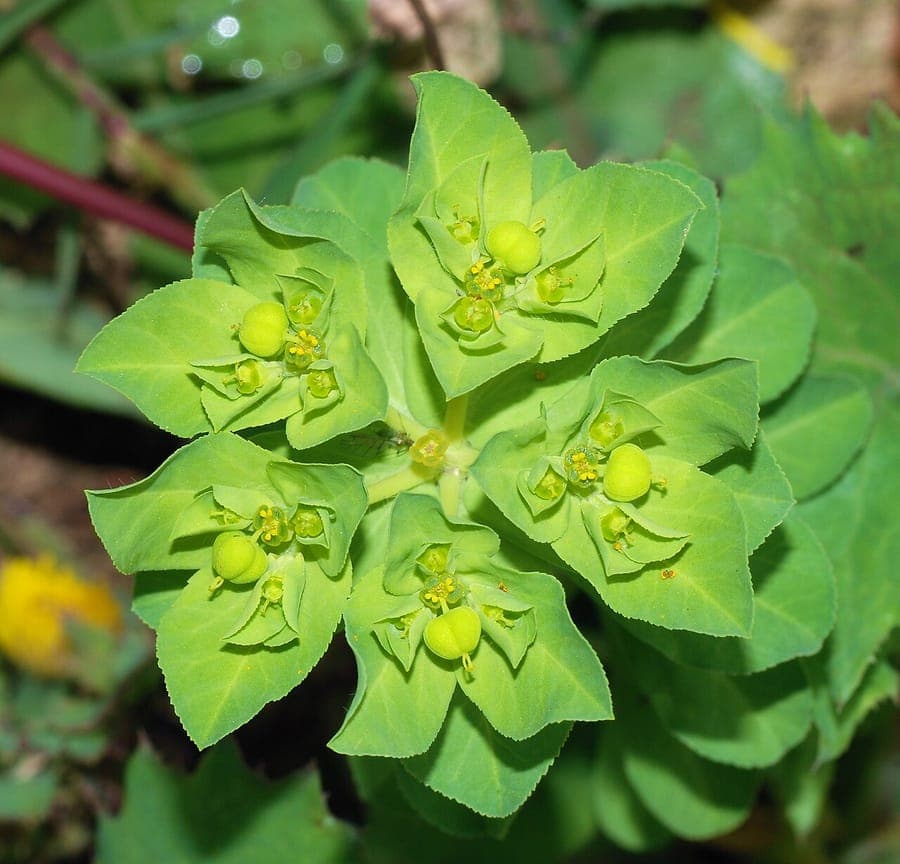
Alvesgaspar / CC BY-SA 3.0, via Wikimedia Commons
Saw-tooth spurge: complete guide
Euphorbia serrata
¿Quieres ver Saw-tooth spurge: complete guide en tu jardín?
1 minuto, sin tarjeta de crédito
Overview
Saw-tooth spurge (Euphorbia serrata) is a compact plant native to Mediterranean regions, particularly North Africa and South Europe. Known for its distinctive serrated leaf margins (from which its Latin name derives), this plant offers both visual interest and reliable performance in hot, dry climates. The brilliant yellow flower bracts appear in late spring and create sustained color throughout the flowering season.
In Mediterranean and warm gardens, saw-tooth spurge excels on dry, sunny sites where water is limited. The plant provides structure and color with minimal attention, making it ideal for gardeners seeking drought-tolerant Mediterranean species that thrive with benign neglect.
Appearance & Bloom
Saw-tooth spurge forms compact, upright or spreading stems with distinctive toothed leaf margins. Leaves are small, densely arranged, and the characteristic serrated edges are clearly visible, especially on young foliage. Plants typically reach 30-40 centimeters in height with equal or greater spread. The foliage is blue-green to gray-green, attractive year-round.
Flowering occurs late spring through early summer (April-June) with brilliant yellow bracts forming prominent cyathia structures. Flowers arrange in dense, eye-catching inflorescences. The yellow color remains vivid for weeks. Following flowering, characteristic triangular seed capsules develop, providing continued textural interest. The overall effect is one of sustained, bright color in the garden.
Ideal Location
Saw-tooth spurge demands full sun. Minimum 6-8 hours direct sunlight daily is essential for optimal flowering and compact growth. In shade, plants become leggy and flower production diminishes dramatically. The plant thrives in hot, dry locations that challenge other garden plants.
South-facing walls, sunny banks, and drought-prone terraces provide ideal conditions. Container culture on sunny patios and balconies succeeds remarkably. Avoid shaded spots; sun-challenged sites will produce disappointing results.
Soil
Saw-tooth spurge thrives on dry, well-drained soils. Heavy, waterlogged soils must be absolutely avoided, as water retention leads invariably to root rot. Sandy to loamy soils prove ideal. Nutrient-poor soils are acceptable; the plant grows admirably on lean ground.
Amend heavier soils with sand at planting for drainage improvement. Container growers should use specialized drought-adapted potting mixes with substantial sand or perlite content. Excellent drainage becomes non-negotiable for success.
Diseño gratis
¿Quieres ver Saw-tooth spurge: complete guide en tu jardín? Crea un diseño gratis ahora.
Watering
Saw-tooth spurge is extremely drought-tolerant once established. Regular watering is necessary until well-rooted (3-4 weeks post-planting). Mature plants in Mediterranean climates require virtually no supplemental water except during severe drought. In wetter climates, prevent waterlogging through careful drainage management.
In container culture, weekly watering during growth season may be necessary, but typically less than for other plants. Restrict water during dormancy. Overwatering ranks as the primary cause of failure; err toward underwatering.
Pruning
Saw-tooth spurge requires minimal pruning, naturally maintaining compact form. Dead branches can be removed any time. Light post-flowering cutback produces neat appearance but proves unnecessary. Damaged foliage removal is prudent. The plant regenerates quickly from small pieces, making aggressive pruning unnecessary and unwarranted.
Maintenance Calendar
Spring: New growth emerges; light pruning performed if desired. Minimal water provided. Summer: Flowering occurs and persists for months. Minimal to no water except severe drought. Autumn: Plant remains green; moisture needs remain very low. Winter: Plant may die in cold zones; survives in mild climates.
Winter Hardiness
Saw-tooth spurge is hardy to approximately -5 to -10 degrees Celsius. In milder Mediterranean and southern European climates, permanent outdoor cultivation succeeds. In northern regions, treat as annual or pot-grown plant brought indoors for winter. In very cold winters, survival is unlikely outdoors.
In climates experiencing occasional frosts, protection helps; mulching and covering offer assistance. Potted specimens easily move indoors for winter protection, extending cultivation into cool-season gardening.
Companion Plants
Saw-tooth spurge combines beautifully with other Mediterranean and drought-tolerant plants. Aromatic herbs, gray-foliaged plants (Stacheldraht, silver foliage), and Mediterranean shrubs form perfect partners. Yellow flowers harmonize well with blue-flowering drought-tolerant plants.
In Mediterranean borders, pair with Salvia, Rosmarinus, Lavender, and other classic Mediterranean garden plants. Compact form makes it excellent for rockeries and major portions of dry borders. The fine texture softens larger, bolder plantings while maintaining architectural interest.
Closing
Saw-tooth spurge represents an excellent choice for dry, sunny gardens, particularly in Mediterranean climates. With its distinctive serrated leaves and brilliant yellow flowers, it provides both structure and seasonal color. For gardeners with dry soils and appreciation for Mediterranean plants, this represents an essential addition to the garden palette. Its remarkable drought tolerance and minimal maintenance requirements make it invaluable for water-wise gardening.
Explore more drought-tolerant plant combinations via gardenworld.app/en. Find inspiration for Mediterranean gardens at gardenworld.app/en.
¿Quieres ver Saw-tooth spurge: complete guide en tu jardín? Crea un diseño gratis ahora.
Sube una foto, elige un estilo y obtén un diseño fotorrealista con lista de plantas en menos de un minuto.
Más de 10.000 jardines diseñados
Sin tarjeta de crédito


Plantas similares
Woolly mercury: complete guide
Mercurialis tomentosa
All about Mercurialis tomentosa, the woolly mercury from southwestern Europe: site, soil, watering, care and garden design tips.
Shurur: complete guide
Euphorbia fruticosa
Everything about Shurur: cultivation in dry climates, xeriscaping, care and tips for drought-resistant gardens in warm climates
Glary spurge: complete guide
Euphorbia glareosa
Everything about glary spurge: cultivation, maintenance, frost hardiness and use in Mediterranean and mountain-inspired gardens