
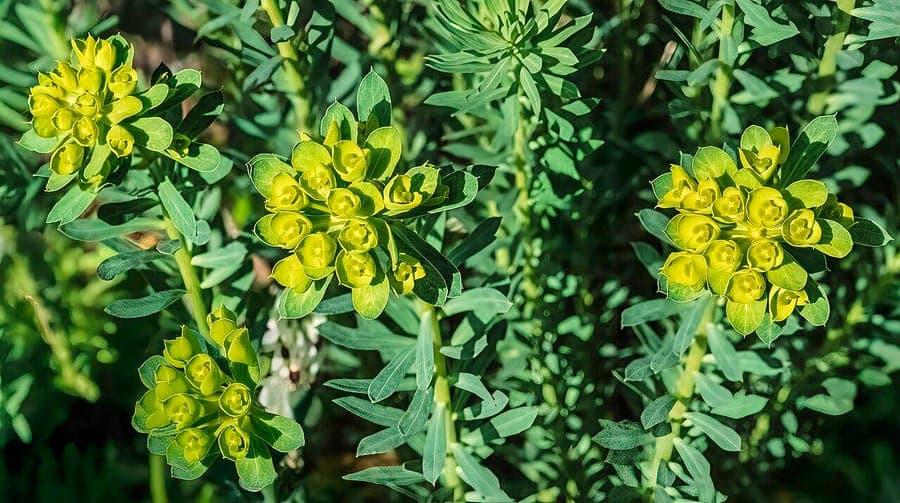
Didier Descouens / CC BY-SA 4.0, via Wikimedia Commons
Cypress spurge: complete guide
Euphorbia seguieriana
¿Quieres ver Cypress spurge: complete guide en tu jardín?
1 minuto, sin tarjeta de crédito
Overview
Euphorbia seguieriana, commonly known as cypress spurge, is a versatile ornamental perennial from the Euphorbiaceae family. This Mediterranean plant grows across much of Europe and extends to Pakistan. The distinctive feature is its bright yellow bracts appearing from May onwards, creating a striking display throughout summer.
The cypress spurge develops into a neat, rounded mound reaching approximately 30-40 cm in height. It grows steadily without demanding heavy maintenance, making it ideal for borders and rock gardens where reliable, stable plants are appreciated.
Appearance & Bloom Cycle
This plant grows compact with fine, blue-green foliage arranged along upright stems. In May, characteristic yellow cyathia (flower-like structures) appear and persist until July. These create substantial visual impact in garden beds.
Plant height reaches 30-45 cm with similar spread. Growth is regular and does not require severe pruning. The gray-green foliage provides excellent contrast to the bright yellow blooms.
Ideal Location
Select a full sun position for optimal growth and flowering. Minimum 6-8 hours of direct daily sunlight is essential. The plant tolerates partial shade but produces fewer flowers.
Wind exposure is not problematic; cypress spurge withstands windy locations well. This makes it suitable for gardens in exposed positions. Avoid completely shaded spots.
Soil Requirements
This plant is not fussy about soil type but cannot tolerate waterlogged conditions. Ensure excellent drainage by incorporating sand or gravel. A neutral to slightly acidic soil (pH 6.0-7.5) works excellently.
On heavy clay soils, work in some organic matter to improve structure. Avoid stagnant, wet clay. In containers, use potting mix amended with 30% perlite for enhanced drainage.
Watering
Cypress spurge is drought-tolerant once established. During the growing season (May-October), water regularly but allow soil to dry between waterings. The plant tolerates dry periods well.
During wet winters, be cautious; excessive water leads to root rot. In containers, water less frequently than open ground plantings. Reduce winter watering but avoid complete drying out.
Diseño gratis
¿Quieres ver Cypress spurge: complete guide en tu jardín? Crea un diseño gratis ahora.
Pruning
Cypress spurge requires minimal maintenance. Remove dead or damaged stems in spring (March-April). The plant naturally prefers a rounded form without regular cutting.
When plants become too large, cut back after flowering (August) to encourage branching. Always wear gloves when pruning due to irritant sap.
Maintenance Calendar
March-April: After winter, carefully remove dead material. Begin regular watering.
May-July: Peak flowering period. Water regularly, no feeding needed.
August: After flowering, can be cut back for compact growth. Remove seedheads.
September-October: Gradually reduce watering.
November-February: Winter dormancy. Minimal water, no feeding.
Winter Hardiness
Euphorbia seguieriana is winter-hardy to USDA zone 5 (-29°C). In cold mountain areas, winter protection with straw mulch is recommended. In maritime climates, usually evergreen without protection.
Severe frost may damage shoot tips, but plants regenerate from the root system. In very cold climates, grow in containers and overwinter in a greenhouse.
Companion Plants
Cypress spurge combines beautifully with low-growing grasses like Festuca glauca. Partners well with Sedum, Sempervivum and other succulent types. Also attractive with gray-foliaged artemisia.
In borders, combines nicely with lavender species. Avoid vigorous perennials that might smother the spurge. Ideal for gravel gardens and steppe-style plantings.
Availability & Purchase
Cypress spurge is available through major garden centers. Usually stocked spring through summer in 1-2 liter pots. Check for compact, healthy plants without dead stems.
Reserve plants online at gardenworld.app for best availability and expert advice during peak seasons. Many suppliers carry this species.
Summary
Euphorbia seguieriana is a valuable addition to dry, sunny borders. Hardy, low-maintenance, and with striking yellow flowers, it deserves a place in modern gardens. Combine with ornamental grasses and other drought-tolerant plants for harmonious steppe-style borders.
With minimal care and water, this spurge grows reliably for years. Plant in spring for flowers this season. Explore more plant suggestions on gardenworld.app.
¿Quieres ver Cypress spurge: complete guide en tu jardín? Crea un diseño gratis ahora.
Sube una foto, elige un estilo y obtén un diseño fotorrealista con lista de plantas en menos de un minuto.
Sin tarjeta de crédito


Plantas similares
Woolly mercury: complete guide
Mercurialis tomentosa
All about Mercurialis tomentosa, the woolly mercury from southwestern Europe: site, soil, watering, care and garden design tips.
Shurur: complete guide
Euphorbia fruticosa
Everything about Shurur: cultivation in dry climates, xeriscaping, care and tips for drought-resistant gardens in warm climates
Glary spurge: complete guide
Euphorbia glareosa
Everything about glary spurge: cultivation, maintenance, frost hardiness and use in Mediterranean and mountain-inspired gardens