
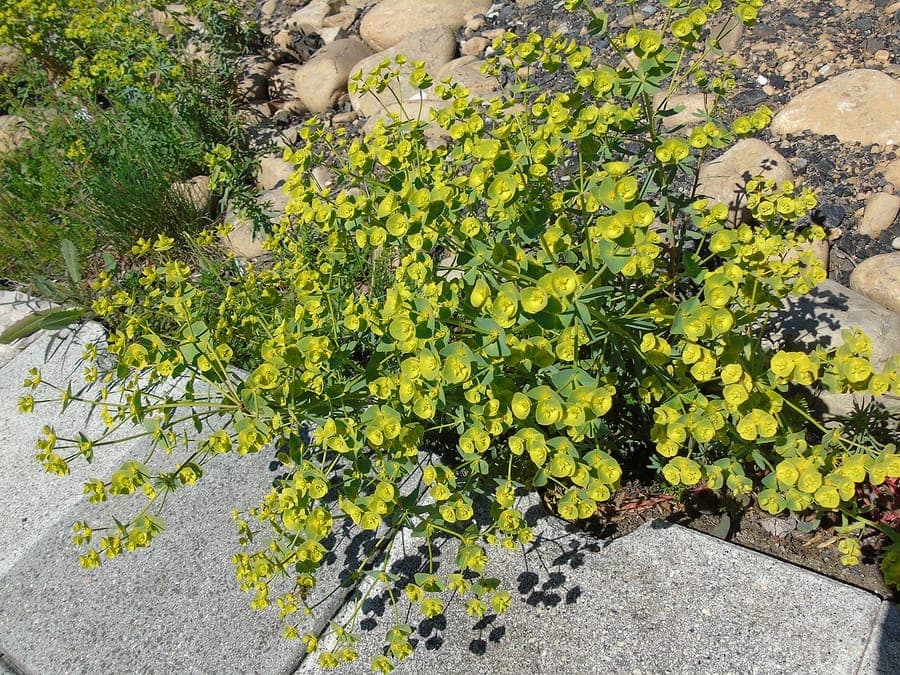
Fernando Losada Rodríguez / CC BY-SA 4.0, via Wikimedia Commons
Garden spurge (Euphorbia segetalis): complete guide
Euphorbia segetalis
¿Quieres ver Garden spurge (Euphorbia segetalis): complete guide en tu jardín?
1 minuto, sin tarjeta de crédito
Overview
Garden spurge (Euphorbia segetalis), also called corn spurge or grainfield spurge, is an annual plant in the Euphorbiaceae family. Native to the Mediterranean region and found from North Africa through Central Europe, this plant impresses with its fine form, reddish-brown stems, and delicate yellow flower clusters. It blooms abundantly from April through October.
Appearance & Bloom Cycle
Garden spurge reaches 20-60 centimeters in height with slender, reddish-brown stems and fine linear green foliage. Small yellow flower bracts (cyathia) appear from April to October, depending on sowing date and temperature. The plant's light, airy structure creates a delicate presence. All plant parts contain toxic milky sap.
Ideal Location
Plant garden spurge in full sun (at least six hours of direct sunlight daily) with plenty of warmth. The plant thrives in hot, dry conditions. Shade promotes leggy growth and reduced flowering. A warm, sunny location where the plant gets afternoon heat is ideal.
Soil Requirements
Garden spurge flourishes in well-draining, lean soil. Poor soils are acceptable; this plant needs no rich feeding. Heavy clay must be substantially improved with sand. Ideal pH is 6.5-7.5, though the plant is reasonably tolerant. Excellent drainage is crucial.
Diseño gratis
¿Quieres ver Garden spurge (Euphorbia segetalis): complete guide en tu jardín? Crea un diseño gratis ahora.
Watering
Water regularly during the growing season, but once established, reduce supplemental watering. The plant tolerates drought well once rooted. Avoid waterlogging, which causes rot. During dry spells, water regularly until flowering declines in late autumn.
Pruning & Maintenance
Garden spurge is an annual requiring no routine pruning. Spent flowers may be removed to prevent rampant self-seeding. Always wear gloves when handling this plant due to toxic sap. Wash hands thoroughly after contact.
Maintenance Calendar
April-May: Direct sow seeds outdoors or in containers. June-October: Water regularly; deadhead flowers if desired. October-November: Allow plant to senesce and complete its lifecycle. December-March: Dormant period; no maintenance.
Winter Hardiness
Garden spurge is an annual and does not overwinter in cold climates. In mild regions, the plant may self-seed and establish successive generations. In most growing regions, resow fresh seed each spring.
Companion Plants
Pair garden spurge with other warm-season drought-tolerant annuals: cosmos, rudbeckias, baby's breath, or lavender. Its fine, airy structure contrasts beautifully with heavier blooms. It serves well as filler in borders as larger plants mature.
Conclusion
Garden spurge adds summery elegance to warm, sunny gardens. This annual performer demands minimal care and offers months of delicate bloom. Sow seeds this spring and enjoy its yellow bracts from early summer through autumn. For more garden design ideas, visit gardenworld.app.
¿Quieres ver Garden spurge (Euphorbia segetalis): complete guide en tu jardín? Crea un diseño gratis ahora.
Sube una foto, elige un estilo y obtén un diseño fotorrealista con lista de plantas en menos de un minuto.
Más de 10.000 jardines diseñados
Sin tarjeta de crédito


Plantas similares
Woolly mercury: complete guide
Mercurialis tomentosa
All about Mercurialis tomentosa, the woolly mercury from southwestern Europe: site, soil, watering, care and garden design tips.
Shurur: complete guide
Euphorbia fruticosa
Everything about Shurur: cultivation in dry climates, xeriscaping, care and tips for drought-resistant gardens in warm climates
Glary spurge: complete guide
Euphorbia glareosa
Everything about glary spurge: cultivation, maintenance, frost hardiness and use in Mediterranean and mountain-inspired gardens