
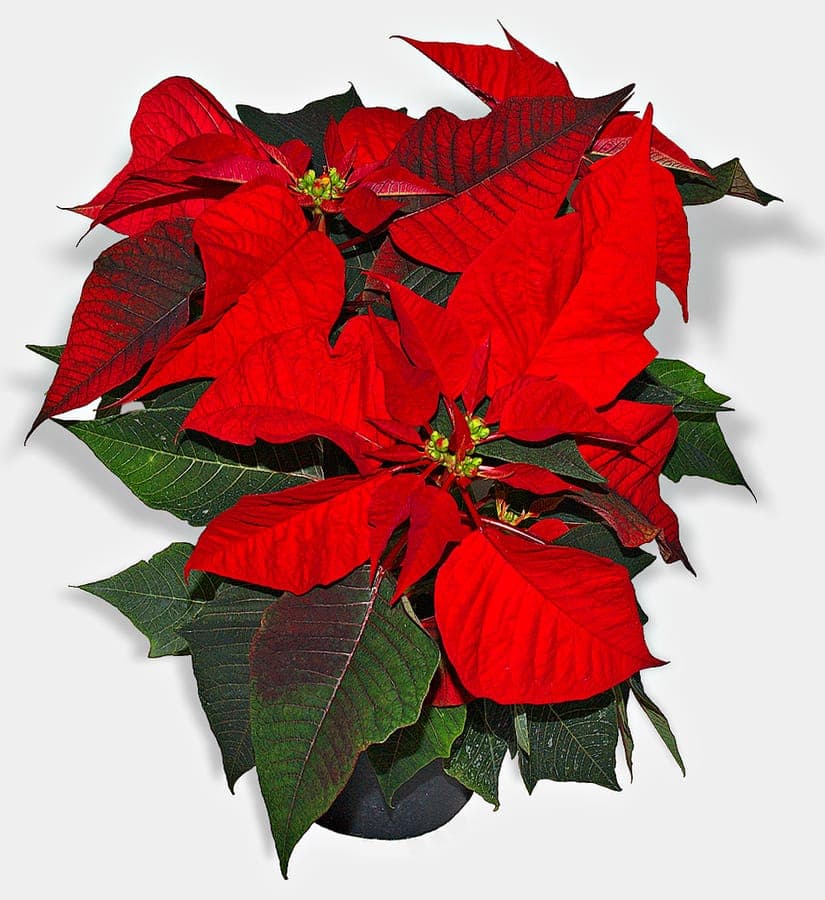
André Karwath aka Aka / CC BY-SA 2.5, via Wikimedia Commons
Poinsettia: complete guide
Euphorbia pulcherrima
¿Quieres ver Poinsettia: complete guide en tu jardín?
1 minuto, sin tarjeta de crédito
Overview
The poinsettia (Euphorbia pulcherrima) is a winter favourite that commands attention in homes and offices worldwide. Native to tropical Mexico and Guatemala, this shrub is celebrated for its vivid coloured bracts - not actually flowers but coloured leaves surrounding tiny true flowers. The classic red form is most familiar, though pink, white, cream, and bicolour variants are increasingly available.
Appearance and bloom cycle
Poinsettias grow as compact shrubs (30-60 cm tall in pots) with dark green foliage and brilliant upper bracts. These bracts turn red, pink, or white depending on cultivar. Tiny true flowers cluster in the bract centre. With good light and temperature management, the colourful display persists from November through February. Without proper care, many plants defoliate dramatically after Christmas.
Ideal location
Position the plant in the brightest location available indoors - ideally a south or west-facing windowsill. Provide at least 6 hours of indirect bright light daily. Supplemental grow lights (12+ hours) work adequately for office settings. Maintain warmth: ideal daytime temperatures 18-24°C, never below 15°C at night. Avoid draughts, radiator heat, and proximity to heating vents. Slightly cooler conditions (16-18°C) extend colour longevity.
Soil requirements
Use loose, well-draining potting compost: mix 40% quality potting medium, 40% coir fibre, 20% perlite. The plant resents waterlogged conditions. Repot in March following bloom into fresh substrate. Light, nutrient-rich compost works well. Lime-tolerant soils are acceptable. For outdoor cultivation in warm climates: identical well-draining mix with partial shade preferred over full sun (avoiding leaf scorch).
Watering
Keep substrate moist but not saturated. Water when the top 2 cm feels dry to touch. Always use room-temperature water - never icy cold tap water. Overhead spraying leaves water marks on bracts, so water at soil level only. During bloom (December-February), reduce watering compared to growth seasons. Post-bloom, you can withhold water until new growth appears (March-April), gradually rehydrating. This approach triggers superior rebloom potential.
Diseño gratis
¿Quieres ver Poinsettia: complete guide en tu jardín? Crea un diseño gratis ahora.
Pruning
Critical for achieving next year's flowers. After blooming (February-March), prune hard: cut all stems back to 10 cm above soil. This stimulates prolific branching. In May-June, pinch lightly (top 5 cm) to encourage bushiness. Cease pruning by October to allow bloom-preparation. Ensure no light breach during dark autumn months (October-December) or blooming fails to trigger properly.
Maintenance calendar
- January-February: Peak bloom period, moderate watering, maximum light
- March-April: Hard pruning, rebloom training, moderate feeding
- May-July: New growth flush, regular nutrition (200ppm N), normal watering
- August-October: Increase feeding carefully, begin short-day photoperiod training (<11 hours light)
- November-December: Darkness period, minimal watering, cool conditions (15-18°C)
- January: Gradual temperature increase, water normalisation
Winter hardiness
Poinsettias are extremely frost-tender and grow outdoors year-round only in tropical/subtropical climates (USDA 9b-11). In temperate regions, they're purely indoor plants. Temperatures below 12°C cause defoliation. Long-term success requires proper pruning and photoperiod training for subsequent blooms - many plants perish because owners don't understand rebloom requirements.
Companion plants
Indoors, group poinsettias of varying colours for visual impact. Outdoors in warm climates, combine with other tropical shrubs. For potted arrangements:
- Single specimen poinsettias work as focal points
- Red and white together create striking contrast
- Small green foliage (Hedera helix) around the base adds depth
- Silver foliage (Senecio cineraria) provides colour contrast
Closing
Poinsettias can bloom year after year with proper pruning and short-day training. Many discard plants after one season - unnecessarily! With patience and care, consistent rebloom is achievable. Use Gardenworld.app to select complementary houseplants creating attractive combined displays. For outdoor poinsettia projects in warm climates, Gardenworld.app assists in grouping tropical companions for visual balance and long-term structural harmony.
¿Quieres ver Poinsettia: complete guide en tu jardín? Crea un diseño gratis ahora.
Sube una foto, elige un estilo y obtén un diseño fotorrealista con lista de plantas en menos de un minuto.
Más de 10.000 jardines diseñados
Sin tarjeta de crédito


Plantas similares
Woolly mercury: complete guide
Mercurialis tomentosa
All about Mercurialis tomentosa, the woolly mercury from southwestern Europe: site, soil, watering, care and garden design tips.
Shurur: complete guide
Euphorbia fruticosa
Everything about Shurur: cultivation in dry climates, xeriscaping, care and tips for drought-resistant gardens in warm climates
Glary spurge: complete guide
Euphorbia glareosa
Everything about glary spurge: cultivation, maintenance, frost hardiness and use in Mediterranean and mountain-inspired gardens