
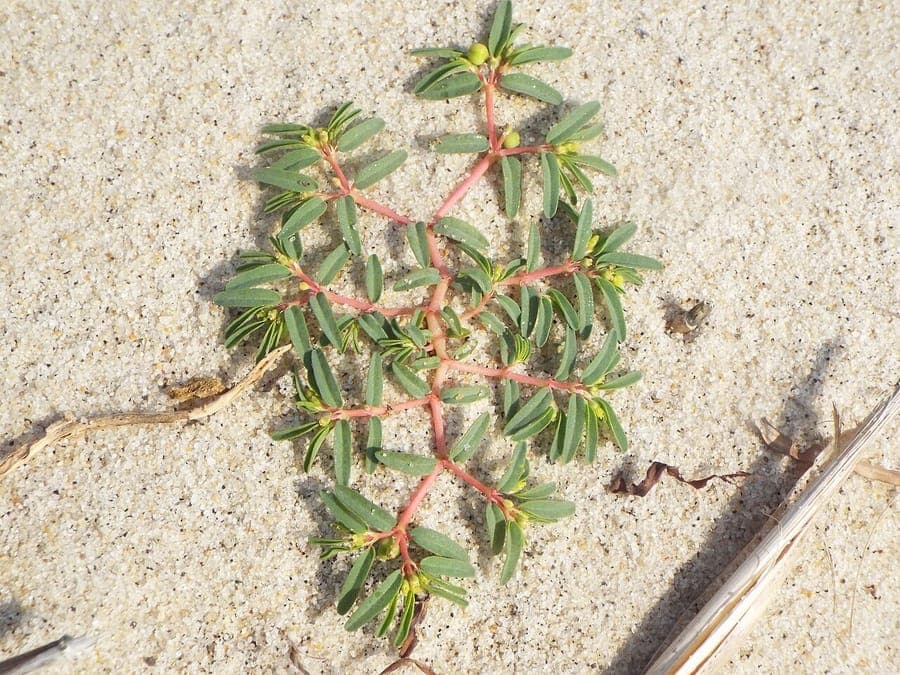
Jonathan Layman / CC BY 4.0, via Wikimedia Commons
Seaside Sandmat: complete guide
Euphorbia polygonifolia
¿Quieres ver Seaside Sandmat: complete guide en tu jardín?
1 minuto, sin tarjeta de crédito
Overview
The seaside sandmat (Euphorbia polygonifolia) is a remarkable low-growing ground cover native to North America's Atlantic and Great Lakes coastlines. Belonging to the Euphorbiaceae family, this succulent thrives in sandy, salty conditions where many plants struggle. Its dense, spreading habit and modest yellow flowers make it an exceptional choice for gardeners seeking a virtually maintenance-free ground cover that requires minimal intervention yet delivers season-long visual interest.
Appearance and Bloom
Seaside sandmat forms tight mats typically 15 to 30 centimeters tall with a spread that can exceed 60 centimeters when mature. Leaves are small, alternate, and distinctly polygonal - the origin of its scientific name. Summer bloom occurs from July through October, producing subtle but charming yellow cyathia (a characteristic flower structure of the Euphorbia genus). Late-season foliage often develops reddish tones, adding autumn appeal. The plant's evergreen nature provides structure even in winter.
Ideal Location
Full sun exposure is critical for optimal performance. Aim for at least six hours of direct sunlight daily for compact growth and prolific flowering. This makes seaside sandmat ideal for south-facing borders, rock gardens, and coastal landscapes. The plant's exceptional salt and wind tolerance make it unparalleled for maritime gardens where wind stress is constant. Sandy, exposed locations that challenge other plants suit this species perfectly.
Soil
Well-draining, gritty soil is non-negotiable. Heavy clay must be amended with coarse sand and pea gravel to prevent waterlogging. Optimal pH ranges from 5.5 to 7.5. The plant tolerates nutrient-poor soils exceptionally well - in fact, rich amendments often encourage weak, floppy growth. For garden integration, prepare soil as 40% garden loam, 40% coarse sand, and 20% grit. Salt-laden soils pose no problem for this coastal specialist.
Watering
Once established, seaside sandmat is remarkably drought-tolerant. Supplemental watering is rarely necessary. During extended dry spells (three or more weeks without rain), occasional deep watering supports vigor, but overwatering is detrimental. During the growing season (April through September), water only once or twice monthly in normal conditions. Winter months require virtually no moisture.
Diseño gratis
¿Quieres ver Seaside Sandmat: complete guide en tu jardín? Crea un diseño gratis ahora.
Pruning
Pruning is largely unnecessary for healthy development. If the plant becomes overly dense or sprawls excessively, gentle tidying in early spring (March-April) maintains shape. Use sharp secateurs to remove winter-damaged stems after the frost season ends. A light "haircut" - removing no more than one-third of growth - encourages bushiness without shocking the plant.
Maintenance Calendar
April-May: Growing season begins; water only during extreme drought. Assess winter damage. June-August: Peak bloom period; minimal maintenance. Enjoy prolific sunshine exposure. September-October: Transition to dormancy; taper watering gradually. November-March: Dormant season; no feeding, no watering, no intervention required.
Winter Hardiness
Seaside sandmat is cold-hardy to USDA Zone 5 (-28 degrees Celsius). Throughout the Netherlands, Belgium, and France, it survives outdoor winters without protection. During extreme cold snaps (below -15 degrees Celsius for extended periods), surface damage may occur, yet plants typically recover fully by late spring. A 2-3 centimeter layer of organic mulch around the base provides additional winter insulation in harsh regions.
Companion Plants
Seaside sandmat pairs beautifully with fellow drought-tolerant ground covers:
- Sedum species (varied heights, colors)
- Delosperma (bright magenta, yellow flowers)
- Festuca glauca (steel-blue fine texture)
- Thymus vulgaris (creeping aromatic groundcover)
- Heuchera (purple foliage contrasts)
Saponaria and Alchemilla provide textural contrast. For pollinator-friendly designs, combine with dwarf lavender (Lavandula angustifolia 'Munstead'). The result is a garden that supports wildlife while requiring minimal care.
Conclusion
Seaside sandmat ranks among the most reliable, low-maintenance ground covers for contemporary garden design. With minimal care, this plant provides decades of green mat-forming coverage. Ideal for sustainable gardening, coastal fortifications, and rock gardens. Available at local garden centers throughout Europe. Discover your garden's potential at gardenworld.app. Create stunning designs with expert guidance at gardenworld.app.
¿Quieres ver Seaside Sandmat: complete guide en tu jardín? Crea un diseño gratis ahora.
Sube una foto, elige un estilo y obtén un diseño fotorrealista con lista de plantas en menos de un minuto.
Más de 10.000 jardines diseñados
Sin tarjeta de crédito


Plantas similares
Woolly mercury: complete guide
Mercurialis tomentosa
All about Mercurialis tomentosa, the woolly mercury from southwestern Europe: site, soil, watering, care and garden design tips.
Shurur: complete guide
Euphorbia fruticosa
Everything about Shurur: cultivation in dry climates, xeriscaping, care and tips for drought-resistant gardens in warm climates
Glary spurge: complete guide
Euphorbia glareosa
Everything about glary spurge: cultivation, maintenance, frost hardiness and use in Mediterranean and mountain-inspired gardens