
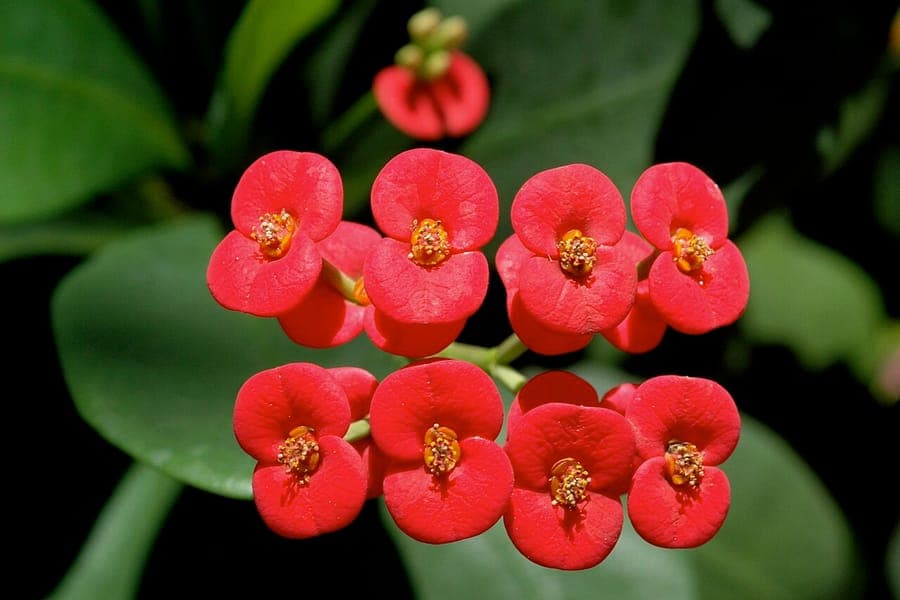
Ezra Katz / CC BY-SA 3.0, via Wikimedia Commons
Euphorbia milii: complete guide
Euphorbia milii
¿Quieres ver Euphorbia milii: complete guide en tu jardín?
1 minuto, sin tarjeta de crédito
Euphorbia milii, commonly known as Christ thorn or crown of thorns, is a fascinating succulent native to Madagascar that has evolved to thrive in the harshest conditions. This member of the Euphorbiaceae family is renowned for its striking red, pink, or white flowers that can bloom year-round under optimal conditions. The plant can reach up to 1.5 meters in height and forms a densely branched shrub with thin, woody stems protected by sharp thorns. These thorns serve as a natural defense mechanism against animals in its native habitat and make this plant unsuitable for households with small children or curious pets.
The appearance of Euphorbia milii is deceptively elegant, featuring pointed grayish-green leaves scattered along the branches. The actual flowers are remarkably small and inconspicuous, but are surrounded by two large brilliant red or pink bracts that persist much longer than true flower petals. These colorful pseudoflowers can reach 2-3 centimeters in diameter and appear in dense clusters at the branch tips. With proper care and abundant light, this plant produces blooms nearly continuously, though the flowering intensity diminishes during winter months.
Cultivating Euphorbia milii successfully requires abundant sunlight. The plant demands at least 6-8 hours of direct sunlight daily to thrive and bloom adequately. Place the plant in a south-facing window where it receives full sun, or utilize grow lights if cultivating indoors in a less luminous location. The plant cannot tolerate shade and will refuse to flower in insufficient light. Rotate the plant weekly to ensure all sides receive equal light exposure and maintain even growth patterns throughout.
Soil composition is absolutely critical for Euphorbia milii's survival. Use specially formulated cactus soil or create your own mixture combining 2 parts potting soil, 1 part perlite, and 1 part sand. This ensures rapid water drainage and prevents roots from remaining in damp soil. The soil pH should range between 6.0 and 7.5, preferably neutral to slightly acidic. Repot during early spring into a container only 2-3 centimeters larger, avoiding excessive soil additions around the roots.
Watering represents the most common mistake beginners make with this species. Euphorbia milii is a true drought enthusiast and tolerates underwatering far better than excess moisture. Water only when the soil becomes completely dry, which means approximately once every 7-10 days during summer, but only once every 3-4 weeks in winter. Test soil moisture by inserting your finger 5 centimeters deep before watering. The plant requires minimal water since it maintains minimal foliage for moisture retention. During winter dormancy, further reduce watering frequency substantially.
Pruning maintains Euphorbia milii's compact, full form. Pruning is best performed in early spring around March-April. Always wear fine gloves or use pruning shears since the thorns are exceptionally sharp and painful. Cut branches back to approximately half their length, positioning cuts just above a node or leaf. This stimulation encourages the development of multiple side shoots and produces a bushier specimen. You can remove dead or damaged branches throughout the year as needed.
The maintenance calendar for Euphorbia milii begins with winter dormancy. From October through February, maintain cooler temperatures (10-15 degrees Celsius) and significantly reduce watering frequency. This preparation period conditions the plant for the flowering season ahead. Beginning in March, gradually increase watering and raise temperatures slowly. The active growth season runs from April through September, the perfect time for occasional fertilization. Apply half-strength cactus or succulent fertilizer once monthly. Flowering typically occurs from May through October, though under perfect conditions blooms may appear year-round.
Euphorbia milii demonstrates extreme frost sensitivity and can only be grown outdoors in very warm climates with mild winters. Throughout the Netherlands, Belgium, and Northern France, this plant must remain permanently indoors. Winter temperatures between 10-15 degrees Celsius promote flowering, but temperatures must never drop below 5 degrees Celsius. The plant will lose leaves and potentially die if exposed to freezing temperatures.
Companion plants that pair beautifully with Euphorbia milii in interior succulent arrangements include other drought-tolerant species such as Aloe vera, Jade plant (Crassula ovata), and various Echeveria species. Position them together in a deep tray with well-draining soil, provided all plants receive identical watering schedules. Ensure all specimens receive full sun and maintain adequate air circulation to prevent fungal issues and rot.
Importantly, note that all parts of Euphorbia milii are toxic. The white sap released from cut stems can cause significant skin irritation, so always work with gloves. Ensure the plant remains out of reach of children and pets. Despite these precautions, Euphorbia milii rewards dedicated growers with decades of life and impressive size development. With proper care, you will enjoy months of magnificent blooms annually. Consult Gardenworld.app for additional information on succulents and exotic tropical plants.
¿Quieres ver Euphorbia milii: complete guide en tu jardín? Crea un diseño gratis ahora.
Sube una foto, elige un estilo y obtén un diseño fotorrealista con lista de plantas en menos de un minuto.
Más de 10.000 jardines diseñados
Sin tarjeta de crédito


Plantas similares
Woolly mercury: complete guide
Mercurialis tomentosa
All about Mercurialis tomentosa, the woolly mercury from southwestern Europe: site, soil, watering, care and garden design tips.
Shurur: complete guide
Euphorbia fruticosa
Everything about Shurur: cultivation in dry climates, xeriscaping, care and tips for drought-resistant gardens in warm climates
Glary spurge: complete guide
Euphorbia glareosa
Everything about glary spurge: cultivation, maintenance, frost hardiness and use in Mediterranean and mountain-inspired gardens