
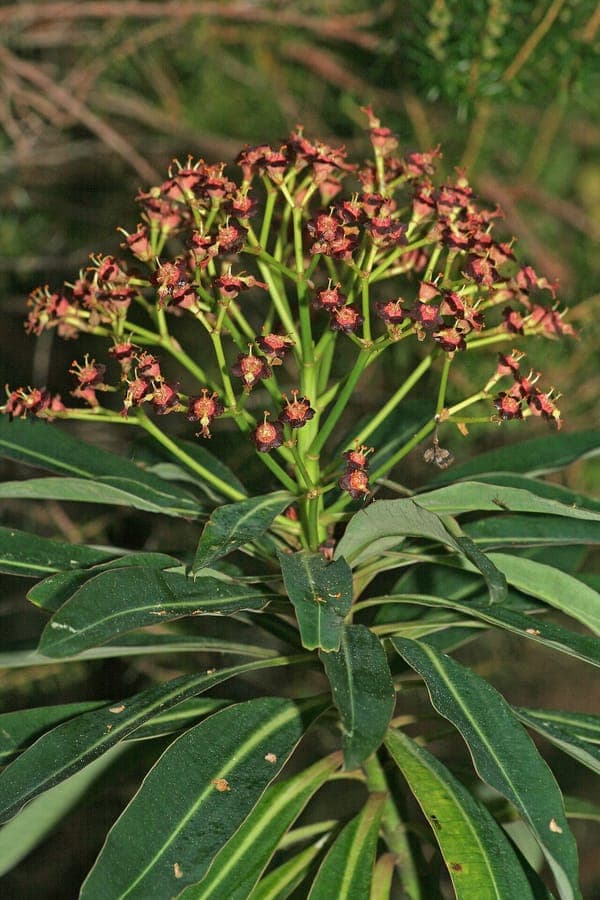
H.-U. Küenle / CC BY-SA 3.0, via Wikimedia Commons
Euphorbia mellifera: complete guide
Euphorbia mellifera
¿Quieres ver Euphorbia mellifera: complete guide en tu jardín?
1 minuto, sin tarjeta de crédito
Overview
Euphorbia mellifera, commonly known as Canary spurge or honey spurge, is a striking shrub from the Euphorbiaceae family. This plant originates from the Canary Islands and Madeira, where it grows in subtropical, semi-arid habitats. The name "mellifera" refers to the honey-like scent of the flowers, which is highly attractive to insects.
In gardens, Euphorbia mellifera offers a unique combination of structural beauty and sensory appeal. This is an ideal plant for gardeners in warmer climate zones wanting to add something unexpected and exotic. The plant grows into a neat, tree-like form with elegant, linear foliage.
Appearance and bloom
Euphorbia mellifera is a semi-evergreen shrub that usually reaches 1-2 meters tall, though under ideal conditions it can grow larger. The plant features narrow, grayish-green leaves that are ribbon-like and arranged in rows along the stems. The bark is smooth and greenish, contributing to the overall elegant appearance.
The inflorescence is characteristic of the Euphorbia genus: cyathia (flower cups) gathered into large plumes. The flowers are small but numerous, with red nectary discs contrasting against yellowish-green florets. The blooming period is long, extending from March to May in temperate climates. The scent is strong, sweet, and honey-like, especially in the morning.
Ideal location
Euphorbia mellifera grows best in fully sunny locations with at least six hours of direct sunlight daily. The plant can also grow in light afternoon shade, especially in very hot climates. In cold years, full sun is essential for overwintering of very young or tender plants.
This plant is excellent for Mediterranean gardens, dry borders, rock gardens, and scree beds. Use this plant also in large containers where it can be protected in cold seasons. The plant also grows beautifully in warm gardens against walls, where it receives heat and shelter.
Soil
Euphorbia mellifera requires well-drained, sandy soil. The plant accepts almost all soils provided drainage is excellent. In heavy clays, sand, gravel, and organic matter should be added to improve drainage. The plant grows equally well on poor, lean soils as on nutrient-rich ones.
The pH preference is neutral to slightly acidic, although the plant can also grow in somewhat more acidic soils. For container growing, well-draining potting soil is essential: a mix of about 50% garden soil, 40% sand, and 10% organic matter works well.
Diseño gratis
¿Quieres ver Euphorbia mellifera: complete guide en tu jardín? Crea un diseño gratis ahora.
Watering
Once established, Euphorbia mellifera is very drought-tolerant and can endure long dry periods. Young plants, however, should be watered regularly during their first growing year until they are fully rooted. Water deeply but not frequently.
Excessive moisture, especially in winter, poses the greatest risk to this plant. In regions with winter rainfall, supplemental watering is seldom needed. In dry summer periods, careful watering can stimulate growth. Avoid wet feet in winter, as this causes root rot.
Pruning
Pruning of Euphorbia mellifera is minimal but can be used to maintain shape. After flowering, long stems can be cut back to promote compact growth. Damaged or dead wood should be removed in early spring.
Beware: Euphorbia sap is toxic to skin and eyes. Always wear gloves and protective clothing when working with this plant. Wash your hands and tools thoroughly after pruning.
Maintenance calendar
Euphorbia mellifera requires minimal maintenance. Young plants can receive light liquid fertilizer monthly during the growing season. Mature plants need little feeding. Do not fertilize in winter.
In spring, withered stems and dead leaves can be removed. After flowering, light pruning is beneficial. For container plants, potting soil should be replaced annually in spring.
Winter hardiness
Euphorbia mellifera is reasonably hardy to about -8 to -10°C when fully established. In areas with very severe winters, protection may be needed. Young plants are more frost-sensitive than mature specimens.
In very cold climates, container growing is recommended so the plant can be moved in winter to a protected, light, and frost-free location. A thin layer of mulch around the plant can also help in very cold years. Ensure winter wetness around the roots is avoided.
Companion plants
Euphorbia mellifera combines beautifully with other Mediterranean and dry-climate plants. Recommended companions include:
- Lavendula species (lavender)
- Cistus (rock rose)
- Rosmarinus (rosemary)
- Santolina (button bush)
- Helichrysum (strawflower)
The greenish-red flowers of Euphorbia mellifera create interesting contrasts with yellow Helichrysum flowers and purple lavender. The elegant form of the plant adds structure to Mediterranean borders.
Conclusion
Euphorbia mellifera is a fascinating plant for gardeners in warmer climate zones. With its exotic appearance, pleasant fragrance, and low maintenance requirements, this plant offers years of interest and enjoyment. Whether you're building a Mediterranean garden or simply want to add something unusual - this Canary spurge deserves a place in your warm-zone garden.
Order your Euphorbia mellifera as a young plant from specialized plant nurseries. Discover other Mediterranean plants on gardenworld.app and work with our guides for dry-zone garden planning. On gardenworld.app you'll also find more ideas for subtropical garden designs in warmer regions.
¿Quieres ver Euphorbia mellifera: complete guide en tu jardín? Crea un diseño gratis ahora.
Sube una foto, elige un estilo y obtén un diseño fotorrealista con lista de plantas en menos de un minuto.
Más de 10.000 jardines diseñados
Sin tarjeta de crédito


Plantas similares
Woolly mercury: complete guide
Mercurialis tomentosa
All about Mercurialis tomentosa, the woolly mercury from southwestern Europe: site, soil, watering, care and garden design tips.
Shurur: complete guide
Euphorbia fruticosa
Everything about Shurur: cultivation in dry climates, xeriscaping, care and tips for drought-resistant gardens in warm climates
Glary spurge: complete guide
Euphorbia glareosa
Everything about glary spurge: cultivation, maintenance, frost hardiness and use in Mediterranean and mountain-inspired gardens