
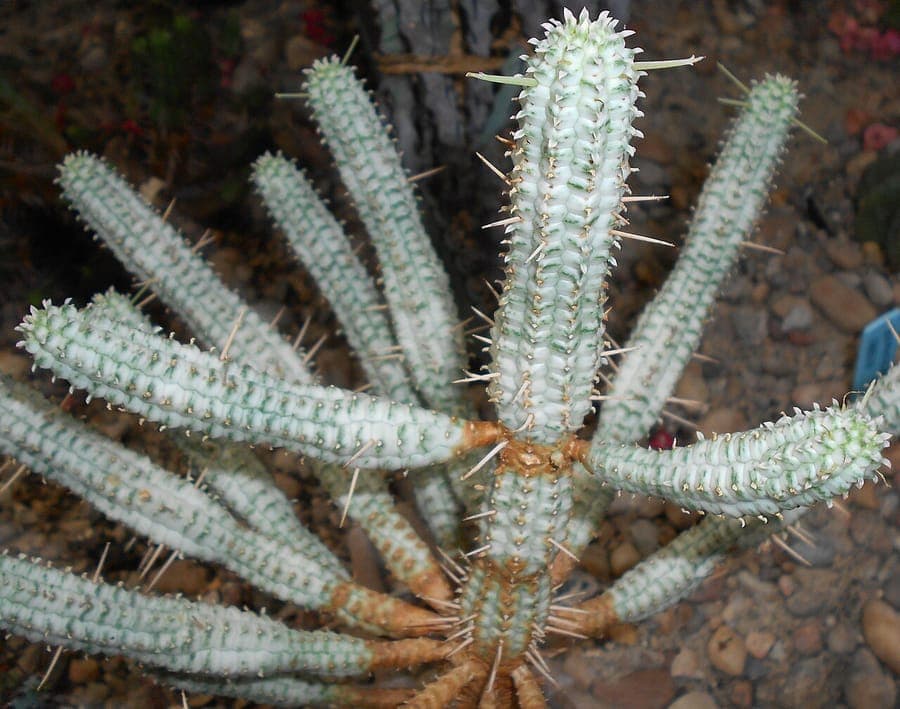
Salicyna / CC BY-SA 4.0, via Wikimedia Commons
Euphorbia mammillaris: complete guide
Euphorbia mammillaris
¿Quieres ver Euphorbia mammillaris: complete guide en tu jardín?
1 minuto, sin tarjeta de crédito
Overview
Euphorbia mammillaris, also known as the corkscrew euphorbia or nipple euphorbia, is a fascinating compact succulent plant from South Africa, specifically the Cape region. This plant is known for its unique spiral growth form, where thick green stems grow in a characteristic spiral pattern. The plant is widely cultivated by collectors because of its striking shape and manageable size.
Appearance and bloom
Euphorbia mammillaris grows as a compact, columnar plant typically reaching 10 to 30 centimeters tall. The stem features distinctive spiral growth with small, button-like protrusions (mammillae) from which the plant gets its name. This small bumpy structure gives the plant its characteristic tactile appearance. The plant produces small leaves in early growth stages, but these quickly fall off as the plant matures.
The flowers of Euphorbia mammillaris are small and inconspicuous, appearing as tiny yellow-green cyathia. They are not the main attraction of this plant. Instead, the unique spiral structure is the highlight. In household conditions, this plant rarely blooms.
Ideal location
Euphorbia mammillaris thrives best in very bright sunlight. Plant it in a location with at least 6 to 8 hours of direct sunlight daily. This is a plant that loves full sun and can even flourish in very hot conditions. In light or shade, the plant will etiolate and lose its characteristic spiral form.
Temperature is important for this succulent plant. In winter, the plant should be kept in a cool environment, preferably between 10 and 15 degrees Celsius. This temperature difference helps the plant have its natural rest period. Ensure the plant is protected from frost threat, as it is not fully hardy in cold climates.
Soil composition
Euphorbia mammillaris requires well-draining, gritty soil. An ideal mix consists of 60 percent cactus/succulent potting soil and 40 percent extra sand, perlite, or gravel. This provides rapid drainage and prevents water accumulation around the roots, which can cause root rot.
The soil pH can be neutral to slightly acidic, between 6.0 and 7.5. Do not add organic material, as it retains water and can cause root rot. The plant grows on poor soils and does not need much nutrition.
Diseño gratis
¿Quieres ver Euphorbia mammillaris: complete guide en tu jardín? Crea un diseño gratis ahora.
Watering
Watering is critical for Euphorbia mammillaris. During the growing season (May to October), water when the soil is completely dry, typically once every two to three weeks. The plant can endure long periods of drought and suffers more from over-watering than from under-watering.
In winter, from November to April, watering should be almost completely avoided. Water only once every two months, or even less in very cold conditions. Ensure water can drain from the pot hole and the plant never sits in water. Over-watering is the most common cause of failure with this plant.
Pruning and shaping
Euphorbia mammillaris requires minimal pruning. The plant grows naturally in a compact, spiral form and pruning is usually not necessary. You can remove damaged, diseased, or dead parts of the plant. This plant forms its unique shape naturally without intervention.
If the plant becomes too large, you can remove the tips. However, this will stimulate new branching and may disrupt the characteristic form. It is better to simply accept the plant in its natural growth habit.
Maintenance calendar
March - April: Beginning of growing season, minimal water. May - June: Regular water addition, fertilize once monthly. July - August: Continued minimal watering, continued fertilizing. September - October: Gradually reduce watering. November - February: Winter dormancy, minimal to no water.
Winter hardiness
Euphorbia mammillaris is not hardy in cold climates. The plant cannot tolerate temperatures below 10 degrees Celsius. In warm climates (USDA zones 10-11), it can be grown outdoors, but is usually kept in containers for easy relocation.
In temperate climates, Euphorbia mammillaris must be grown in containers in a heated greenhouse or indoors. Plant it outside during summer in very warm regions, but ensure you bring it indoors before frost begins.
Companion plants
Euphorbia mammillaris thrives best when grown alone as the centerpiece of a succulent arrangement. It can also be combined with other small succulents such as Sedum, Sempervivum, and small Aloe species. Avoid placing other plants nearby, as the plant needs sunny terrain.
Closing remarks
Euphorbia mammillaris is a unique, architectural plant with impressive spiral growth. With excellent drainage, minimal water, and plenty of sun, this plant will thrive. This is a perfect plant for collectors of unusual succulents. Find Euphorbia mammillaris at specialized succulent nurseries. For more information on cultivation, visit gardenworld.app. Enjoy this remarkable little plant.
¿Quieres ver Euphorbia mammillaris: complete guide en tu jardín? Crea un diseño gratis ahora.
Sube una foto, elige un estilo y obtén un diseño fotorrealista con lista de plantas en menos de un minuto.
Más de 10.000 jardines diseñados
Sin tarjeta de crédito


Plantas similares
Woolly mercury: complete guide
Mercurialis tomentosa
All about Mercurialis tomentosa, the woolly mercury from southwestern Europe: site, soil, watering, care and garden design tips.
Shurur: complete guide
Euphorbia fruticosa
Everything about Shurur: cultivation in dry climates, xeriscaping, care and tips for drought-resistant gardens in warm climates
Glary spurge: complete guide
Euphorbia glareosa
Everything about glary spurge: cultivation, maintenance, frost hardiness and use in Mediterranean and mountain-inspired gardens